What Is a Slump Cone Test? Concrete Workability Test Explained
May 20, 2026
Concrete quality plays a major role in the strength, durability, and long-term performance of any structure. Before concrete is poured into foundations, slabs, columns, or pavements, it must be tested to ensure it has the right consistency and workability. One of the most widely used field tests for this purpose is the Slump Cone Test.
This simple yet highly effective test helps engineers, contractors, and quality control professionals determine whether fresh concrete has the proper water-cement ratio and workability for construction applications. From residential foundations to large infrastructure projects, the slump test remains an essential part of concrete quality assurance.
In this article, we will explore what the slump cone test is, how it works, the equipment required, different types of slump results, and why the test is critical in modern construction practices.
Understanding the Slump Cone Test
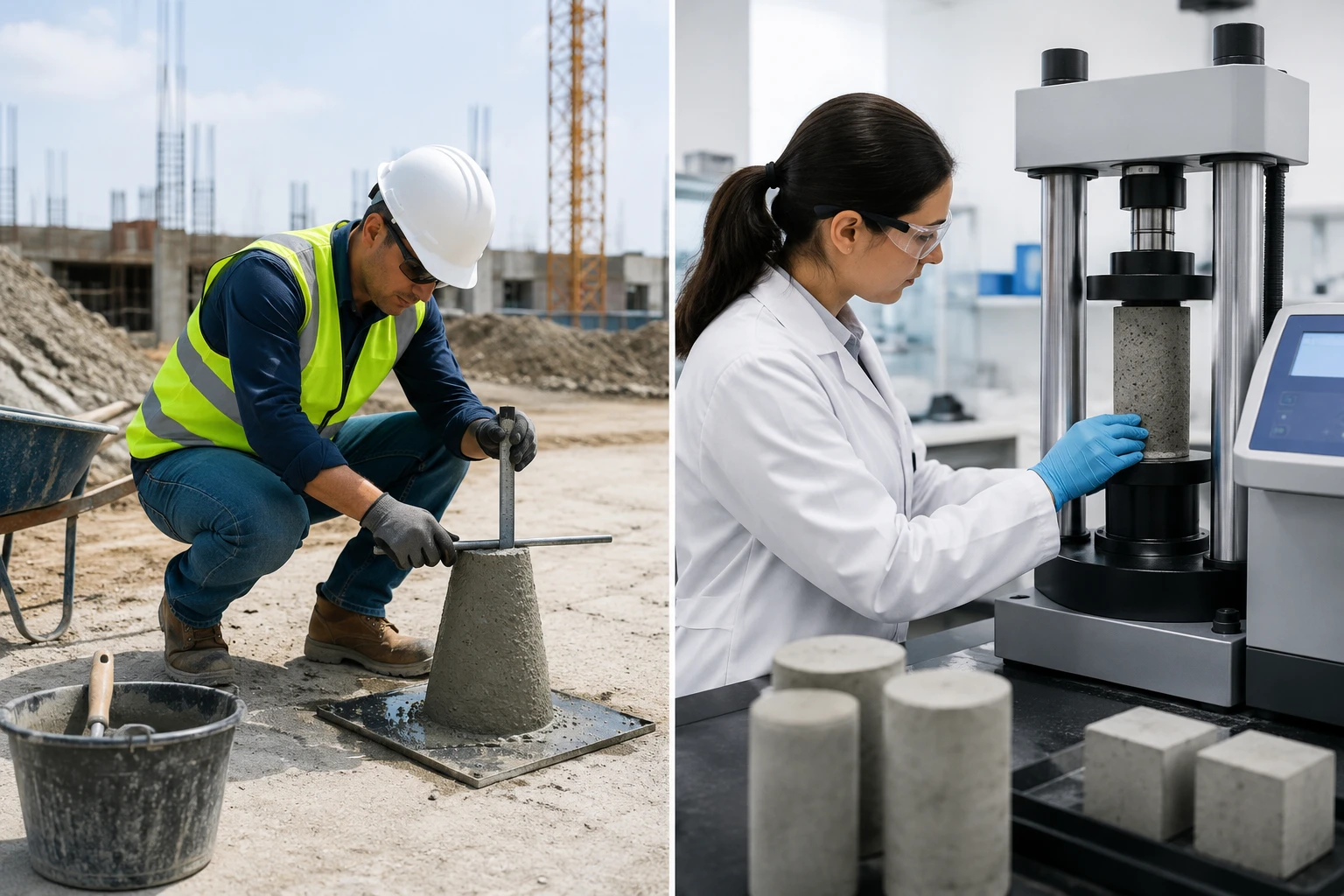
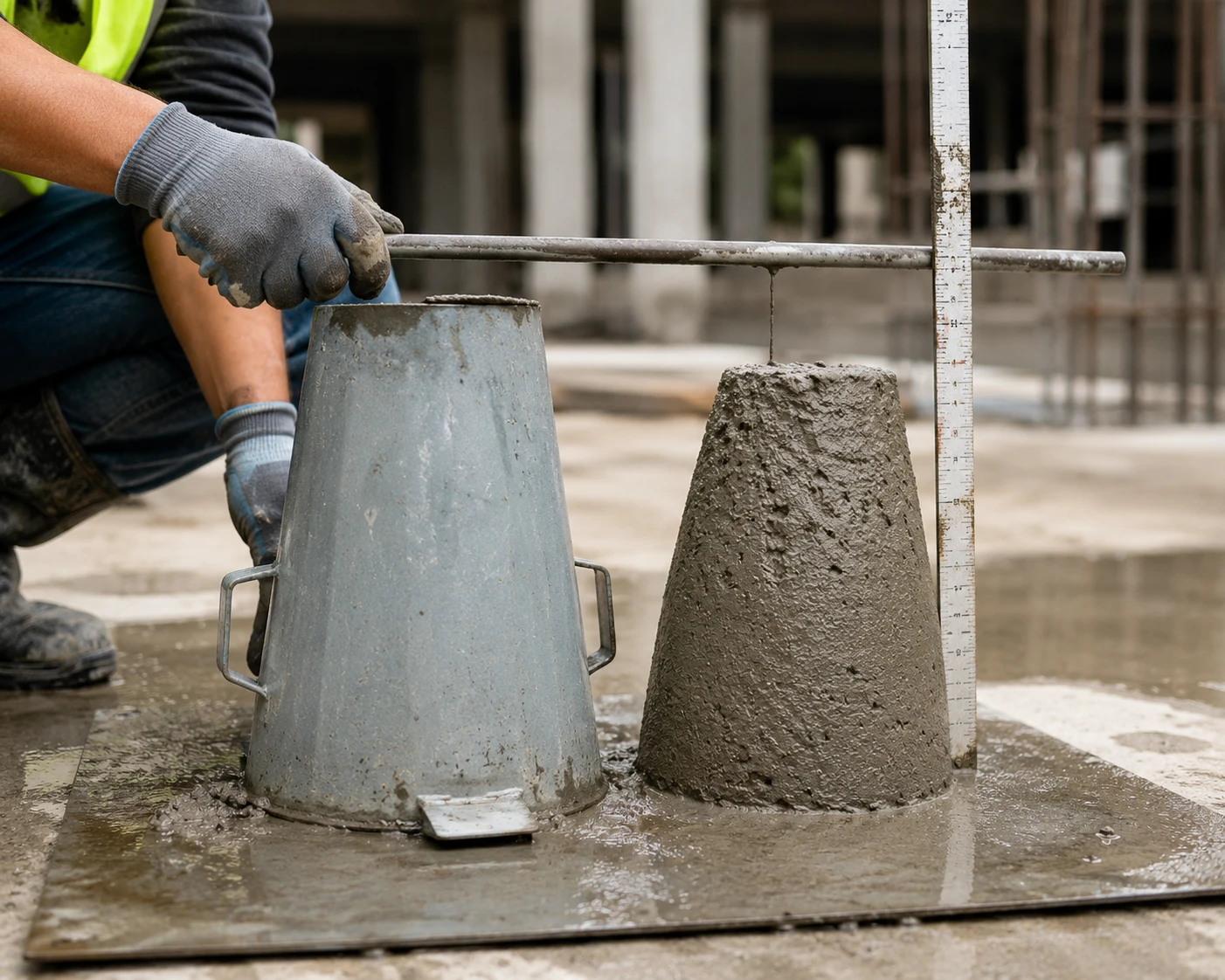
The slump cone test is a field method used to measure the consistency and workability of freshly mixed concrete. The test evaluates how easily concrete flows and whether it maintains its shape after removing the slump cone mold.
Workability refers to how easy concrete is to mix, transport, place, compact, and finish without segregation or excessive bleeding. If the concrete mix is too dry, it may become difficult to place properly. If it is too wet, the structure may lose strength and durability.
The slump test provides a quick indication of whether the concrete batch meets the required consistency for a specific construction application.
Why Concrete Workability Matters
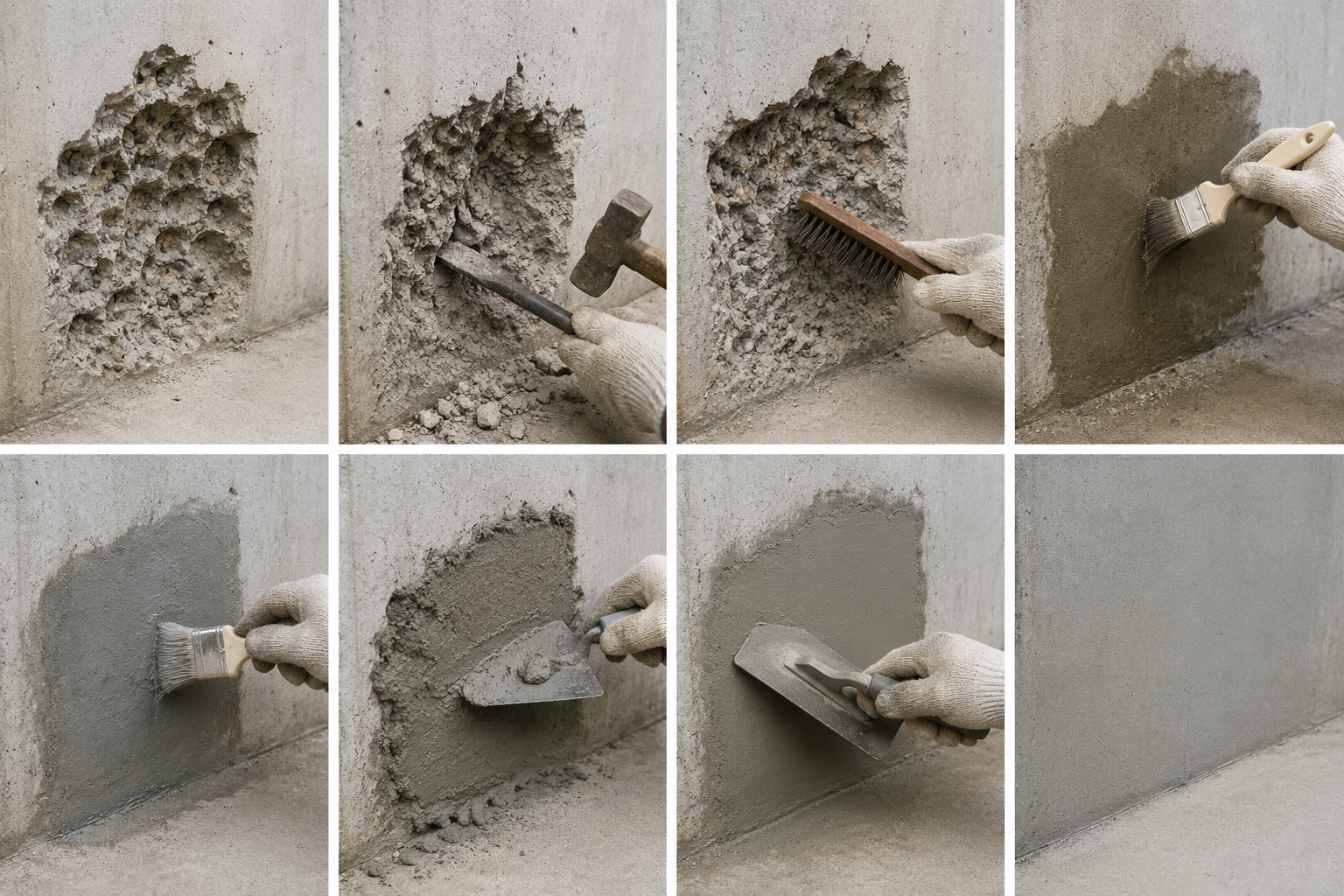
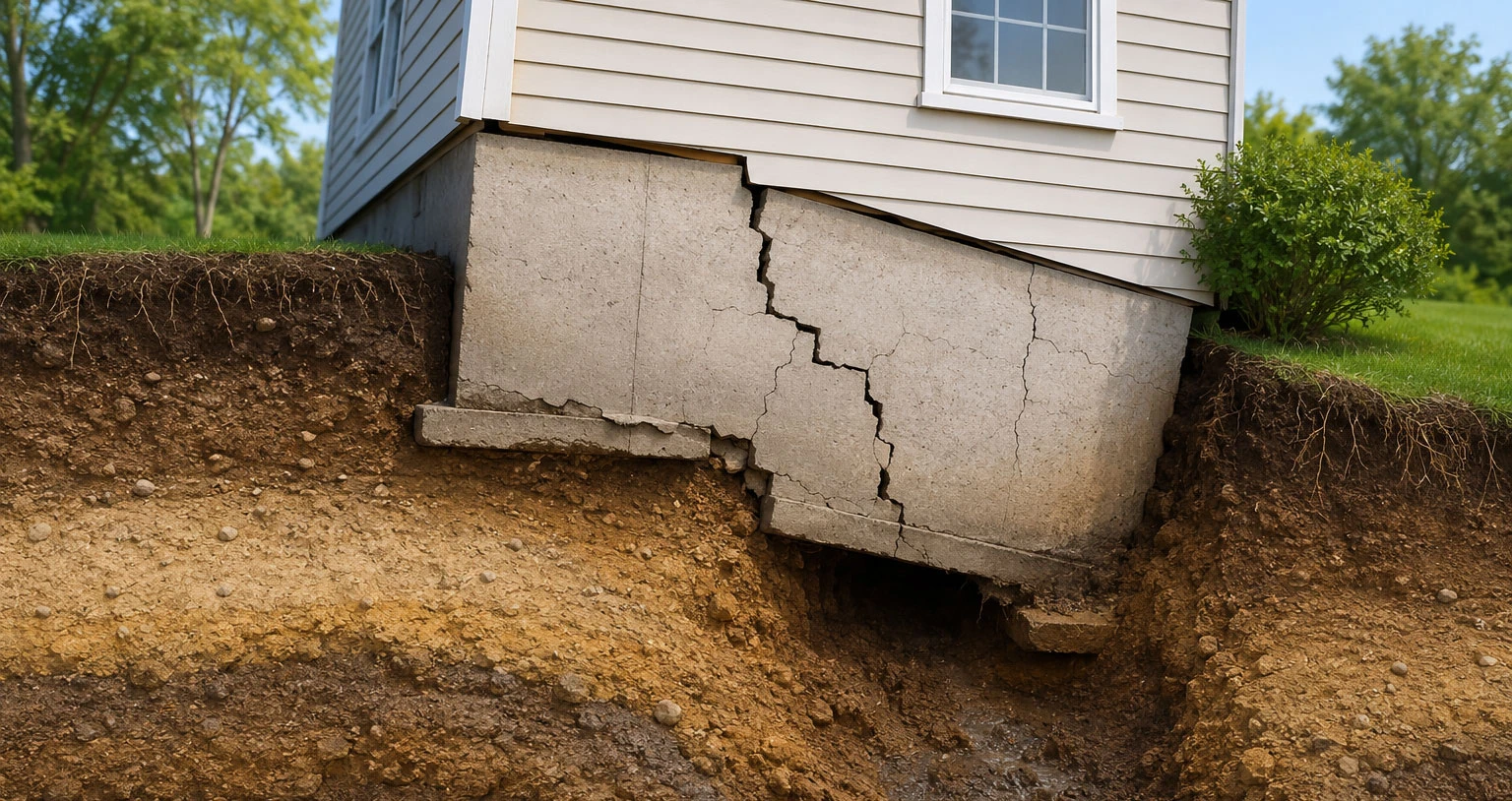
Concrete workability directly impacts construction quality and structural performance. Improperly mixed concrete can lead to several issues, including:
- Honeycombing
- Poor compaction
- Surface cracking
- Weak compressive strength
- Segregation of aggregates
- Reduced durability
By performing a slump test before placement, construction teams can identify problems early and make adjustments before the concrete is used.
Concrete testing is a key part of quality control procedures in both laboratory and field environments. Equipment such as concrete testing equipment helps ensure compliance with industry standards and project specifications.
Equipment Used in a Slump Cone Test
Several tools are required to conduct the test accurately.
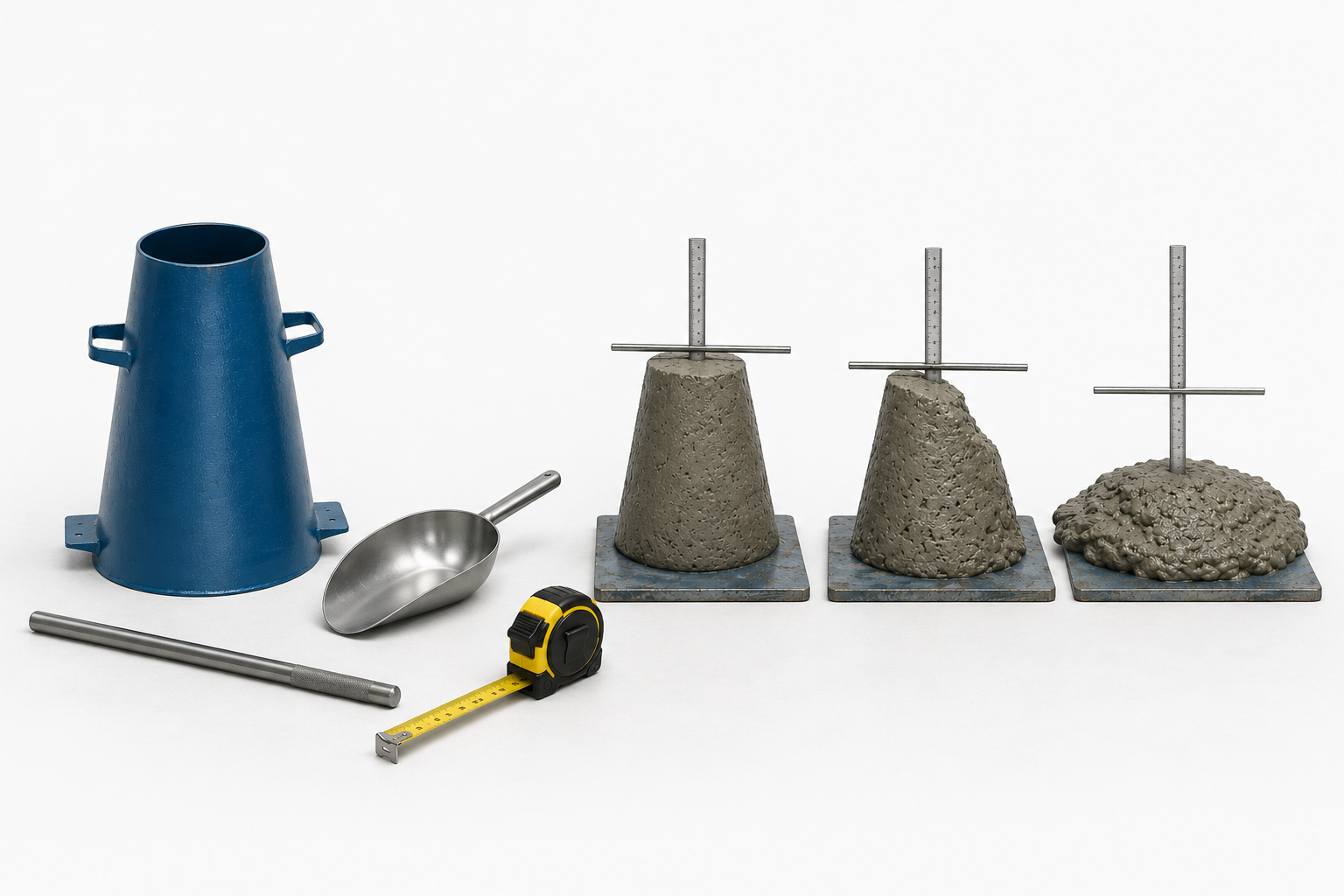
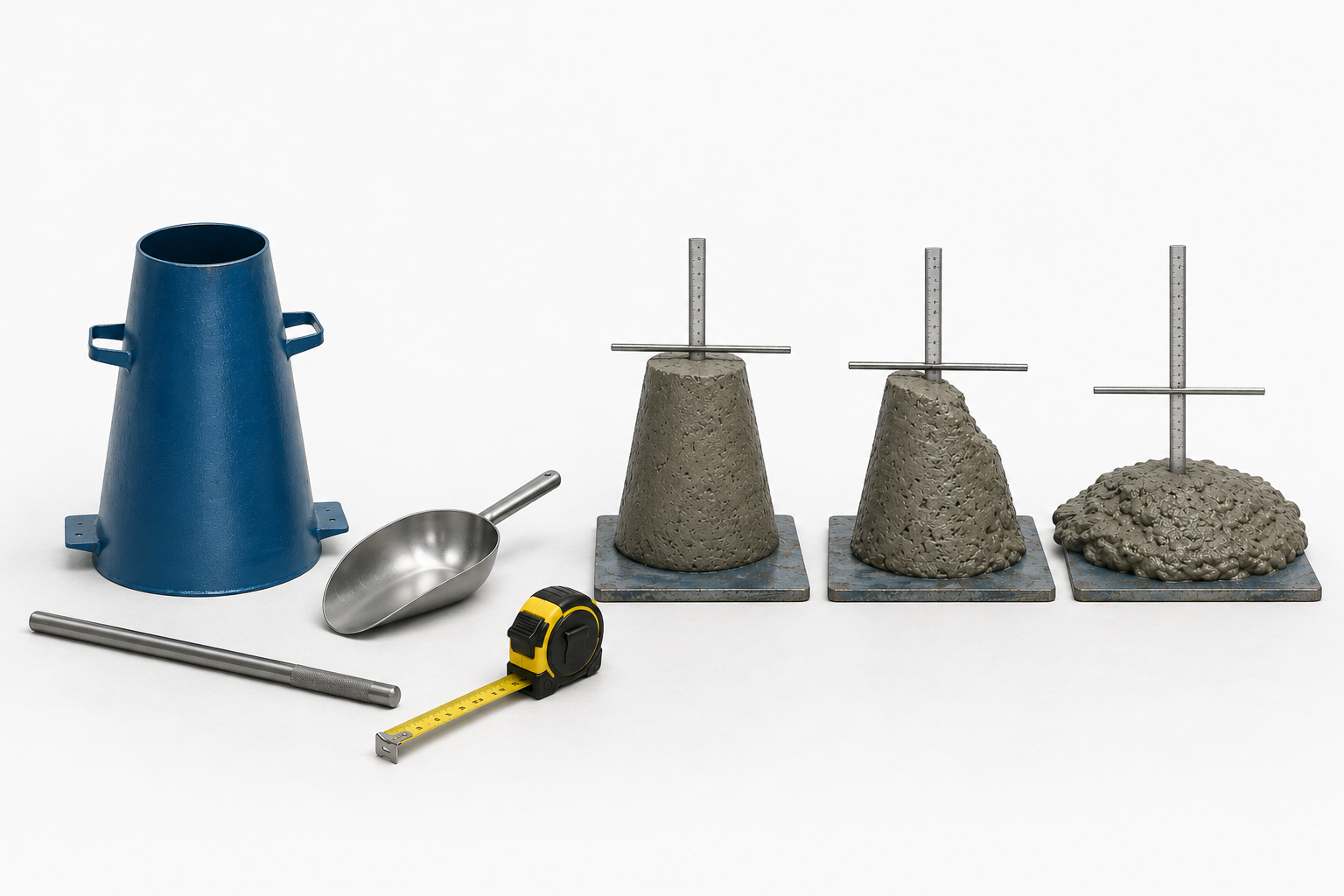
Slump Cone (Mould)
The slump cone is a frustum-shaped metal mold used to hold fresh concrete during testing. Standard dimensions typically include:
- Top Diameter: 100 mm
- Bottom Diameter: 200 mm
- Height: 300 mm
The cone is usually made of durable steel to withstand repeated field use.
Professionals commonly use specialized slump cones and accessories for accurate testing and compliance with standards.
Tamping Rod
A tamping rod is used to compact the concrete inside the cone in layers. The rod is generally:
- 16 mm in diameter
- Approximately 600 mm long
- Rounded at one end
Proper compaction is essential for obtaining reliable slump measurements.
Measuring Scale or Tape
After removing the slump cone, the vertical settlement of the concrete is measured using a ruler or measuring tape.
Scoop
A scoop is used to transfer fresh concrete into the slump cone mold during testing.
Step-by-Step Procedure for the Slump Cone Test
The slump test procedure is relatively straightforward but must be performed carefully for accurate results.
Step 1: Prepare the Base Surface
Place the slump cone on a clean, level, and non-absorbent surface. Hold the cone firmly in place using foot rests or handles.
Step 2: Fill the Cone in Layers
Fresh concrete is poured into the cone in three equal layers.
Each layer should be compacted using the tamping rod with approximately 25 strokes.
Step 3: Strike Off Excess Concrete
After filling the cone completely, remove excess concrete from the top using the tamping rod or a trowel to create a level surface.
Step 4: Lift the Cone Vertically
Slowly and carefully lift the slump cone vertically upward without twisting or tilting it.
As the mold is removed, the concrete settles or “slumps.”
Step 5: Measure the Slump
Measure the vertical difference between the original cone height and the highest point of the slumped concrete.
The measured value represents the concrete slump.
Reliable field measurements often require accurate construction measuring tools to maintain testing consistency.
Types of Slump in Concrete Testing
The slump result provides valuable insight into the behavior and workability of the concrete mix.
True Slump
A true slump occurs when the concrete settles evenly while maintaining its general shape.
This is considered the ideal slump result and indicates a cohesive and workable concrete mix.
Shear Slump
A shear slump happens when one side of the concrete slips or shears away.
This may indicate poor cohesion, improper mix proportions, or insufficient aggregate grading.
A shear slump often requires the test to be repeated.
Collapse Slump
A collapse slump occurs when the concrete completely collapses after the cone is removed.
This usually indicates that the concrete mix is too wet and has excessive workability.
Collapse slump results are generally considered invalid for standard construction applications.
Standard Slump Values for Different Applications
Different construction projects require different levels of concrete workability.
Typical slump ranges include:
|
Construction Type |
Recommended Slump |
|
Road Construction |
25–50 mm |
|
Mass Concrete |
25–75 mm |
|
Reinforced Concrete |
75–100 mm |
|
Pumped Concrete |
100–150 mm |
The required slump depends on factors such as placement method, reinforcement density, weather conditions, and structural design.
Advantages of the Slump Cone Test
The slump test remains popular because of its simplicity and effectiveness.
Quick and Easy
The test can be completed within minutes on-site without complex laboratory equipment.
Cost-Effective
Minimal equipment is required, making it economical for routine field testing.
Immediate Quality Assessment
The slump test provides instant feedback regarding concrete consistency and workability.
Widely Accepted
The method is recognized by multiple international standards and construction specifications.
Construction professionals frequently rely on concrete testing instruments to maintain quality assurance across projects.
Limitations of the Slump Test
Although useful, the slump cone test does have limitations.
Not Suitable for Very Dry Mixes
Extremely stiff concrete mixes may not produce meaningful slump values.
Limited Information
The test measures consistency but does not directly determine strength or durability.
Operator Sensitivity
Improper testing techniques can affect accuracy and repeatability.
Factors Affecting Slump Values
Several variables influence the slump of fresh concrete.
Water-Cement Ratio
Higher water content generally increases slump values.
Aggregate Size and Shape
Rounded aggregates improve workability, while angular aggregates may reduce slump.
Admixtures
Plasticizers and superplasticizers can significantly alter workability without adding excess water.
Temperature
Hot weather accelerates moisture loss and may reduce slump values during transportation and placement.
Monitoring fresh concrete conditions often requires reliable concrete thermometers for accurate temperature readings during testing.
Importance of Slump Testing in Modern Construction
The slump cone test continues to play a vital role in construction quality control because it helps ensure that concrete is suitable for placement and compaction before it reaches the structure.
Consistent concrete workability helps improve:
- Structural integrity
- Surface finish quality
- Durability
- Compaction efficiency
- Long-term performance
From highways and bridges to commercial buildings and residential foundations, proper slump testing helps reduce costly construction defects and failures.
Final Thoughts
The slump cone test is one of the most practical and widely used methods for evaluating fresh concrete workability. Despite its simplicity, the test provides valuable information that helps construction teams maintain concrete quality and consistency on-site.
Understanding how to perform the test correctly, interpret slump results, and recognize different slump types is essential for engineers, contractors, inspectors, and technicians involved in concrete construction.
As modern construction projects continue to demand higher quality standards, proper concrete testing remains a critical part of successful project execution.