Laboratory Rotary Sifters: Mary Ann, Rotary & Sonic Machines
Choose the Machine Type for the Procedure
Rotary sifters use a rotating, angled sieve stack—sometimes with tapping—to separate particle sizes, while sonic sifters use an air-column motion for fine-particle separation. Confirm which motion the governing procedure permits before selecting equipment; these machine types are not interchangeable for every analysis.
Rotary and sonic sifters also differ from tray-based aggregate testing screens and from standard sieve shakers. Choose the equipment family that accepts the sieve format and sample size your method requires.
Compare Mary Ann Sifter Configurations
The Mary Ann Sifter, Silent accepts 8in and 12in sieves with a specified stack height and capacity that varies by sieve height. Compare the Rainhart Mary Ann Sifter and Rainhart Mary Ann Sifter, 220V against your electrical supply and required capacity rather than assuming all Mary Ann configurations share specifications.
Verify sieve capacity for the exact sieve heights your procedure uses, along with timer controls, motor specifications and installation space. The silent configuration emphasizes enclosed, quieter operation; confirm the sound-control arrangement and door configuration for the selected unit.
Select Rotary and Sonic Alternatives
Compare the Gilson Rotary Sifter and WS Tyler RX-20 Rotary Sifter against required sieve format, capacity and operating controls. Match the machine to the sieves and sample volumes your method specifies rather than choosing by machine size alone.
For fine-particle separation, compare the GilSonic AutoSiever Sonic Sifter and Advantech L3P Sonic Sifter, along with listed columns, diaphragms and accessories. Confirm the sieve format each sonic system accepts; sonic sifters use their own columns rather than standard round-frame stacks.
Match Consumables and Replacement Parts
Round-frame machines require matching aggregate test sieves, pans and covers; verify frame diameter and height against the selected machine's capacity. Replacement parts for rotary machines—door hinges, handles, tilt guides, timers—are model-specific, so confirm the exact machine before ordering parts.
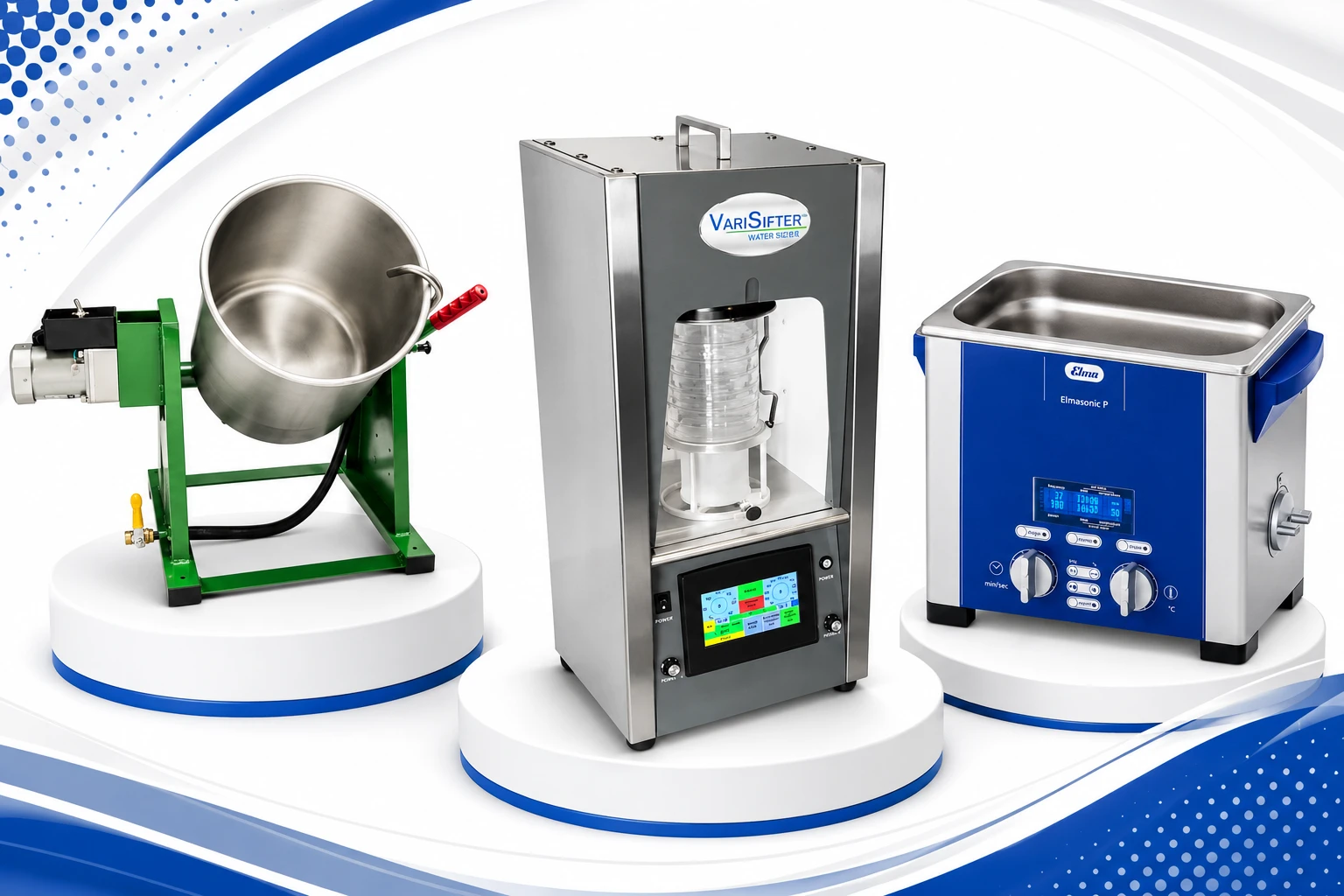
Keep cleaning equipment separate from testing equipment: ultrasonic sieve cleaners clean sieves and do not replace a sifting machine. Confirm every accessory's compatibility with the selected unit rather than assuming parts from one machine family fit another.
Plan Installation and Operation
Check electrical supply, required floor space, door-swing clearance and operator access for the selected model before ordering. Follow the manufacturer's instructions for setup, sieve-stack loading, timer settings and shutdown, and use any provided emergency-stop or safety features as directed.
Confirm verification and documentation requirements for the sieving procedure, and inspect sieve condition before each run. Do not infer machine performance from one model's specifications; verify each configuration against the governing method and required particle-size range.