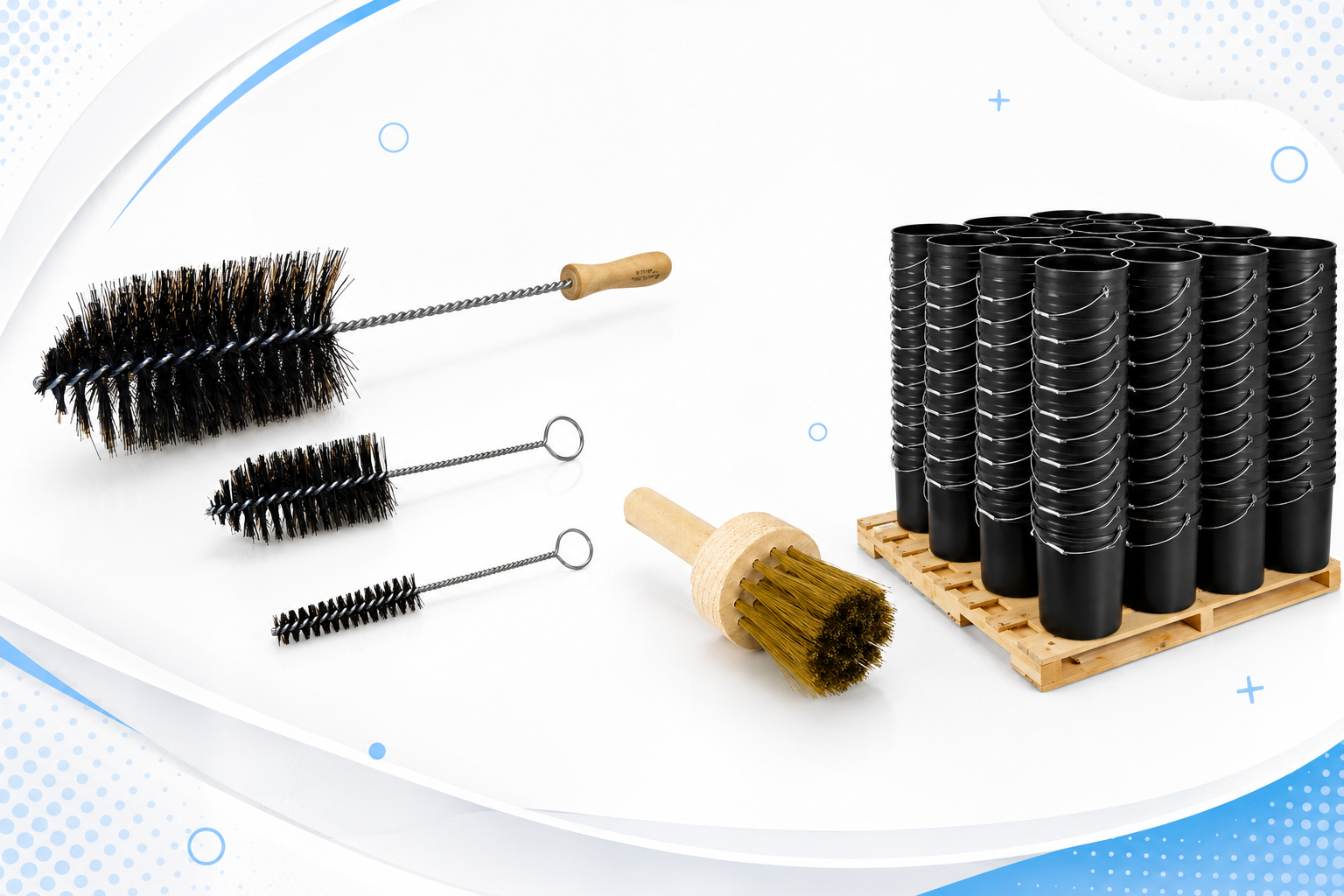
Sieve Cleaning Brushes: Bristle Types & Mesh Applications
Match Bristle Material to Mesh Fineness
Sieve cleaning brushes protect mesh openings while removing trapped particles. Bristle material determines which sieves a brush is suitable for: soft nylon bristles for fine mesh, stiffer brass bristles for coarser mesh. Using the wrong bristle type can distort openings, so match the brush to the sieve rather than using one brush across the cabinet.
Two listed brushes state their mesh applications directly: the Nylon Sieve Brush for 120 Mesh and Finer and the Brass Sieve Brush for 100 Mesh and Coarser. Follow the manufacturer's stated ranges; a brush sold as a general cleaning tool is not automatically approved for fine-mesh work.
Compare Fine and Coarse Brush Styles
For fine-mesh sieves, compare the Fine Sieve Cleaning Brush, Small Fine Sieve Cleaning Brush and Nylon Sieve Cleaning Brush. For coarser mesh and screen trays, compare the Coarse Sieve Cleaning Brush, Coarse Screen Tray Brush and Wire Loop Brush.
Check brush dimensions—head diameter, bristle length and handle style—against the sieve sizes you maintain. A brush suited to an 8in round sieve may be awkward on a 12in tray or a small 3in sieve; confirm fit before ordering multiple brushes.
Use General Laboratory Brushes Only Where Approved
The category also lists general-purpose brushes, including acid brushes, scrub brushes, table brushes and wire scratch brushes. Some serve related laboratory cleaning tasks; others are not intended for test-sieve mesh at all. Confirm the intended application before using any general-purpose brush on a sieve.
Do not substitute a stiff wire brush for mesh cleaning without the manufacturer's approval. Where a listed product identifies a specific use—such as the Brush for R80 Riffle Divider—use it for that purpose rather than repurposing it for sieve mesh.
Plan Sieve Care and Verification
Inspect mesh condition before and after cleaning, and follow the sieve manufacturer's cleaning instructions for the frame material and cloth type. Replace brushes when bristles deform; a worn brush can bend openings as easily as the wrong bristle type.
For fine or delicate mesh where brushing is not approved, compare ultrasonic sieve cleaners and confirm the sieve manufacturer's guidance first. Where your quality system requires sieve verification, use the listed NIST Glass Beads for Sieves and follow the applicable verification procedure and documentation requirements.