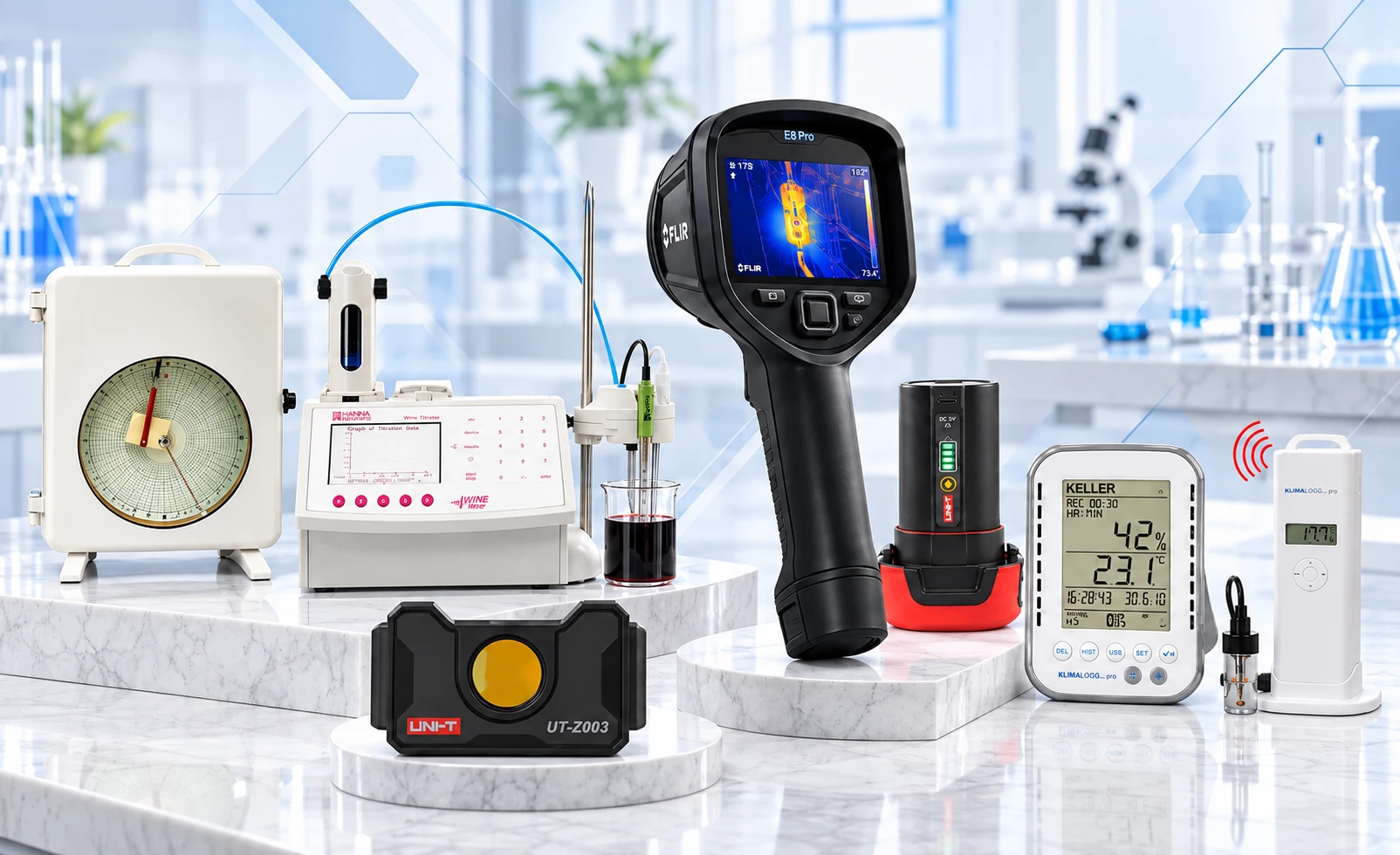
Thermal Imaging Cameras for Inspection and Material Testing
Understand What a Thermal Image Shows
A thermal imaging camera displays temperature variation across a whole area as an image, alongside a measured value at a selected point. It answers questions a single-point thermometer cannot: where the hot spot is, how a gradient spreads and whether a pattern suggests a defect. A thermal image supports inspection findings; it does not replace a documented temperature measurement where one is required.
The category includes compact cameras such as the FLIR C3-X compact thermal camera and FLIR C5, professional Ex-Series models such as the FLIR E4, and phone-attached options like the FLIR ONE Pro for iOS. Each family serves a different working style; verify the exact model listing before comparing features.
Compare Resolution, Sensitivity and Range
Detector resolution determines how much detail the image carries. The FLIR E4 lists an 80 × 60 pixel detector; higher Ex-Series models list greater resolution and sensitivity. Compare detector resolution, thermal sensitivity and field of view against the size of the defects you need to see from your working distance.
Match the temperature range to the inspection: the E4 lists −4 to 482°F, while the FLIR E6 Pro lists −4 to 1022°F. Confirm where the stated accuracy and sensitivity apply within the range, and check image-enhancement features such as MSX on each model listing.
Choose Handheld, Compact or Phone-Based
Handheld Ex-Series cameras suit structured inspections with on-camera reporting; the E4 listing describes Wi-Fi sharing through the FLIR Tools mobile app, internal image storage and a supplied case and charger. Confirm included accessories for the exact model.
Compact models trade some resolution and features for size and cost; phone-based cameras suit quick checks where a smartphone is already carried. Check supported devices before ordering a phone-attached model. For spot readings only, compare digital infrared thermometers instead of a camera.
Match the Application in Materials Testing
In concrete and masonry work, thermal cameras help locate surface patterns associated with delaminations, voids or moisture. The FLIR E4 listing describes use on paving operations, bridge decks and floor slabs. Confirm how your procedure uses thermal findings, and whether verification measurements are needed to confirm an image.
Pair imaging with contact or spot instruments where documentation requires measured values: compare surface thermometers or infrared models. Select the camera by detector performance and range—not by the largest specification on the shelf.
Confirm Documentation and Battery Logistics
Check what the manufacturer supplies—software, cables, cases, chargers—and the warranty terms listed for the model. Where calibration documentation is required for the camera's measurements, confirm whether it accompanies the model or is available separately.
Review battery transport rules before traveling: lithium batteries in checked baggage are restricted by airline regulations. Follow the manufacturer's charging and storage instructions to preserve battery life and detector performance.