Vacuum Ovens for Laboratory Drying & Degassing
Start with the Process, Not Just Chamber Size
Vacuum ovens combine heating with reduced pressure, but a general laboratory drying oven and an asphalt vacuum degassing oven serve different procedures. Define the material, temperature, pressure and processing time required before comparing models. Equipment selected for one process should not automatically be substituted for another.
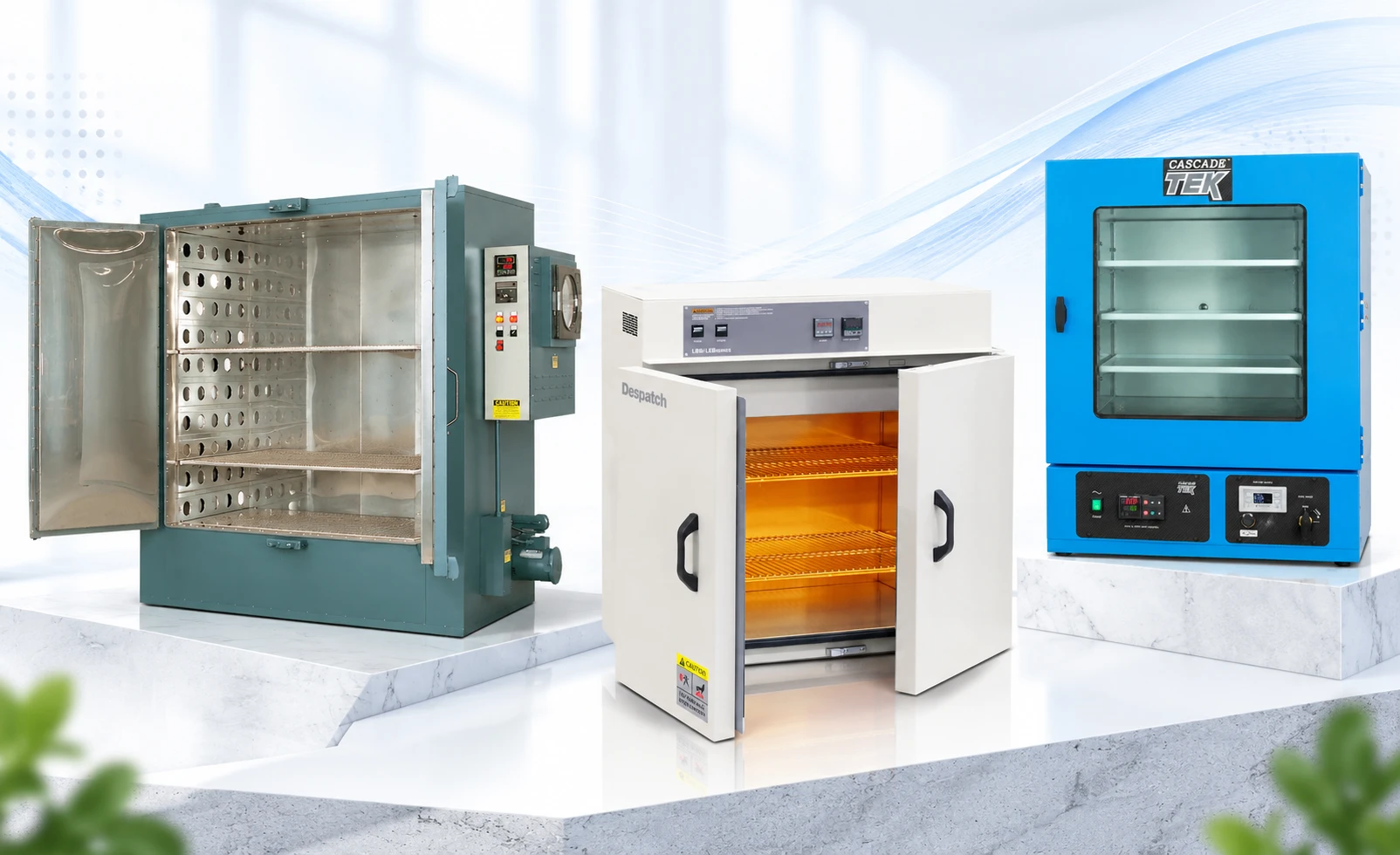
For laboratory and industrial vacuum drying, compare the Cascade TEK TVO-2 Vacuum Oven with larger chamber options. For asphalt specimens following pressure aging, review the ATS Vacuum Degassing Oven with Touchscreen Controller, which has a self-contained vacuum system and an application-specific sample arrangement.
Compare Capacity, Temperature and Controls
Allow space for the actual containers or parts, shelf arrangement and loading access rather than comparing nominal chamber volume alone. Listed options include the 1.67CF TVO-2, 4.5CF Cascade TEK TVO-5 and 65L Jeio Tech OV4-65. Verify each model's usable chamber dimensions and shelf configuration.
Check the operating temperature range, controller functions and pressure measurement arrangement for the exact unit. A programmable temperature controller does not by itself establish automatic vacuum control; compare manual valves, pressure-control options and automated configurations separately.
Confirm the Complete Vacuum Setup
When selecting a vacuum oven with a pump, first establish whether the pump is included, integrated or ordered separately. Match the pump, hose, fittings and any required traps to the oven connections and process. Do not assume accessories from one system fit another because both are described as vacuum equipment.
The TVO-2 listing identifies vacuum and purge connections and optional supporting equipment. The ATS degassing unit instead includes its own vacuum system. Review the contents of the selected configuration before ordering duplicate components or leaving essential items out.
Verify Material Compatibility and Installation
Reduced pressure does not establish suitability for flammable solvents or every sensitive material. Obtain documented approval for the intended material and process, including any vapor handling, exhaust, pump or safety provisions required by the manufacturer. Avoid choosing an oven from a general solvent-removal claim alone.
Confirm electrical supply, installation clearances, gasket compatibility and maintenance requirements. For heating without reduced pressure, compare benchtop laboratory convection ovens rather than assuming a vacuum oven is needed for every drying task.