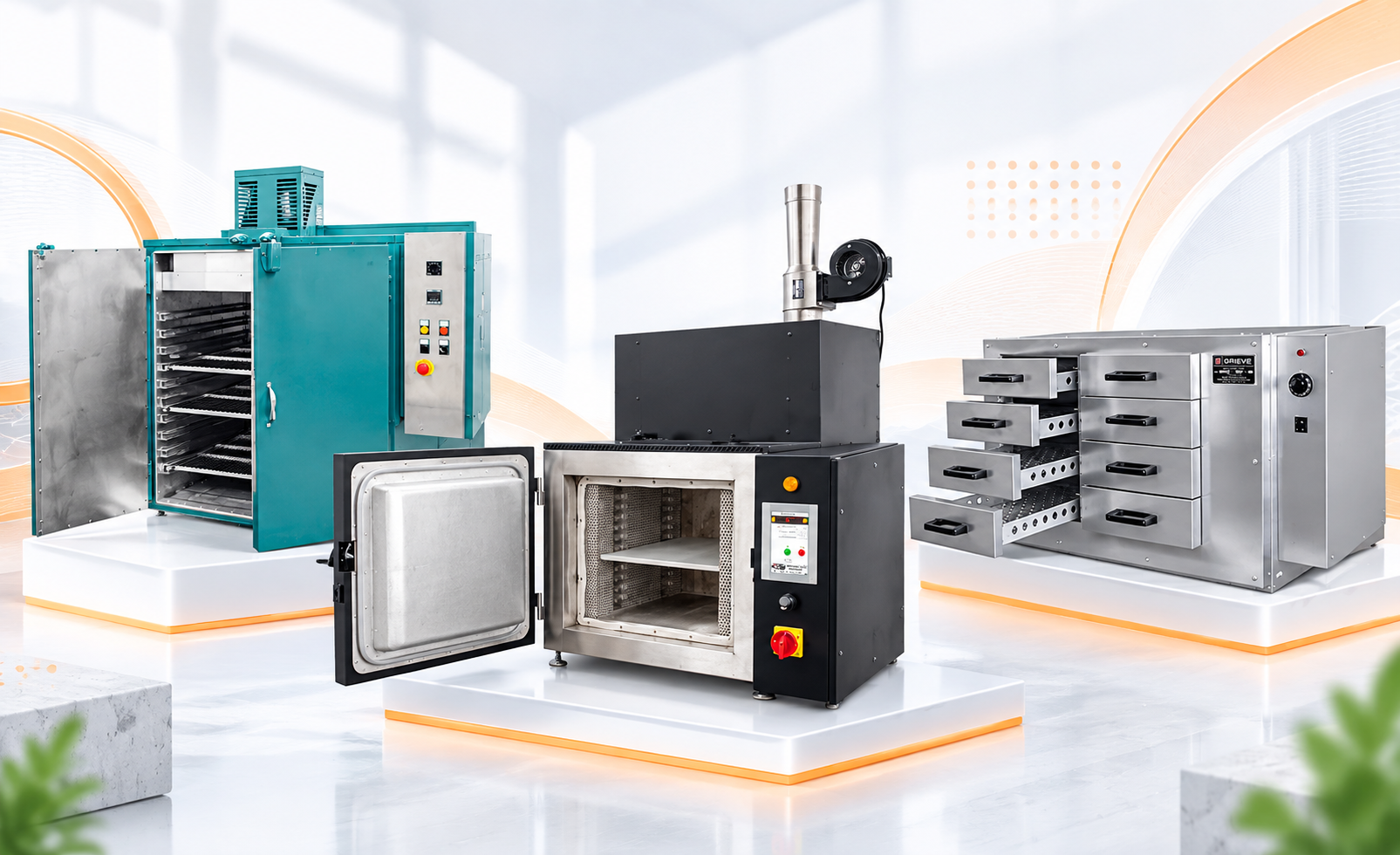
Industrial Laboratory Furnaces & High-Temperature Equipment
Select the Furnace for the Task
Laboratory furnaces serve different high-temperature applications, including ashing, ignition, general chamber heating and asphalt binder testing. Start with the procedure and material, then compare the furnace type and configuration. Operating limits and capabilities differ across models; verify them on each product page rather than assuming a single category-wide temperature or capability.
For general chamber work, compare Carbolite laboratory chamber furnaces such as the 6L ELF 11/6 Chamber Furnace and the 13L General Purpose CWF 11/13. Match chamber volume and controller arrangement to the workload rather than selecting by size alone.
Choose the Right Muffle Configuration
Muffle furnaces isolate the sample from heating elements and combustion products. Compare chamber capacity, controller type and electrical requirements across listed models, including the 11L Digital Control Muffle Furnace and compact benchtop units such as the Thermolyne FB1315M.
Confirm maximum temperature, continuous operating temperature and ventilation requirements for the exact model. Use economy muffle furnaces to compare the focused muffle range, and verify which products appear in each category before assuming identical availability.
Asphalt Ignition and Binder Equipment
Asphalt content testing uses dedicated ignition furnaces rather than general laboratory furnaces. Compare the NCAT Asphalt Content Furnace and other listed asphalt ignition equipment against the governing test requirements, including chamber arrangement and any required accessories.
The Carbolite 7/35B Asphalt Binder Analyser is a separate binder-analysis configuration. Do not substitute general-purpose chamber furnaces for ignition-furnace procedures, or assume accessories and methods transfer between these equipment types.
Handle Hot Materials Safely and Complete the Order
Review handling tools for hot crucibles and beakers, including the 8in Crucible Tongs and 10in Beaker Tongs. Match tool size and material to the vessels in use, and follow the manufacturer's safety instructions for loading, unloading and hot-surface handling.
Confirm electrical supply, installation clearances, ventilation and any exhaust requirements for the selected furnace before ordering. Where a test method governs the work, verify the equipment requirements it specifies. For lower-temperature drying and heating, browse laboratory ovens rather than extending a furnace beyond its documented use.