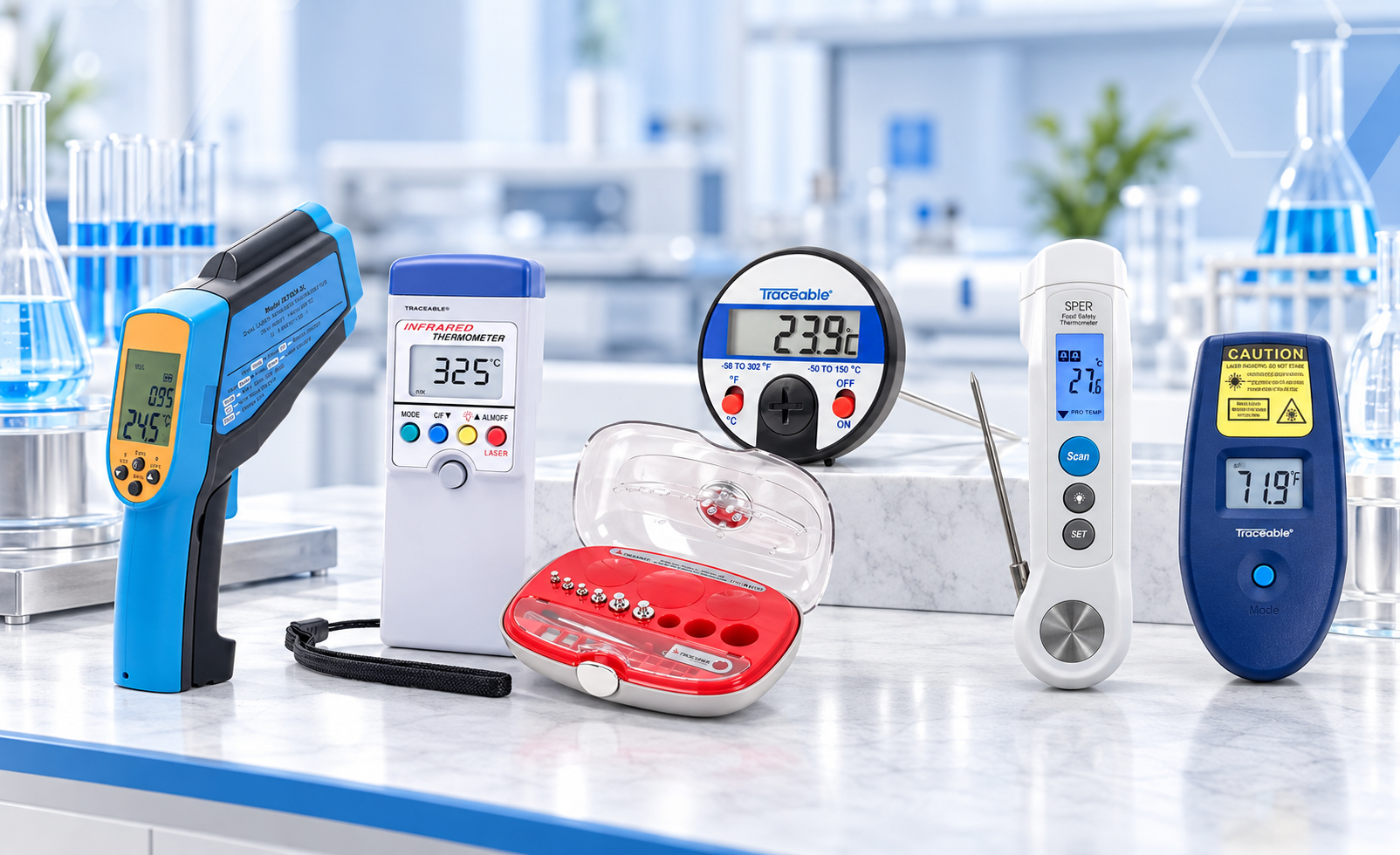
Surface Thermometers for Contact Temperature Measurement
Contact Reading Requires the Right Instrument
A surface thermometer measures temperature through direct contact with a material or equipment surface. Contact reading differs from the non-contact method used by infrared instruments: it requires the sensing element to reach the surface and stabilize before the reading is taken. Choose by the measurement your procedure documents.
The surface range includes dial instruments and Type K probe designs. The 0 to 150°F surface dial lab thermometer is one of several dial models; a 0 to 500°F version covers hotter equipment. Confirm each model's stated accuracy and range before ordering.
Compare Dial and Probe Designs
Dial surface thermometers mount directly on the surface and read a marked scale. Listings for the dial models describe attachment to ferrous surfaces with integral magnets, so the instrument stays in place during the reading. Check the dial size, divisions and the surface types the mounting method actually supports.
Probe designs connect a surface-sensing tip to a separate thermometer. The category includes the Type K surface thermometer probe, a magnetic Type K surface probe and a standard Type K surface probe. Verify the compatible meter and connector before ordering a probe alone.
Match the Range to the Equipment
Select the range for the hottest and coldest surfaces you measure. Dial models span 0–150°F, 0–250°F and 0–500°F; probe designs list their own limits. Check where the accuracy specification applies within the range, and allow margin so readings remain inside the stated accuracy interval.
Confirm the correct thermal contact as well: readings depend on stable contact between the sensing element and the surface. Follow the manufacturer's positioning and stabilization instructions rather than assuming an instant reading on contact.
Know When Infrared Fits Better
When a target is moving, distant, energized or too hot to approach, a non-contact reading may be safer. Compare digital infrared thermometers for those conditions and match the distance-to-spot ratio to the target size.
Where the task is comparing temperature patterns across a whole area—finding a hot spot on a panel or tracing heat loss—compare thermal imaging cameras. A single contact reading and a thermal image answer different questions; select by the evidence your work requires.
Confirm Documentation and Care
Where calibration documentation is required, confirm what accompanies the specific dial or probe model and whether verification service is offered separately. Store probes and dial instruments so the sensing surfaces remain clean and undamaged; follow the manufacturer's cleaning instructions between uses.
For immersion and material-internal measurements, compare digital laboratory thermometers and matching probes. Select surface instruments by range, contact design and mounting—not by the broadest specification on the shelf.