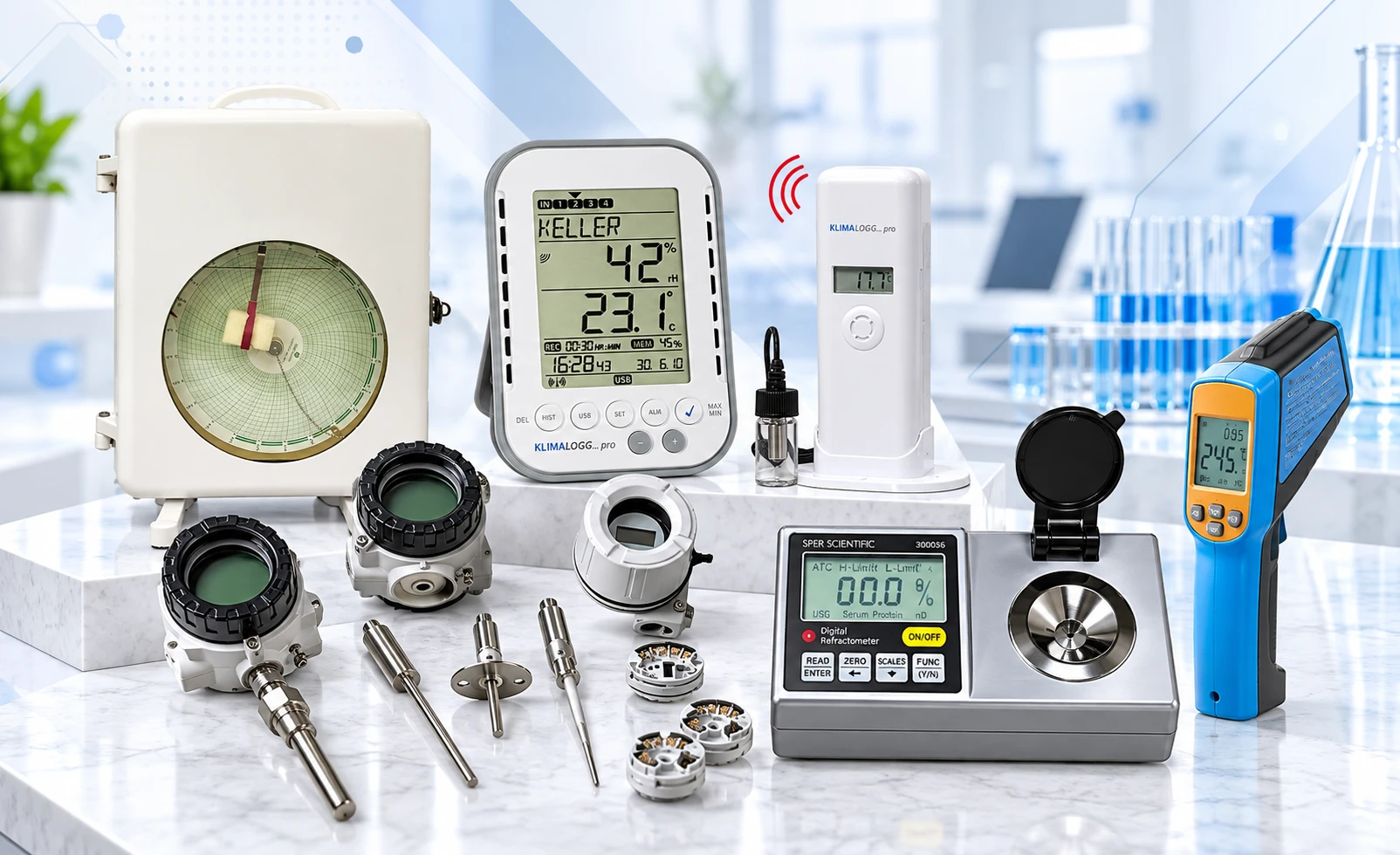
Temperature and Humidity Measuring Instruments
Decide Which Measurements You Need
Start by separating the two measurement tasks. A thermometer reads temperature; a hygrometer reads relative humidity; combined meters display both from one instrument. Some jobs need both values together—concrete curing, storage checks, field observations—while others need only one. Choose the instrument for the actual measurement rather than the most features.
For humidity alone, the category offers both electronic and mechanical options. The sling psychrometer determines relative humidity by comparing wet-bulb and dry-bulb thermometers using its included chart. It lists a 1–97% RH range and 20 to 120°F temperatures. Confirm the stated humidity accuracy and how readings are taken before relying on it for compliance work.
Compare Electronic Meters and Psychrometers
Electronic hygrometers and thermo-hygrometers display humidity and temperature on a screen, typically with selectable units and memory functions. Check the sensor type, stated accuracy, response behavior and battery arrangement on each listing. An electronic display does not automatically mean higher accuracy than a mechanical instrument; compare the specifications.
Psychrometers use evaporation between two thermometers and need no batteries, but they require wetting the wick, whirling the instrument and reading both thermometers before consulting the chart. Choose this method where procedures call for it or where battery-free field work matters; choose electronic meters where frequent or recorded checks matter.
Match Weather and Field Instruments
For construction and site work, the category includes weather-oriented instruments such as the Kestrel construction weather tracker, with wind vane and tripod accessories sold separately. These instruments combine humidity with wind and other readings; verify each measured value, its range and its accuracy on the listing.
Confirm whether the instrument measures air temperature only or can also accept probes for material or liquid temperatures. An ambient weather reading does not establish the temperature inside a sample, chamber or liquid.
Check Ranges, Conditions and Documentation
Verify each instrument's temperature and humidity ranges against the conditions where it will be used, including any limits on condensation, dust or exposure. Where calibration documentation is supplied or offered separately, confirm exactly what accompanies the model you select.
Where continuous records are required rather than spot readings, compare temperature and humidity data loggers. A display, memory recall or max/min function is not a substitute for the recorded history many procedures require.
Use and Maintain the Instrument
Follow the manufacturer's instructions for conditioning the humidity sensor, wetting psychrometer wicks and storing the instrument between uses. For protection in the field, review thermometer accessories and confirm fit with the actual model. Select measurement instruments by the values your procedure documents—not by the broadest range on the shelf.