Data Loggers for Temperature and Humidity Monitoring
Start with What and How You Must Record
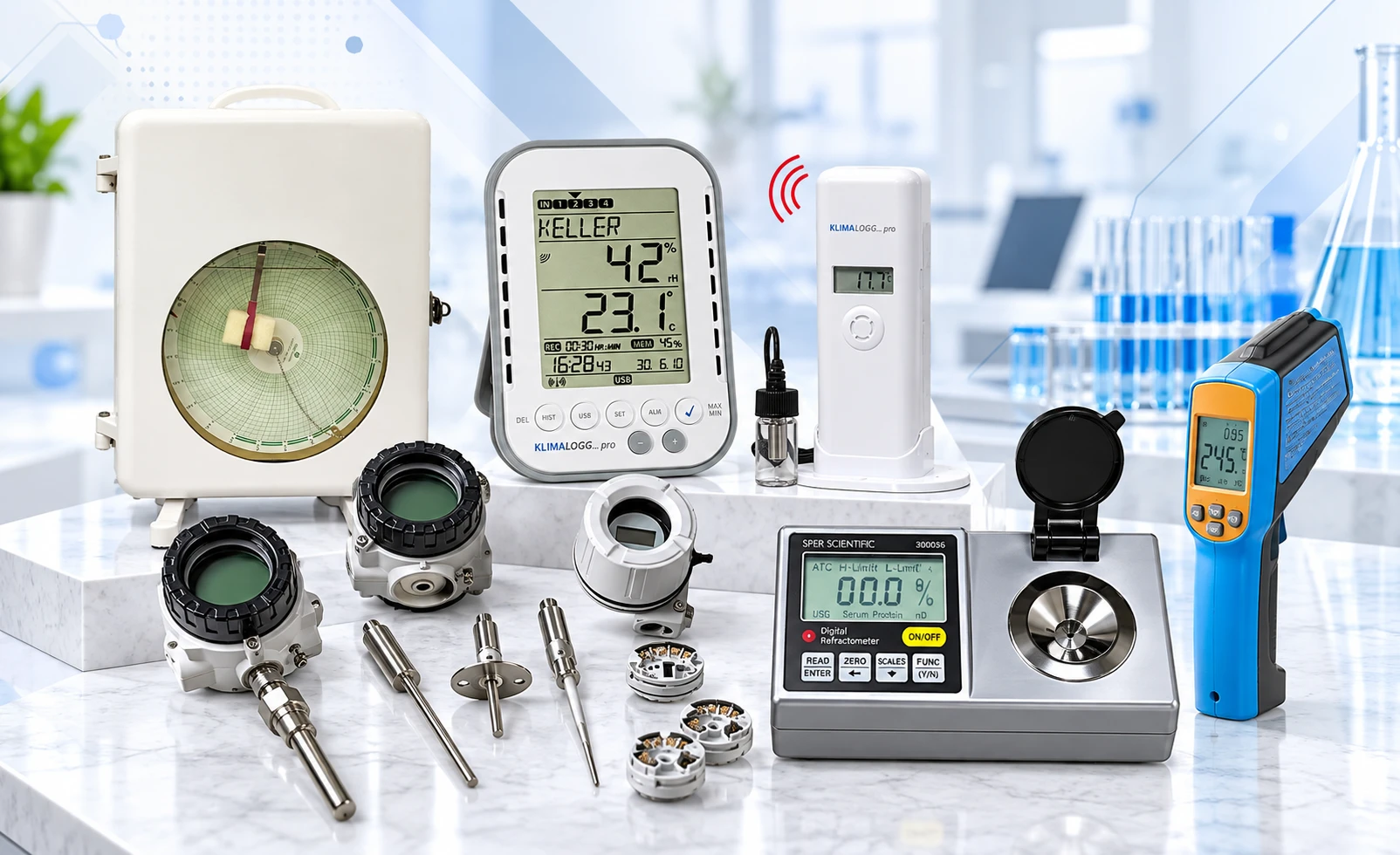
Decide what the logger must record—temperature, humidity or both—before comparing hardware. Electronic loggers save readings to internal memory for later download; chart recorders capture the same history on paper. These are different working systems with different consumables, not interchangeable versions of one product.
Confirm the required measurement range, interval and record length from your procedure. A logger that samples frequently for a week fills memory differently from one that records twice a day for a month; check the manufacturer's stated capacity for the interval you will actually use.
Compare Sensor and Channel Configurations
Match the sensor type and quantity to the application. The 4-channel data logging thermometer accepts external probes for logging several points at once; verify the compatible probe types before ordering sensors separately. Models with an internal sensor measure the air around the unit; models with a remote probe extend measurement into chambers, rooms or liquids.
Check each model's stated sensor range. Logging capability does not guarantee every condition: an ambient-only sensor cannot record a freezer, and a probe rated for one range may not suit another application's environment.
Match Memory, Export and Reporting
Confirm how readings are retrieved: USB download, software report or display recall. Check which interface the model uses and whether software runs on your systems. The LogTag temperature/humidity logger works with its own reader software; verify compatibility before planning a fleet.
If your quality program requires electronic records, confirm how the logger exports data and whether the downloaded file satisfies your documentation needs. A max/min display is not the same as a timestamped history; do not treat recall features as full logging.
Check Alarms and Placement
Where excursions must trigger action, compare the alarm features actually offered: visual indicators, audible alarms or email notification. Alarm claims vary between models; confirm each one on the listing before relying on it for compliance.
Plan placement and power: mounting hardware, battery type and expected battery life belong to each listing. The vaccine temperature logger illustrates a purpose-built configuration for cold-chain work; its buffer design and reporting belong to that model.
Plan the Consumables and Fleet
Battery-powered loggers need periodic battery replacement; choose spares according to the manufacturer's schedule. Chart systems require recorder charts and pens; confirm sizes before stocking consumables.
For continuous monitoring that must survive power interruptions, compare the temperature recorder range. For spot checks rather than recorded histories, compare digital thermometers. Select by the evidence your procedure requires, not the instrument's name.