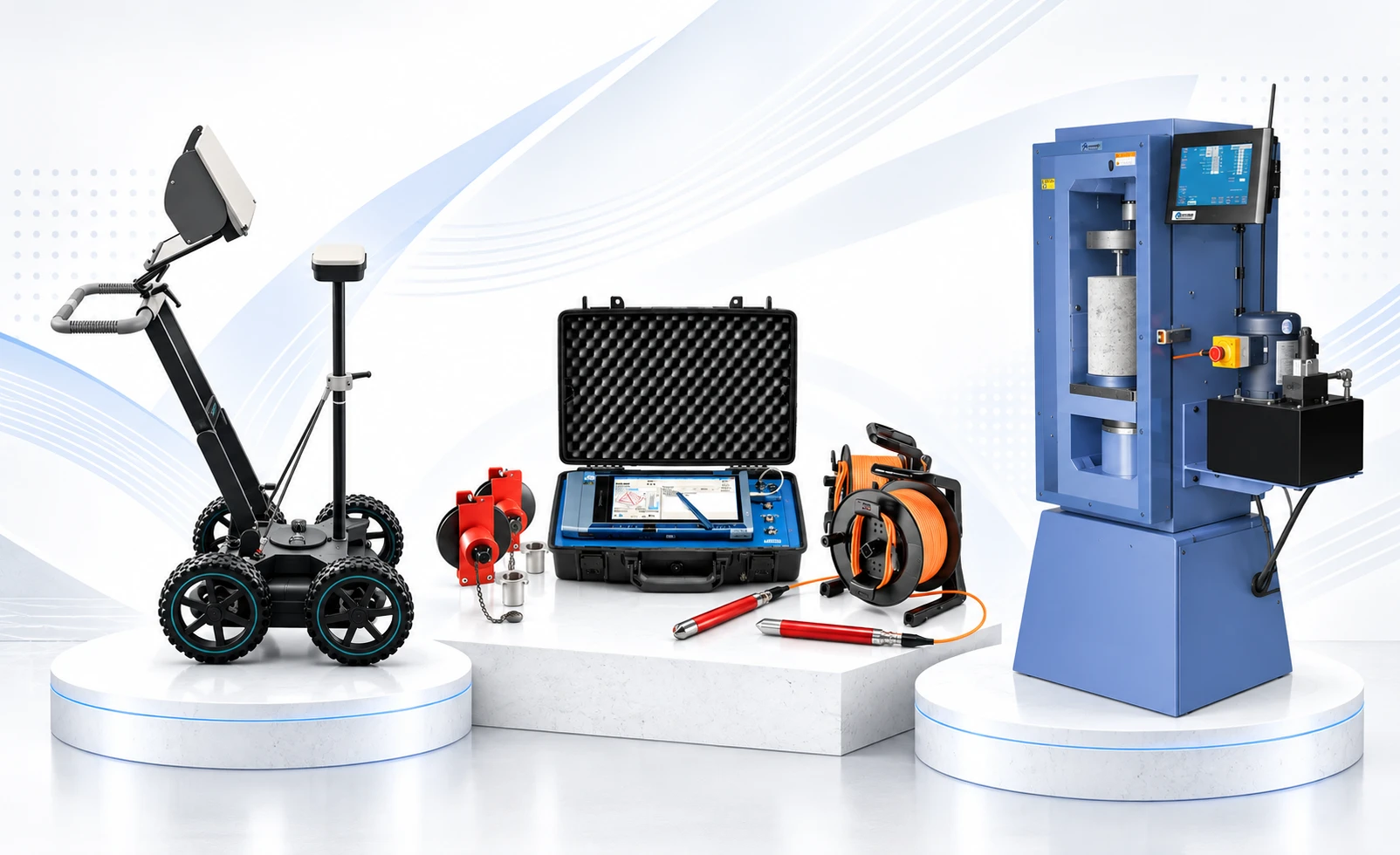
Concrete Strength Testers: Compare Laboratory & In-Place Methods
Choose Destructive Specimen Testing for Verified Results
Compressive-strength testing on prepared specimens provides the most direct strength measurement. Review concrete compression testing machines by capacity, controller and accepted specimen sizes, and mold specimens in concrete test cylinder molds suited to the required dimensions.
Match the complete setup to the governing test method: specimen preparation, curing and loading rate all influence results. Strength figures describe the tested specimens under the specified conditions; they are not a blanket statement about every element in the structure.
Use In-Place Methods for Condition Estimates
When strength must be assessed without damaging the structure, indirect instruments provide quick estimates. Compare rebound hammers such as the Concrete Rebound Hammer, Type N, the Humboldt Concrete Rebound Hammer and the Original Schmidt Digital Rebound Hammer, Type N, or assess uniformity with the Proceq Pundit PL-200 Pulse Velocity Tester.
Rebound and pulse-velocity readings correlate with condition; they are not direct compressive-strength results. Confirm any strength correlation against the governing procedure, and use penetration or setting-time apparatus from the concrete penetrometers category only for the measurements they are designed for.
Add Maturity Monitoring Where Schedules Demand It
The maturity method estimates in-place strength development from the concrete's temperature history. The Humboldt Concrete Maturity Sensor System is one listed option; check sensor quantity, cable length and data-reading requirements against the pour being monitored.
Maturity-based estimates support schedule decisions but should be confirmed with specimen testing where specifications require verified results. Plan curing around the concrete curing equipment category, and review flexural beam testing separately when bending strength governs the design.