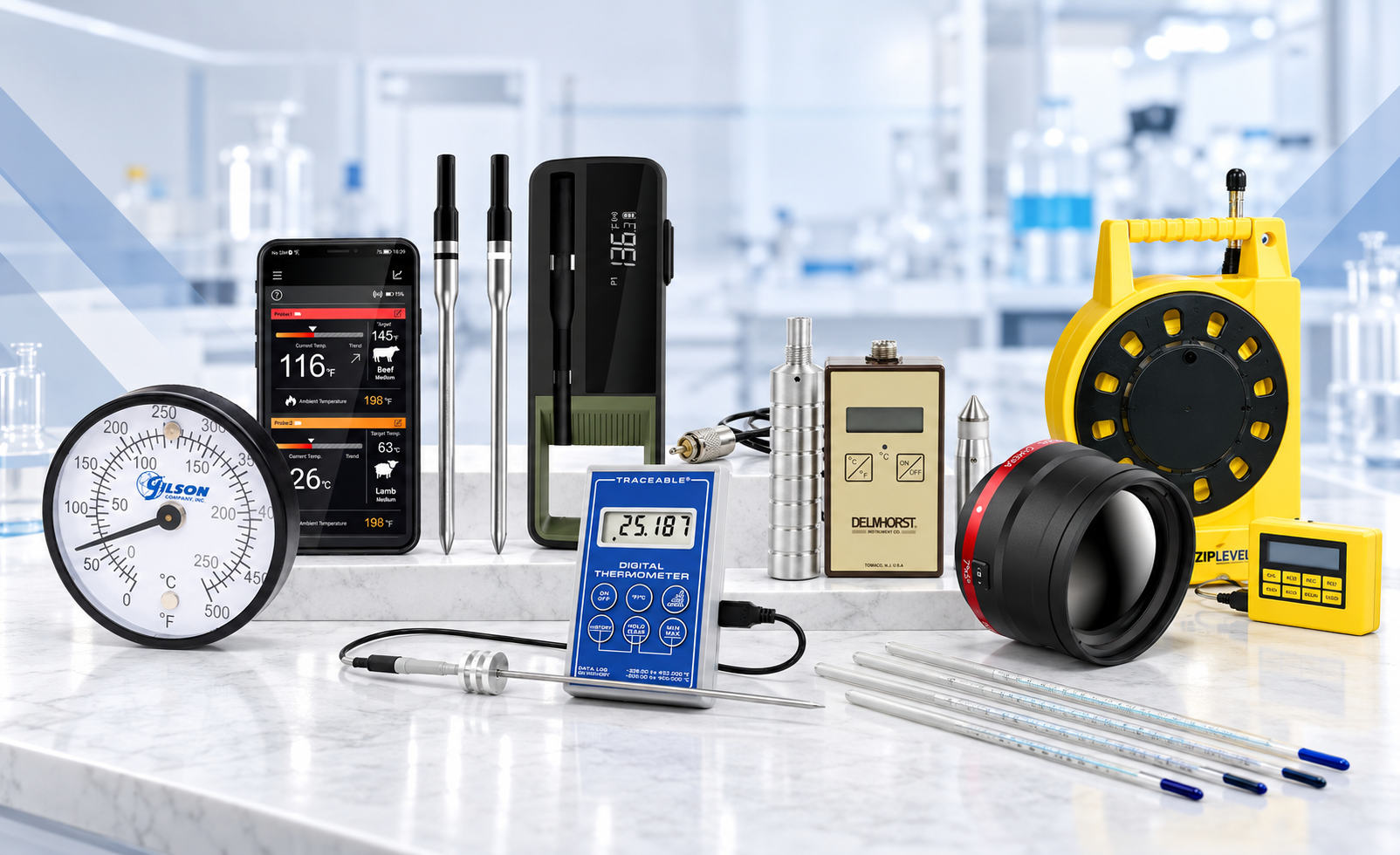
Laboratory Dial Thermometers for Lab and Field Testing
Select the Temperature Range and Scale
Choose a dial thermometer that covers the temperatures required by your procedure. Check whether its scale is Fahrenheit, Celsius or dual range, then compare the divisions with the readings you need to record. A small scale division does not establish the instrument's measurement accuracy.
For example, the −40 to 160°F pocket dial thermometer has a 5in stem, 1in dial and 2° divisions. Its listing specifies accuracy as a percentage of full range. Compare that basis carefully with models whose accuracy is stated in degrees or as a percentage of reading.
Match Stem Length and Sensing Position
Check the stem length, diameter and required insertion depth against the sample container or test arrangement. The length of the stem is not necessarily the length of its sensing region. Follow the selected model's instructions for insertion and positioning; a stem suitable for one vessel may not reach the measurement location in another.
Choose the dial size and viewing position so readings can be taken without moving the instrument from the required position. Verify any clip, fitting or mounting arrangement on the individual listing rather than assuming every dial thermometer includes the same hardware.
Distinguish Immersion from Surface Measurement
A stem thermometer and a contact-surface thermometer are not interchangeable simply because both have a dial. Select the sensing design for the measurement: a sample, liquid, air space or equipment surface. For direct-contact surface instruments, compare the surface thermometer range.
Use digital infrared thermometers when a non-contact surface reading is appropriate. They do not substitute for a measurement inside a material or liquid.
Choose Portable or Application-Specific Options
For instruments carried between sampling points, compare pocket thermometers by stem protection and case design. For hot-material work, review thermometers for asphalt testing and confirm the selected range, sensing arrangement and procedure requirements.
Where an electronic readout is preferred, compare digital laboratory thermometers. Select by accuracy, probe fit and operating conditions, not display style alone.
Confirm Calibration and Care Requirements
Check whether calibration documentation is supplied with the specific model and whether adjustment is permitted. An adjustment feature does not replace a documented verification check. Follow the manufacturer's instructions for cleaning, calibration checks and storage, and choose any thermometer accessories to fit the actual instrument.