How Soil Conditions Drive Foundation Failure: A Repair Contractor's Field Perspective
May 11, 2026
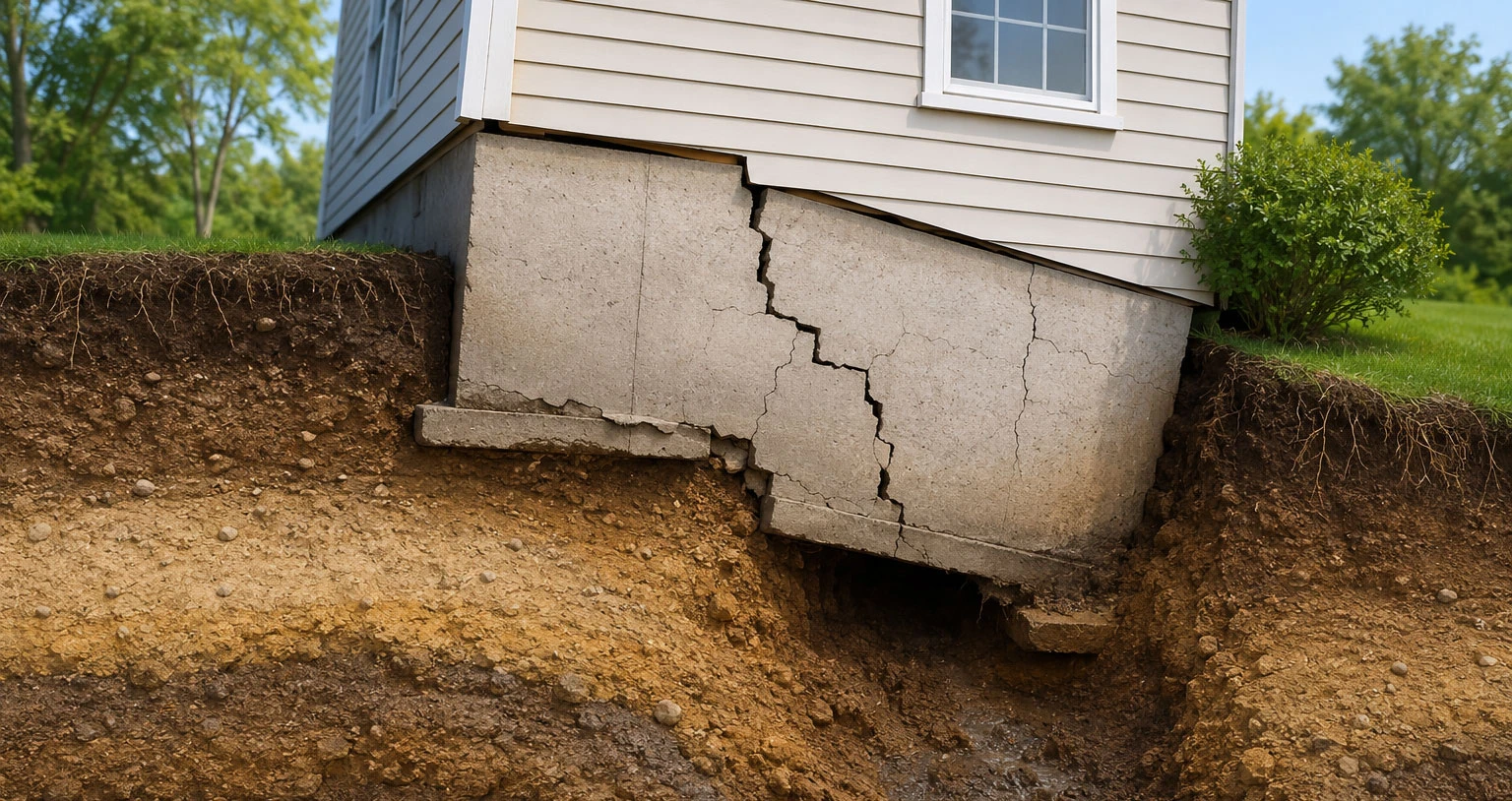
I've spent 15 years on the repair side of foundation work — diagnosing failures, stabilizing structures, and documenting what went wrong. And in nearly every case, the story starts underground, with soil behavior that was either underestimated, undertested, or misunderstood during the original construction.
My perspective is admittedly different from the lab. I see foundations after they've failed — after the soil has done its damage and the homeowner is standing in their living room wondering why their doors don't close anymore. But that field vantage point has given me a deep appreciation for what soil testing gets right, where the gaps are, and why the relationship between geotechnical data and real-world performance deserves more attention than it typically gets.
Plasticity Index and Liquid Limit: Where Foundation Trouble Begins
Every foundation contractor in expansive clay territory learns to respect the plasticity index. In the Tulsa metro area where I work, we're dealing with soils that routinely test at PI values of 30–50, with liquid limits exceeding 60. These numbers put our clays firmly in the CH classification under the Unified Soil Classification System — high-plasticity clays with significant swell-shrink potential.
What those numbers mean in the field is this: a soil with a PI of 40 and a liquid limit of 65 has a massive range of moisture content over which it will change volume. When that soil sits beneath a residential slab with 6 inches of gravel base and no post-tension reinforcement — which describes a significant percentage of Oklahoma homes built before the mid-2000s — you get differential movement. Not if. When.
The correlation between PI values and foundation distress is one of the most reliable patterns in my work. Homes built on soils with PI values above 35 account for the overwhelming majority of my repair projects. Below a PI of 20, foundation failures are comparatively rare — when they occur, they're almost always attributable to drainage failures, plumbing leaks, or compaction deficiencies rather than native soil behavior.
When Compaction Quality Meets Long-Term Reality
Here's where my field observations start to diverge from what I see in lab reports and construction documentation. Compaction testing during construction gives you a snapshot — a proctor density measurement at a specific moisture content on a specific day. It tells you that the fill met 95% of standard Proctor at the time of placement. What it doesn't tell you is how that fill will perform five years later after cycling through Oklahoma's seasonal moisture extremes.
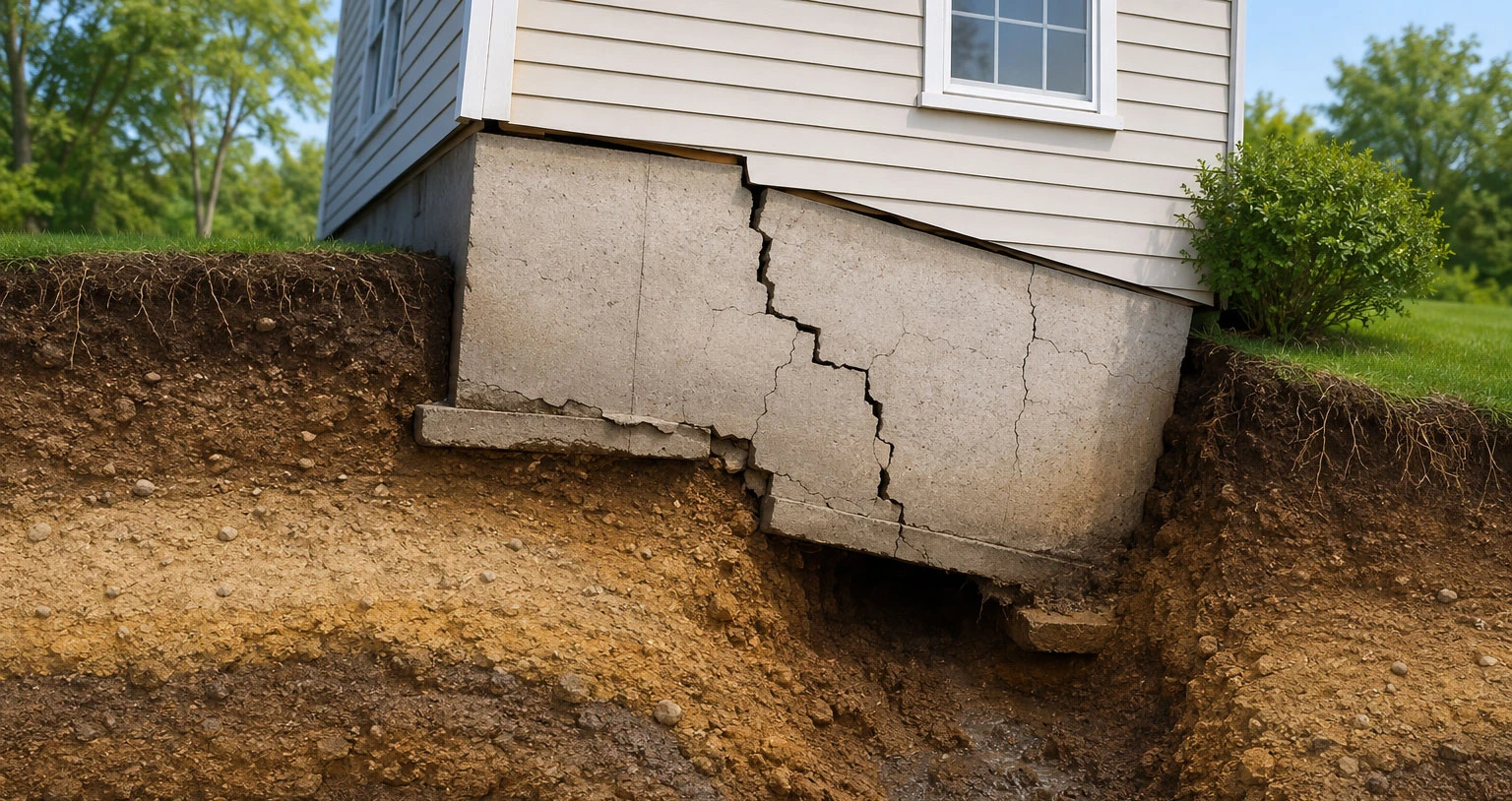
I've inspected homes where the original compaction reports were textbook — every lift met spec, optimum moisture was achieved, density testing passed. And yet the home developed significant differential settlement within seven years. When we excavated for pier installation, the answer was usually apparent: the fill had been placed during favorable moisture conditions, but the clay content of the fill itself was high enough that subsequent wetting and drying cycles essentially "reset" the compaction. The soil found a new equilibrium at a lower density, and the foundation settled into the resulting voids.
This isn't a criticism of the testing — it's an observation that compaction testing captures initial placement quality but doesn't fully account for the long-term volume change behavior of high-PI fill materials. In my experience, native clay soils that are left undisturbed often perform more predictably than engineered fill using the same clay material, because the native soil has already reached equilibrium over geologic time.
Seasonal Moisture Fluctuations: The Engine of Differential Settlement
In eastern Oklahoma, soil moisture content at the surface can swing by 15–20 percentage points between the spring wet season and late summer drought. That swing diminishes with depth, but its effects are concentrated exactly where residential foundations live — in the top 6–12 feet of the soil column.
The mechanism of differential settlement in this context is straightforward but worth articulating: the perimeter of a foundation is exposed to far more moisture fluctuation than the interior. Rainfall, irrigation, and evaporation all affect the perimeter zone first and most intensely. The center of a slab sits on soil that stays more consistently moist (or dry, depending on the season), creating a moisture gradient from perimeter to center.
This gradient produces what we call "edge lift" in wet periods (perimeter swells, center stays put) and "center lift" or more commonly "edge settlement" in dry periods (perimeter shrinks, center stays relatively stable). Over repeated cycles, the cumulative result is differential settlement — the foundation moves different amounts in different locations, and the structure above it cracks.
I measure this routinely with manometer surveys during foundation repair assessments. Elevation differentials of 1.5–2.5 inches across a 40-foot slab are common in homes exhibiting moderate to severe distress. I've documented differentials exceeding 4 inches in extreme cases — homes where settlement was allowed to progress for over a decade before intervention.
Case Studies: Where Testing Could Have Changed the Outcome
Case 1: New Subdivision on Reclassified Agricultural Land
A 2016-era subdivision in the south Tulsa corridor. Twelve homes built on former pastureland. The original geotechnical report included two borings for the entire development, both located near the entrance. Soils were classified as CL (low-plasticity clay) with a PI of 18.
By 2021, four homes on the south end of the development were showing significant distress. Our assessment revealed PI values of 38–42 in the soil directly beneath those homes. The boring locations had simply missed a high-plasticity clay deposit that extended through the southern lots.
We installed steel pier systems on all four homes, driving to a competent bearing stratum at 22–28 feet. Total repair costs exceeded $120,000 across the four properties. A more comprehensive soil investigation — additional borings, consistent sampling depth, and lab testing on every lot — might have cost $8,000–$12,000 total and would have flagged the issue before a single footing was poured.
Case 2: Compaction Pass, Foundation Fail
A custom home on a hillside lot in Jenks, built in 2013. Compaction reports showed 96% standard Proctor at optimum moisture across all fill lifts. The fill was 8 feet deep on the downhill side. By 2019, the downhill side had settled 2.3 inches relative to the uphill side, which sat on undisturbed native material.
The fill material was native clay with a PI of 34. It had been compacted properly, but the volume change potential of the material was never factored into the foundation design. A stiffer slab with post-tension reinforcement, or better yet, a deep foundation system bypassing the fill entirely, would have been appropriate for those soil conditions.
Bridging the Lab-to-Field Gap
My biggest takeaway from 15 years in the field is that the geotechnical data is almost always there — the challenge is getting it into the hands of the people who make design and construction decisions, in a format that translates to actionable choices.
A few observations I'd offer to the materials testing community:
- Plasticity index deserves headline status in residential geotech reports. It's the single most predictive metric for foundation performance in expansive clay regions, and it's often buried in the appendix.
- Boring density matters for residential sites. One or two borings per subdivision is insufficient when soil conditions can vary meaningfully over 50 feet. Per-lot sampling is ideal; per-phase sampling is a minimum.
- Long-term volume change potential should be explicitly addressed when high-PI fill materials are used. Standard compaction testing doesn't capture this risk, and builders rarely ask about it.
- Field conditions don't always align with lab predictions — and that's okay. Soil is heterogeneous, moisture is dynamic, and lab tests capture a moment in time. What matters is that the variability is acknowledged in the recommendations rather than simplified away.
The better the testing, the fewer foundations I have to repair. That's good for homeowners, good for builders, and ultimately good for the credibility of every professional involved in the construction chain. I'd rather see the investment go into prevention than come to me for the fix.