Field Testing vs Lab Testing in Construction
May 08, 2026
Every construction quality control program relies on two environments: the job site and the laboratory. While both serve the same ultimate goal, confirming that materials meet specification before they become part of a permanent structure, field testing and lab testing operate differently, measure different things, and serve different decision-making timelines. Understanding the distinction between the two, and knowing exactly when each approach is required, is one of the most practical skills a construction materials testing (CMT) professional can develop.
This guide breaks down the key differences between field testing and lab testing in construction, walks through which tests belong to which environment, and explains how the two work together to form a complete construction quality control program.
What Is Field Testing in Construction?
Field testing refers to any construction materials test performed directly on the job site, at the point of material placement, without transporting the sample to a controlled laboratory environment. The goal of field testing is speed and immediacy. When concrete arrives at a pour, when asphalt is being laid on a roadway, or when a soil subgrade is being compacted under a slab, a project cannot pause for several days while samples travel to a lab and results come back. Field tests provide real-time data that drives real-time decisions.
The most common field tests in construction cover three material types: soil, concrete, and asphalt, the three materials most affected by time-sensitive placement conditions.
Field Testing for Soil
Soil behaves differently depending on its moisture content, density, and the type of material being compacted. Field density test equipment including nuclear density gauges and sand cone apparatus is used to verify that the soil being placed and compacted in embankments, trenches, and subgrades has reached the required compaction level before the next lift is added. If compaction is inadequate, the next layer of soil or pavement added on top will eventually settle unevenly, causing costly structural problems down the road.
Penetrometers give technicians a fast read on soil bearing resistance in the field, while soil moisture testing equipment tracks the water content that directly controls whether adequate compaction is even achievable. Soil thermometers are also used on cold-weather projects where frozen ground conditions can invalidate compaction results entirely. For sampling subsurface conditions on-site, soil augers for sampling and CBR field test sets let technicians evaluate subgrade strength without waiting for borehole results from an off-site lab.
Field Testing for Concrete
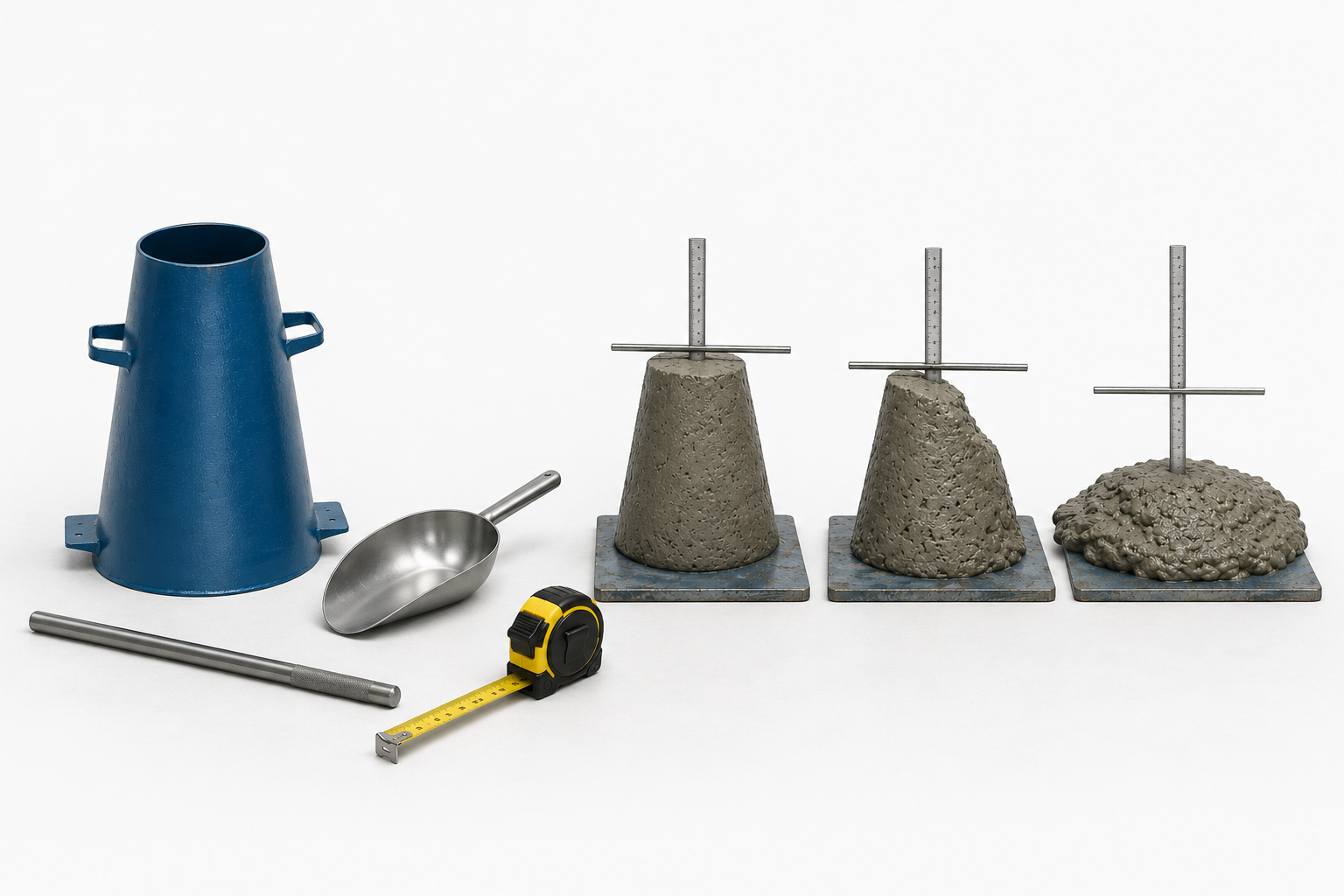
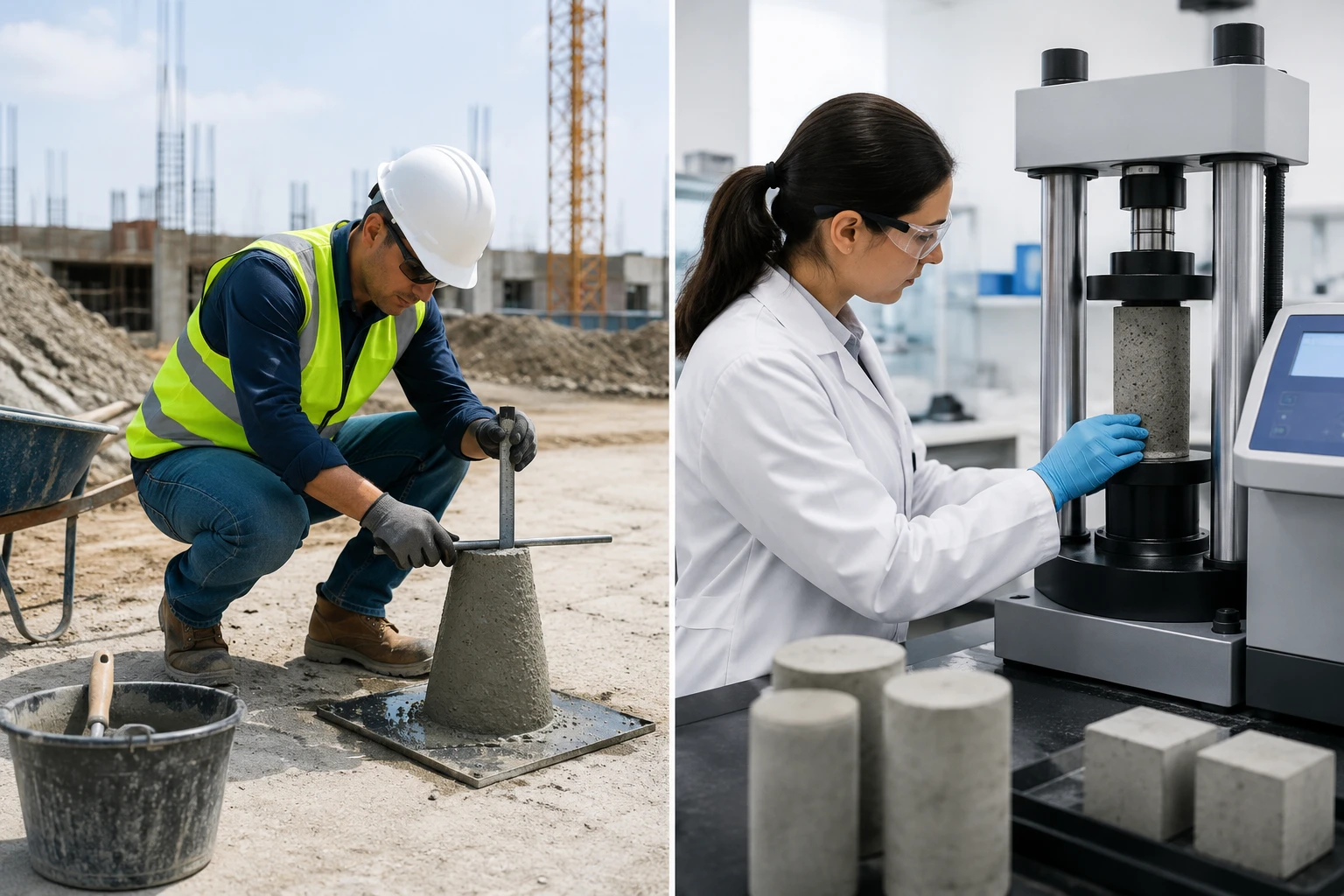
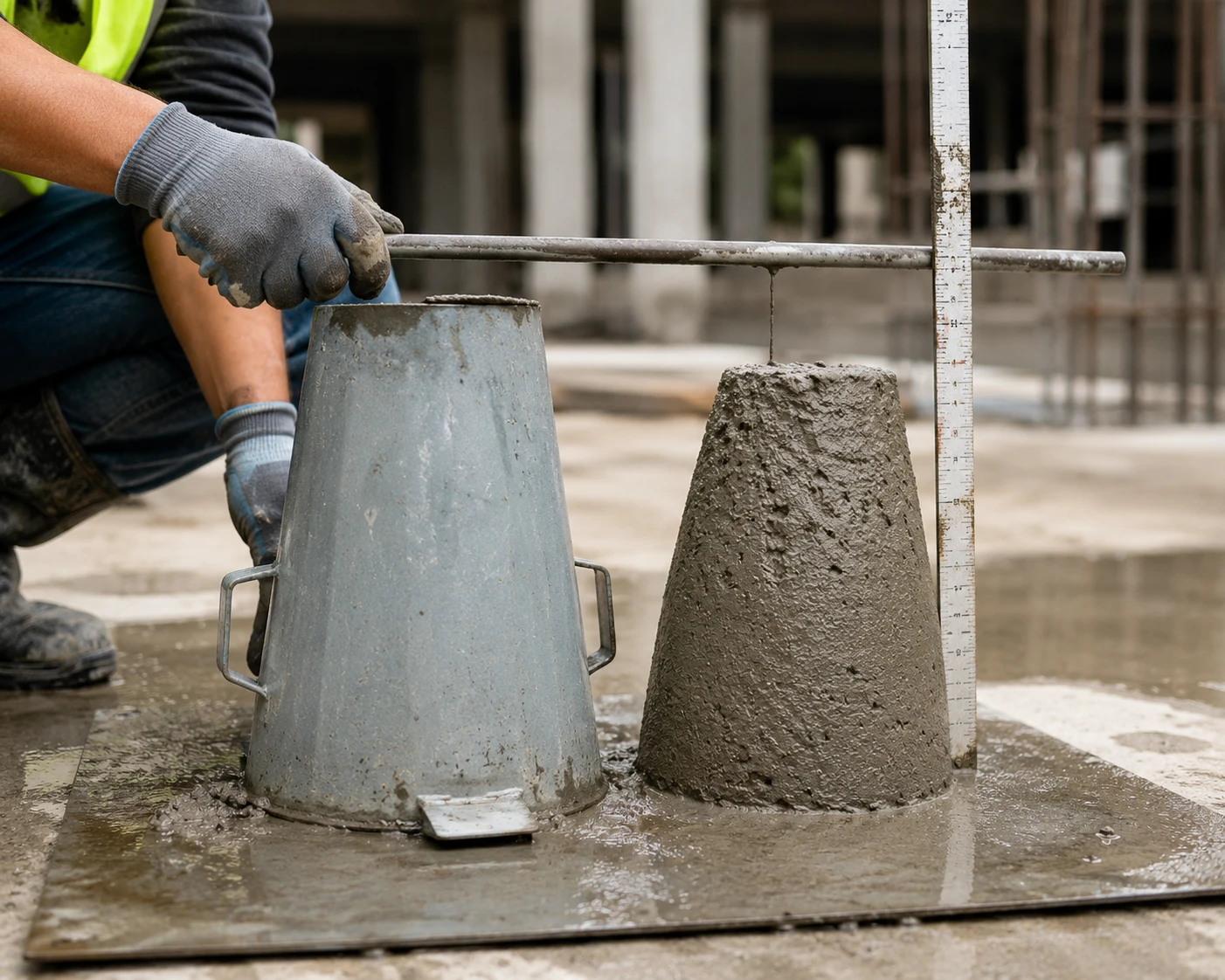
Fresh concrete begins losing workability the moment it leaves the batch plant, which makes field testing one of the most time-critical operations in any construction quality control program. The concrete slump test performed within minutes of truck discharge tells the technician whether the mix's water-to-cement ratio is within specification. Too much water reduces strength; too little makes the concrete unworkable and difficult to consolidate. Fresh concrete testing also includes measuring concrete air entrainment (critical for freeze-thaw resistance in cold climates) and performing the density test of concrete to catch mix design deviations before the pour goes any further.
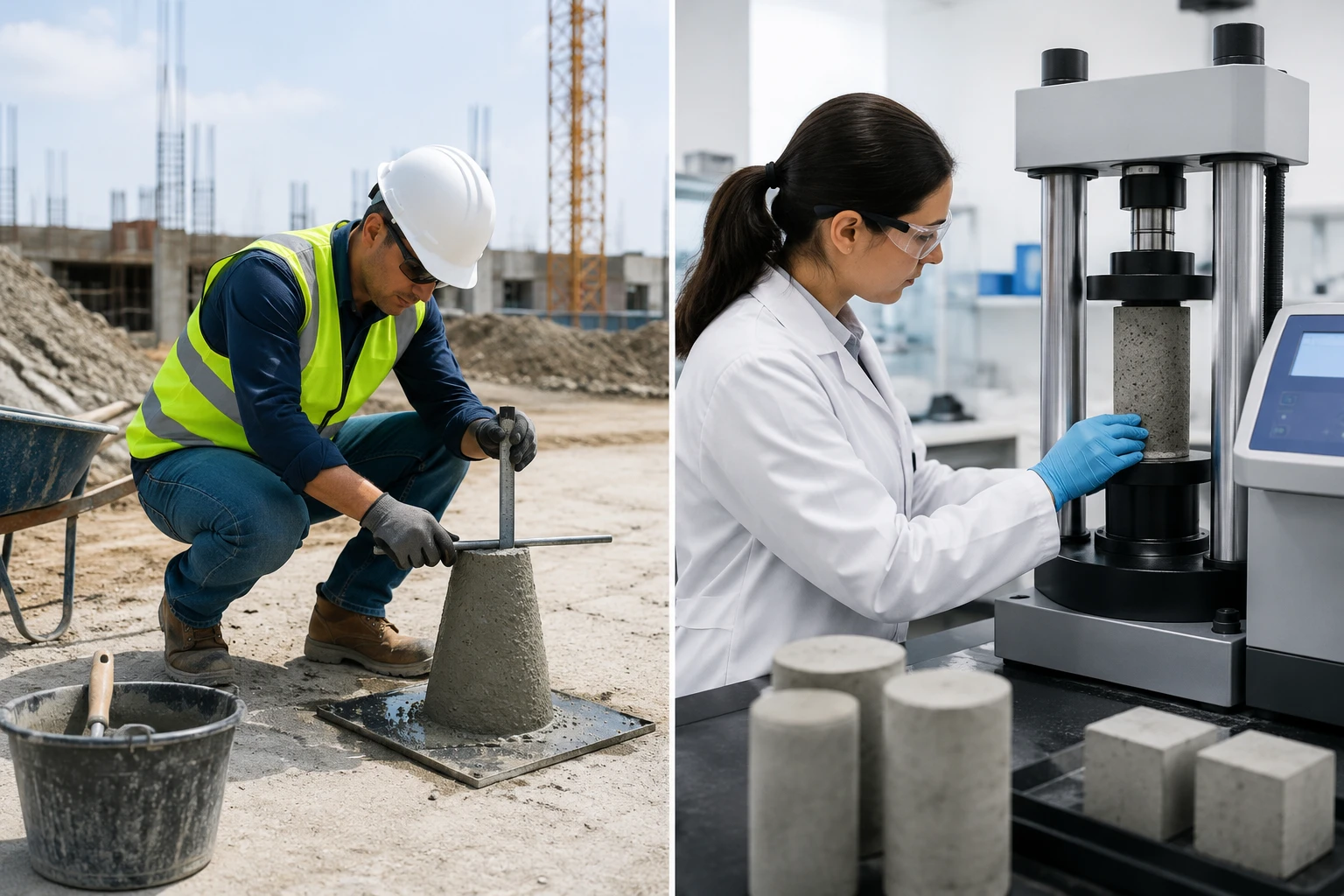
After these in-place checks are complete, the field technician also casts concrete test cylinders that will be transported to the lab for compressive strength testing at 7, 14, and 28 days. This is the clearest example of how field and lab testing are not competing approaches; they are sequential steps in the same process.
Field Testing for Asphalt
Pavement testing in the field focuses on what is happening at the mat as the paver moves forward. Thermometers for asphalt testing including digital infrared thermometers and digital pocket thermometers are used continuously to verify that the mix is being placed within the allowable temperature window. Mix that is too cold won't compact to the required density; mix that is overheated risks binder degradation. Asphalt core drill and bits are used after compaction to pull pavement cores for lab verification of density and thickness. Permeability test equipment may also be deployed in the field to assess how well the compacted surface drains.
What Is Lab Testing in Construction?
Lab testing takes place in a controlled environment where temperature, humidity, specimen preparation, and measurement conditions can be precisely managed. Lab tests generally take longer to complete than field tests, but they produce data with a higher degree of accuracy and repeatability which is why they are the basis for most material acceptance decisions in construction contracts.
Lab Testing for Soil
Samples collected in the field using soil augers or tube samplers are brought back to the lab for detailed characterization. The Atterberg limits test determines a soil's liquid limit, plastic limit, and plasticity index properties used to classify the soil and predict its long-term behavior under load. The automatic soil compactor machine runs Proctor compaction tests that establish the target density field crews are working toward. Triaxial test equipment for soil strength and soil permeameters reveal how the soil performs under shear stress and how quickly water moves through it data that cannot be reliably gathered on a busy job site. Specific gravity of soil tests and soil pH testers complete the picture for lab-based soil classification.
Lab Testing for Concrete and Cement
The concrete compressive strength testing machine is the centerpiece of any concrete lab. Cylinders cast in the field are broken at specified ages to verify that the mix has achieved its design strength. The flexural beam test measures tensile strength for pavement and slab applications, while concrete strength measurement tools like rebound hammers support non-destructive concrete testing for existing structures. Proper concrete curing in a temperature- and humidity-controlled environment is essential between casting and breaking inconsistent curing conditions are among the most common sources of misleading strength results.
On the cement side, Vicat test equipment, the cement Blaine air permeability apparatus, and cube molds for cement tests require the steady conditions of a dedicated lab to produce results that meet ASTM and AASHTO precision requirements. Mortar testing and grout testing follow the same logic: the controlled lab environment eliminates the variability that would corrupt results if these tests were attempted on a job site.
Lab Testing for Asphalt and Aggregate
Asphalt extraction machine tests recover binder from compacted samples to verify that the binder content in the placed mix matches the approved design. Asphalt Rice testing determines theoretical maximum specific gravity, a lab-only measurement that requires vacuum equipment and precise temperature control unavailable in the field. Asphalt viscosity test equipment, asphalt ductility tests, and penetration tests for asphalt all characterize the binder under controlled lab conditions that replicate service temperature ranges.
Aggregate gradation analysis performed with ASTM test sieves, a sieve machine, and sample splitters and dividers is always a lab operation. Specific gravity apparatus test equipment and aggregate moisture probes also require the controlled weighing environment of a lab to meet ASTM accuracy requirements.
The Role of Precision Support Equipment in Both Environments
Both field and lab testing depend on accurate weighing, temperature monitoring, and drying just scaled to their respective environments. In the lab, bench scales and lab mechanical balances from manufacturers like Ohaus, Adam Equipment, and Radwag deliver the precision needed for moisture content and gradation analysis. In the field, field scales and mobile scales for material testing bring sufficient accuracy to job site sampling operations without requiring a full lab setup. Balance calibration weights keep both types of scales traceable and audit-ready.
For drying, lab ovens and benchtop convection ovens handle the steady, high-volume drying demanded by a busy testing program, while economy muffle furnaces take on ignition testing for asphalt binder content. Temperature monitoring bridges both environments: data loggers and digital temperature recorders track curing room conditions in the lab, while surface thermometers and thermocouple probes monitor mix temperatures on the job site. Thermal imaging cameras add a powerful non-destructive inspection dimension to field work, revealing moisture infiltration, heat loss, and subsurface conditions invisible to the naked eye.
Field and Lab Testing: Better Together
The most effective construction quality control programs treat field testing and lab testing as a continuous loop, not isolated operations. Field tests catch placement problems the moment they occur. Lab tests confirm that the materials placed in the field will perform as designed over the structure's service life. Neither is sufficient alone a lab that only tests materials in isolation from job site conditions misses placement variables, while a field program that never backs up its findings with controlled lab data lacks the depth to defend its conclusions when disputes arise.
Whether you're equipping a new testing lab, upgrading your field kit, or sourcing ASTM- and AASHTO-compliant equipment for a specific project, explore Certified MTP's full range of soil testing equipment, concrete testing equipment, asphalt testing equipment, aggregate testing equipment, lab scales and balances, industrial ovens and furnaces, and thermometers everything needed to run a world-class testing program, in the lab or in the field.
Questions about which testing approach is right for your project? Contact the Certified MTP team and let our equipment specialists help you build the right setup for your scope of work.