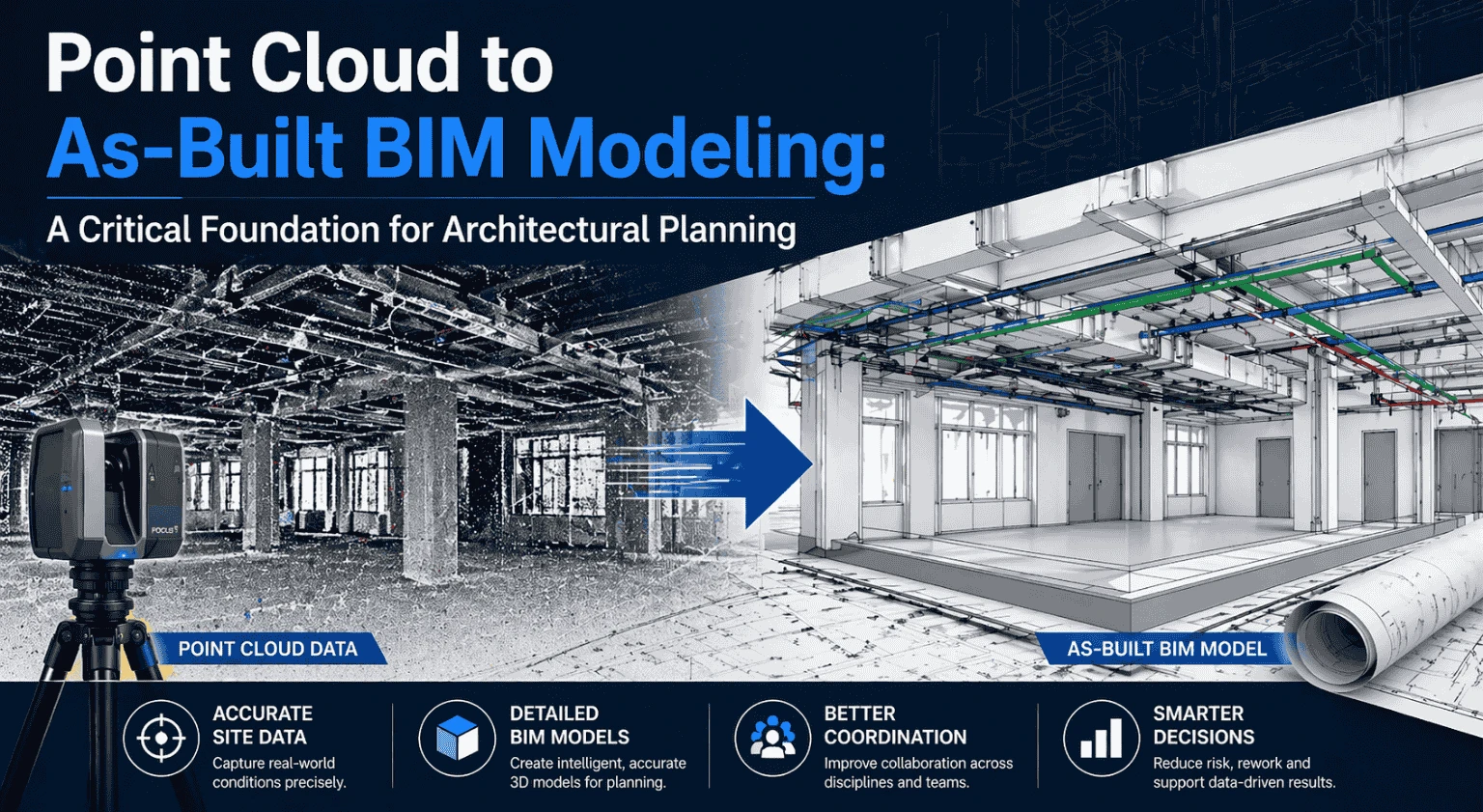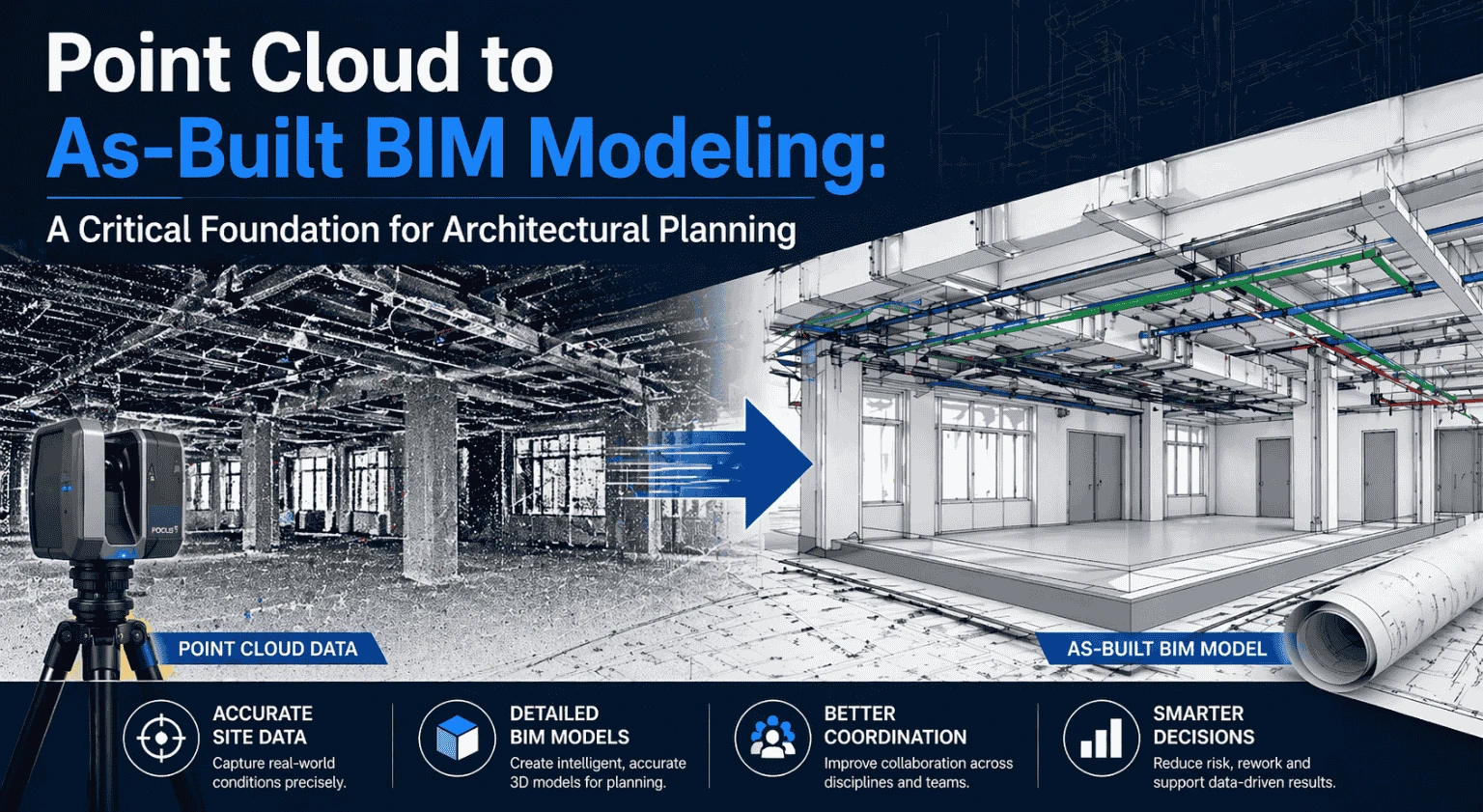
Point Cloud to As-Built BIM Modeling: A Critical Foundation for Architectural Planning
Apr 24, 2026
1. The Real Problem in Architectural Planning
Most architectural challenges do not begin on site, but they begin with the information teams trust too easily. Across many projects, base drawings appear reliable but often reflect design intent rather than actual conditions. Over time, buildings evolve. MEP Services get rerouted, walls are shifted, structural adjustments are made yet these changes rarely make it back into documentation. The gap between 2d CAD drawings and reality quietly grows, and planning starts on ova foundation that is already compromised.
2D Technical drafting introduces another layer of risk:
- Even minor scale or dimension inconsistencies can result in misaligned elements or wasted materials
- Poor visual hierarchy that includes unclear line weights and inconsistent symbols makes drawings harder to interpret, especially when multiple teams are involved
- Clashes between architectural, structural, and MEP elements often remain hidden until construction begins
This is where the breakdown happens; field assumptions, missing details, and last-minute decisions that lead to major delays and cost overruns. The real problem in architectural planning is not designing capability; it is the reliability of the base data.
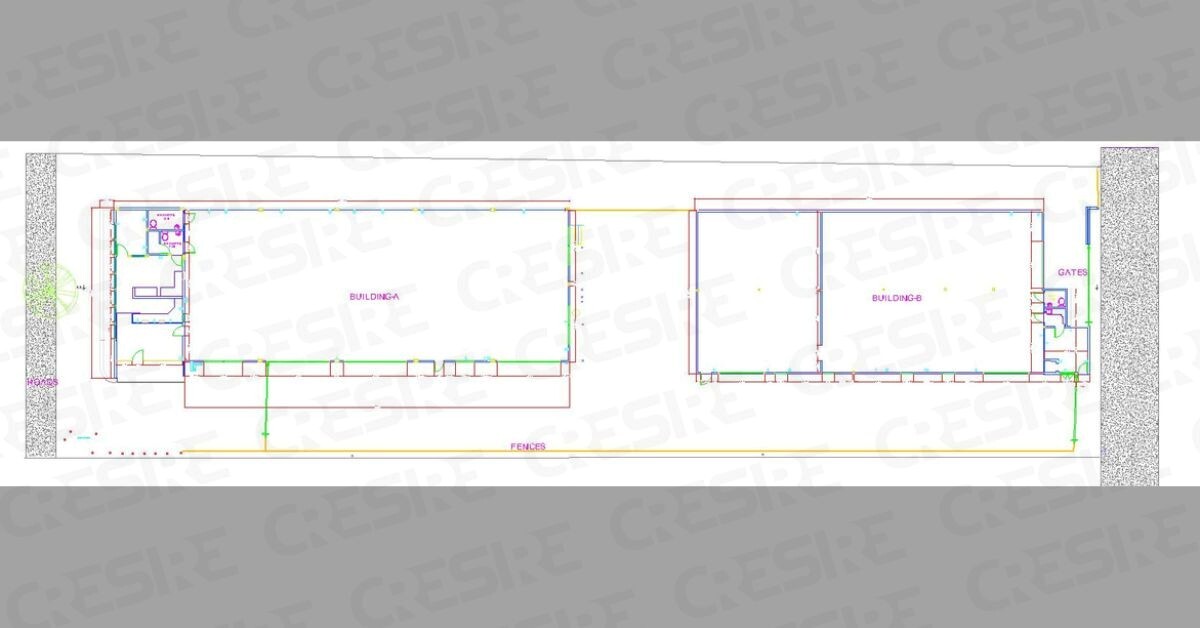
2. Why Point Cloud As-Built BIM Modeling Becomes the Foundation?
This is where point cloud to as-built BIM modeling fundamentally changes the way architectural planning is approached.
Instead of relying on fragmented or outdated information, point cloud to Revit modeling establishes a site-derived, accurate base condition. Laser scanning captures the entire environment in a single coordinated dataset. There are no selective measurements or assumed areas because everything is recorded together, eliminating gaps that traditionally exist between surveyed and interpreted data.
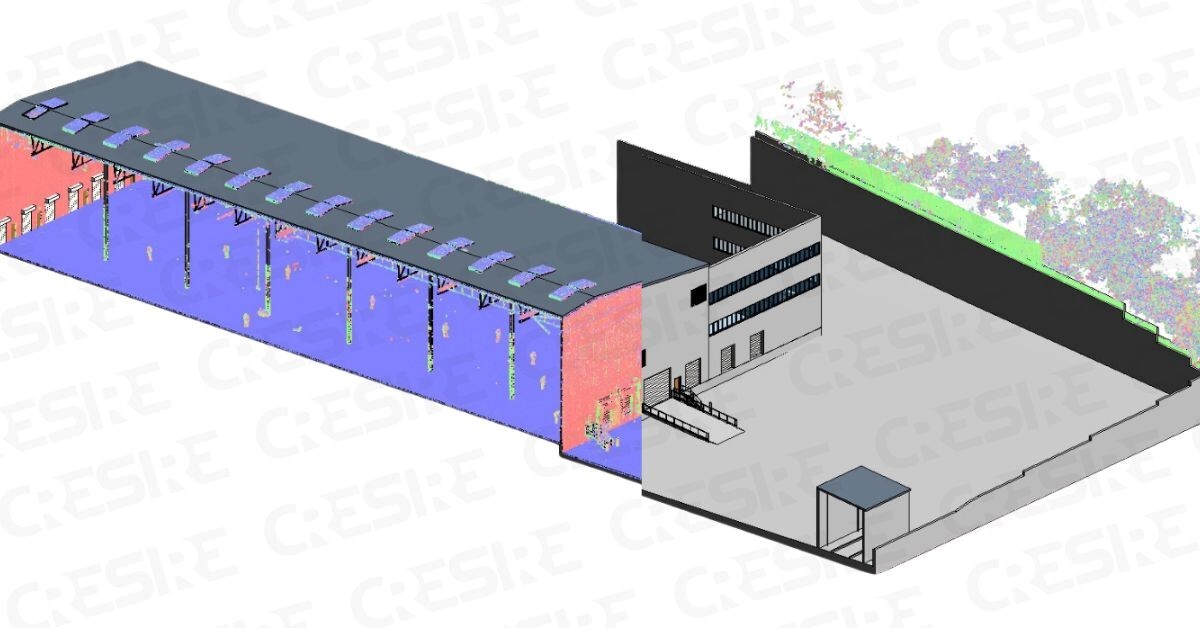
- Through point cloud data to 3d conversion, the result is not just geometry but a coordinated BIM model in which architectural, structural, and MEP elements exist within the same spatial environment. This removes the fragmentation that often exists in conventional documentation.
- Most significantly, the use of point cloud technology in creating BIM models from as-built conditions shows actual conditions. In case there are any problems with misaligned walls, sagging floors, or even off-design structural features, they can be seen in the scanned information.
This has a clear impact on architectural decision-making.
- With point cloud to as-built BIM modeling, design shifts from assumption-based to evidence-driven.
- Architects are no longer estimating conditions, they are working within real constraints.
- Spatial relationships are understood directly, rather than interpreted through drawings. This reduces dependency on repeated site visits and allows early validation of design intent.
- Tolerance also becomes a controlled parameter. Instead of discovering challenges during construction, point cloud to as-built BIM modelingbrings existing site conditions into the design state as measurable inputs.
- Point cloud to BIM enables precise alignment between new and existing elements. This enables critical junctions such as façade interfaces or service penetrations to be checked and resolved before construction begins.
- Since point clouds are taken as the basis for creating the as-built BIM model, all disciplines start out with a common reference model, thus minimizing misunderstandings.
- The clashes that could easily go unnoticed in 2D are caught at an earlier stage when it still makes sense to deal with them.
Over time, this approach leads to a more predictable workflow. Coordination becomes proactive rather than reactive. On-site decisions are reduced because most issues have already been resolved digitally. In this sense, point cloud to as-built BIM modeling is not just a process step but it is the foundation that supports accurate design, efficient coordination, and reliable execution.
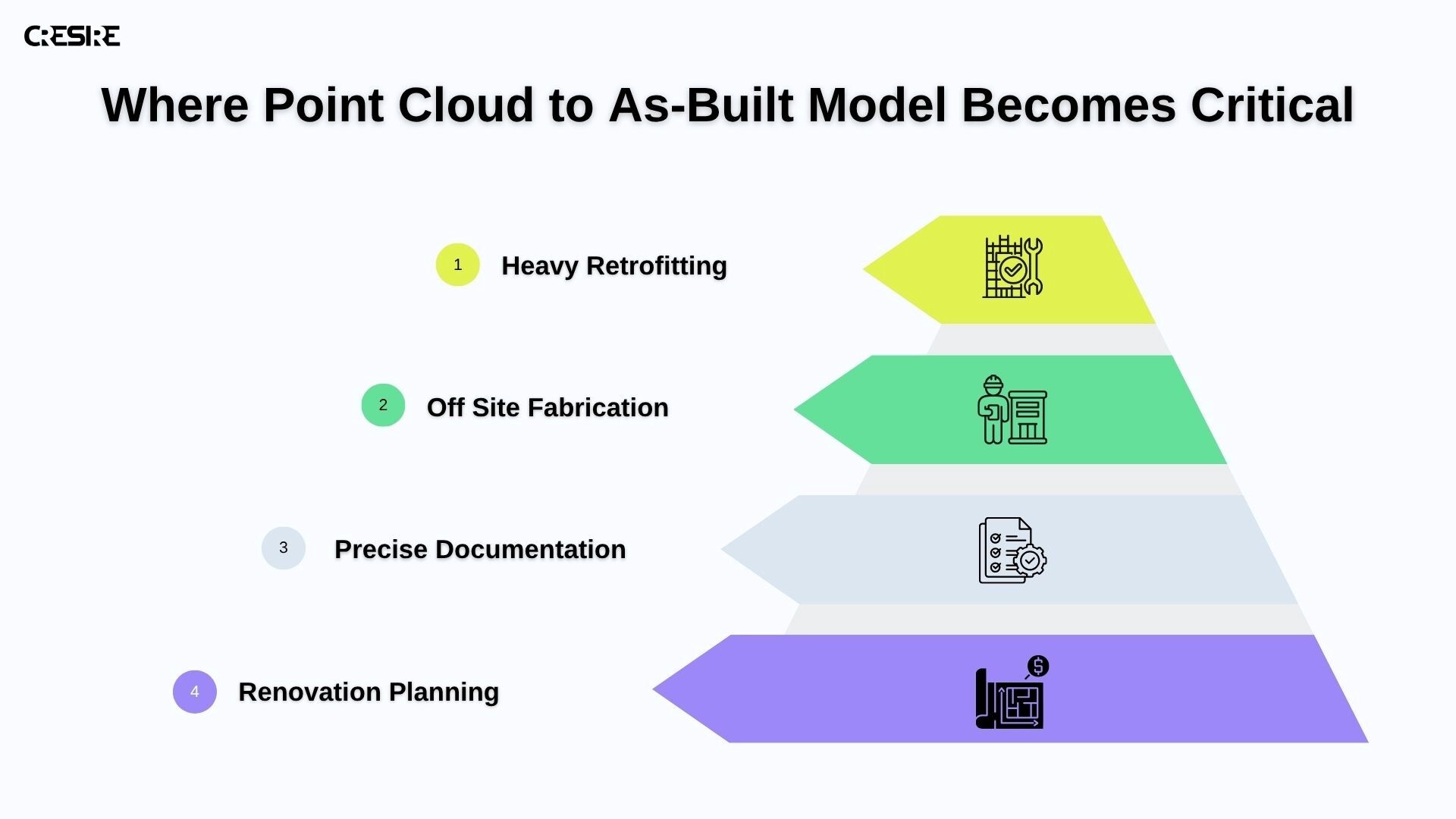
3. Where Point Cloud to As-Built Model Becomes Critical
The value of point cloud to as-built BIM modeling becomes most evident in projects where uncertainty is highest. In renovation and adaptive reuse projects, buildings often carry multiple undocumented changes. Without accurate mapping of existing conditions, design decisions are based on assumptions, increasing the risk of rework.
- For heavy retrofitting service in service installations, cloud point to as-built BIM modeling guarantees that there will be no conflicts among the systems (in particular when there is tight spacing in the ceiling void, accuracy becomes critical).
- By converting the point cloud data into relevant information, it is easy to undertake the assessment of the structure to determine those parts that have moved from their original position, such as columns that are not perpendicular anymore and slabs that have bent.
- Off-site fabrication requires absolute precision. The prefabricated units have to match the site’s requirements perfectly. Creating a 3D model from a scan allows for perfect fitting without any alteration required on-site.
- This principle also holds true for projects where space is limited, the schedule is fast-tracked, and there are multiple parties involved. Using the BIM model reduces confusion and eliminates redundant measurements.
- As regards heritage projects, point cloud to as-built BIM model creation allows for the accurate documentation of complex geometries without having to touch the building structure at all.
Create a poster with these details 1) heavy retrofitting 2) off site fabrication 3) Precise Documentation 4) Renovation planning
4. Technical Backbone (Without Over-Explaining)
The workflow behind point cloud to as-built BIM modeling is structured but efficient.
Laser scanning captures the site as a dense point cloud dataset. This data is then processed; aligned, cleaned, and optimized through point cloud data conversion workflows. Point cloud to 3d modeling helps surveyors save time and cut costs.
From there, it is used as a reference to build a point cloud to Revit model or other BIM outputs. It is not necessary for every point to be captured; however, the geometry needs to be interpreted correctly and modeled precisely and practically.
Regardless of whether the end result is a BIM model or a scanned-to-3D model, the focus is on accuracy and organization.
5. Common Failure Points (Brief but Sharp)
Even with the advantages of point cloud to as-built BIM modeling, certain challenges can reduce its effectiveness.
- Poor scanning planning often leads to incomplete datasets, leaving gaps that later require assumptions.
- Wrong LOD selection can lead to unnecessary detail or missing information
- Skipping QA/QC of model against point cloud data leads to inaccuracies
- Point clouds require careful analysis, treating noise as geometry or ignoring deviations can compromise accuracy.
6. Closing Insight
Architectural planning depends on the reliability of its starting point.
When base information is uncertain, every stage that follows design, coordination, and construction absorbs that uncertainty. The result is rework, delays, and inefficiencies that could have been avoided. Point cloud to as-built BIM modeling addresses this at its core.
By removing fragmented documentation with a unified and precise representation of site, point cloud to bim allows architects and engineers to work with confidence. The critical design decisions are made within real constraints. Moreover, coordination amongst project stakeholders becomes clearer, and execution becomes more predictable.
As projects continue to grow in complexity and timelines tighten, point cloud to as built modeling is no longer optional. It is the foundation that enables precise, coordinated, and buildable outcomes across modern construction workflows.