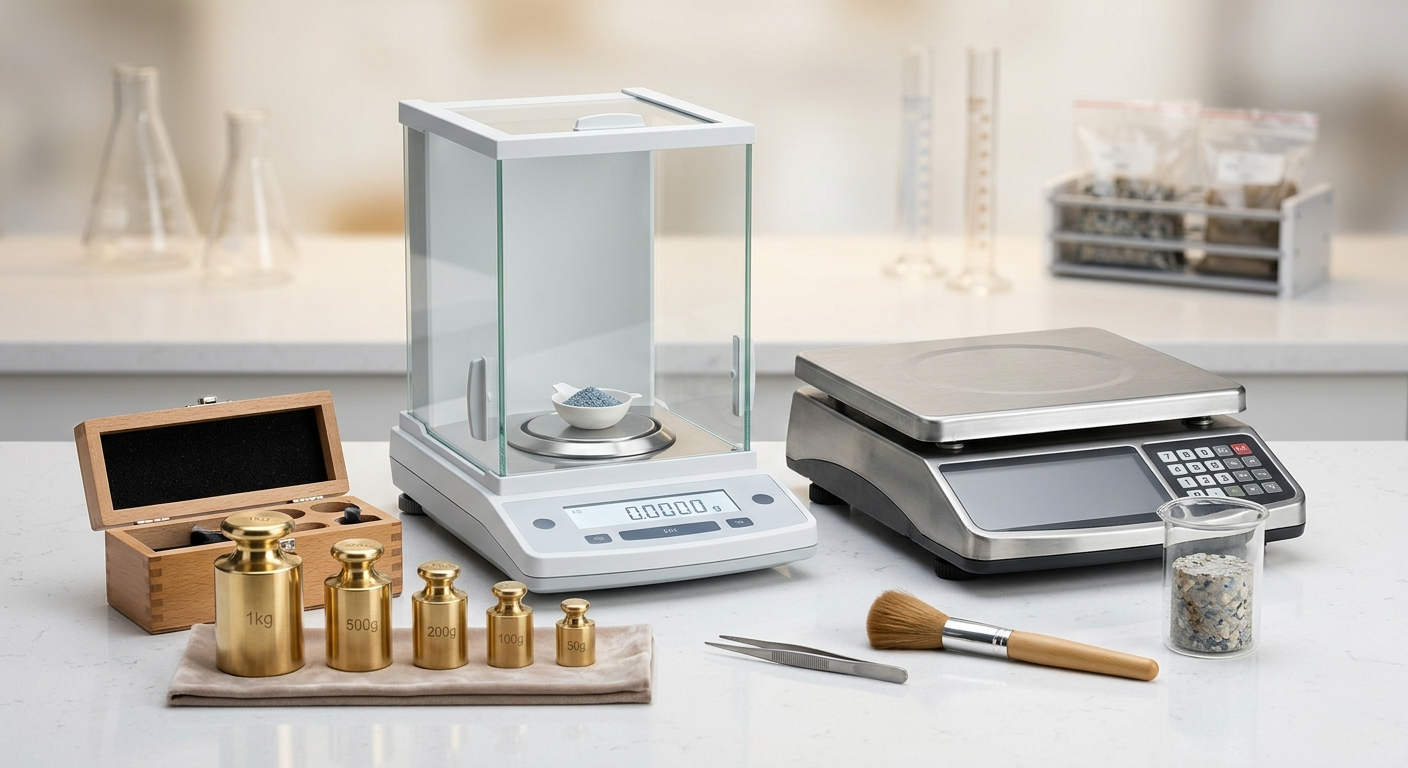
Choosing Lab Balances & Scales for Material Testing
Jun 08, 2026
In scientific research, quality control, and material testing, accuracy is not just a goal, it is a baseline requirement. Whether you are analyzing soil mechanics, verifying asphalt design mixtures, or measuring chemical reagents in a pharmaceutical laboratory, your outcomes depend entirely on the reliability of your initial measurements. At the heart of this accuracy lies the laboratory balance. While a scale might seem like a straightforward piece of equipment, selecting the right one and keeping it properly calibrated requires a deep understanding of weighing technology, environmental variables, and structural design.
The terms "scale" and "balance" are often used interchangeably in casual conversation, but they represent different mechanisms and levels of precision in technical environments. Selecting the appropriate tool involves evaluating the specific needs of your application, understanding how environmental factors threaten measurement integrity, and committing to a rigorous calibration routine.
Understanding the Technology: Balances vs. Scales
To make an informed choice for your laboratory or testing facility, it is essential to distinguish between the core technologies that power these instruments from dedicated suppliers. The fundamental difference lies in how they determine mass or weight.
Precision Balances and Analytical Balances
Laboratory balances generally measure mass rather than weight. They utilize an electromagnetic force restoration system, where an internal electromagnet counteracts the downward force applied by the load on the pan. Because they measure the electrical current needed to balance this force, they are incredibly precise and less susceptible to localized variations in the earth's gravity.
- Analytical Balances: These instruments are designed for the highest level of precision, typically measuring small masses in the sub-milligram range (often down to 0.1 mg or 0.0001 g). Because they are incredibly sensitive, they are universally equipped with transparent draft shields. These enclosures prevent ambient air currents from shifting the pan and destabilizing the reading. To see highly sensitive laboratory solutions, you can explore the collection of analytical balances.
- Precision Balances: While less sensitive than analytical models, precision balances handle much heavier maximum load capacities while still offering small increments of readability (typically 0.1 g to 0.001 g). They are the workhorses of material testing labs, where high-volume measurements require consistent accuracy across diverse sample sizes. You can check out robust options via the precision balances category.
Industrial and Digital Scales
Scales, on the other hand, measure the gravitational force exerted on an object. Modern digital scales rely on electronic load cells. A load cell functions by measuring the minute structural deformation of an internal strain gauge or elastic component under a load. This physical deformation is converted into an electrical signal, which the scale’s internal microprocessor translates into a digital weight reading.
Instruments like heavy-duty benches and rugged ground systems utilize this technology to provide high durability and high capacity. They are perfectly suited for heavier, bulkier items—such as aggregates, concrete test cylinders, or asphalt core samples—where structural toughness is required alongside reliable readout resolution. For versatile applications, look over the selection of bench scales and heavy-duty floor scales.
Key Factors to Consider When Selecting Your Equipment
Investing in a balance or scale requires matching the equipment's specifications to your daily testing requirements. Over-specifying can lead to unnecessary costs and fragile setups, while under-specifying will compromise your data integrity.
1. Readability vs. Maximum Capacity
The most critical balancing act is determining the maximum load capacity you need versus the readability (the smallest increment the instrument can display). High-capacity scales used on construction sites can handle dozens of kilograms but may only read down to the nearest gram or half-gram. Conversely, a specialized laboratory balance provides extreme readability but will fail or sustain permanent damage if overloaded. Always ensure your largest sample, plus its container or tared glassware, sits comfortably below the scale's maximum capacity while still achieving the required decimal-place precision. For outdoor work or mixed laboratory settings, choosing the right tool from a list of versatile laboratory scales is critical.
2. Environmental Resilience and Housing
The environment where you weigh matters as much as what you weigh. In a controlled laboratory setting, delicate electronic balances thrive. However, if your testing occurs near an industrial furnace, an asphalt mixer, or out in the field during a geological survey, you need rugged solutions. Look for units featuring overload protection to safeguard the internal load cells from accidental drops. Furthermore, equipment constructed with a durable stainless steel pan or painted mild steel housing resists corrosion from chemical exposure and withstands the abrasive nature of soils and concrete. If your work relies on mobile infrastructure or construction site deployments, consider browsing through field scales.
3. Specialized Material Testing Functions
Modern weighing equipment does far more than provide a single weight reading. Depending on your material testing discipline, specific integrated features can drastically streamline your workflow:
- Moisture Analyzers: For quality control in industries ranging from food processing to soil mechanics, advanced thermogravimetric equipment combines a precision balance with an integrated heating element. By weighing a sample continuously while drying it, the unit automatically calculates the exact moisture content percentage through loss-on-drying evaluation. Check out specialized moisture analyzers to view these integrated systems.
- Specific Gravity Weighing: Determining the density of liquids and solids requires comparing the weight of a sample in the air to its weight when suspended in water. Advanced laboratory setups utilize specific gravity apparatus hooks to automate these calculations, which are critical for characterizing aggregates and asphalt paving mixtures.
Top Brands in the Material Testing Industry
When sourcing equipment, choosing a reliable manufacturer ensures longevity, readily available replacement parts, and compliance with industry standards. Several brands lead the market in engineering robust weighing instruments:
- OHAUS Scales: Known for a legacy of durability and ease of use, these units bridge the gap between educational classrooms and heavy-duty industrial laboratories. Their catalog spans everything from classic mechanical triple-beam balances to elite digital analytical systems. You can browse the complete lineup of Ohaus scales.
- A&D Weighing Scales: Pioneers in precision, these tools utilize advanced digital processing and force restoration technologies. They excel in high-resolution readouts and offer extensive connectivity options for seamless data logging. View the full inventory of A&D weighing scales.
- Adam Equipment Scales: Balancing affordability with industrial toughness, these systems are widely utilized for field testing, benchtop manufacturing operations, and heavy-duty industrial weighing. Take a look at the array of Adam equipment scales.
- Radwag Scales & Velab Balances: For specialized applications requiring ultra-advanced interfaces, complex data storage, or unique environmental protections, you can explore specialized alternatives by reading about high-performance Radwag scales or specialized Velab balances and scales.
Maintenance and Calibration: Preserving Data Integrity
Purchasing a premium balance is only the first step; maintaining its accuracy over time is where the real work begins. Because scales are sensitive to changes in temperature, static electricity, mechanical vibration, and local gravitational variances, they require regular calibration.
Calibration is the process of comparing a reading from your balance against a certified, known standard weight. Many high-end digital balances feature internal calibration, using a motorized internal weight to adjust the instrument automatically. However, for strict compliance with ASTM, AASHTO, or ISO quality standards, external calibration using certified calibration masses is mandatory.
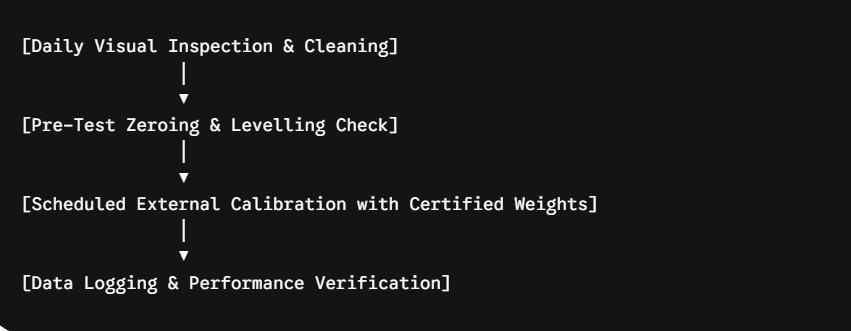
To optimize the lifespan and performance of your weighing instruments, implement a daily maintenance checklist. Ensure the balance is perfectly level using its integrated spirit bubble indicator, as an unlevel scale introduces severe cosine errors into your data. Clean the weighing pan immediately after every test to prevent cross-contamination and dust accumulation inside the mechanical housing. To maintain your traceability records, evaluate the inventory of certified calibration weights needed for your testing parameters. By combining high-quality instruments with diligent upkeep, your testing facility guarantees rock-solid, repeatable results every single time.