The Importance of Asphalt Density Testing in Durable Pavement Construction
Jul 15, 2026
Some roads shrug off years of heavy traffic, harsh weather, and constant loading. Others crack, rut, and crumble within a season or two. What separates a pavement that lasts from one that fails early? More often than not, the answer comes down to density.
Density measures how tightly an asphalt mixture packs together once crews finish compaction. Get that number right, and a road gains strength, flexibility, and resistance to water. Miss it, and even premium materials struggle to perform. Because so much rides on this single property, density testing has become one of the most valuable steps in modern pavement work.
Let us walk through why density matters, how professionals measure it, and what a solid testing routine looks like on site.
What Asphalt Density Really Means
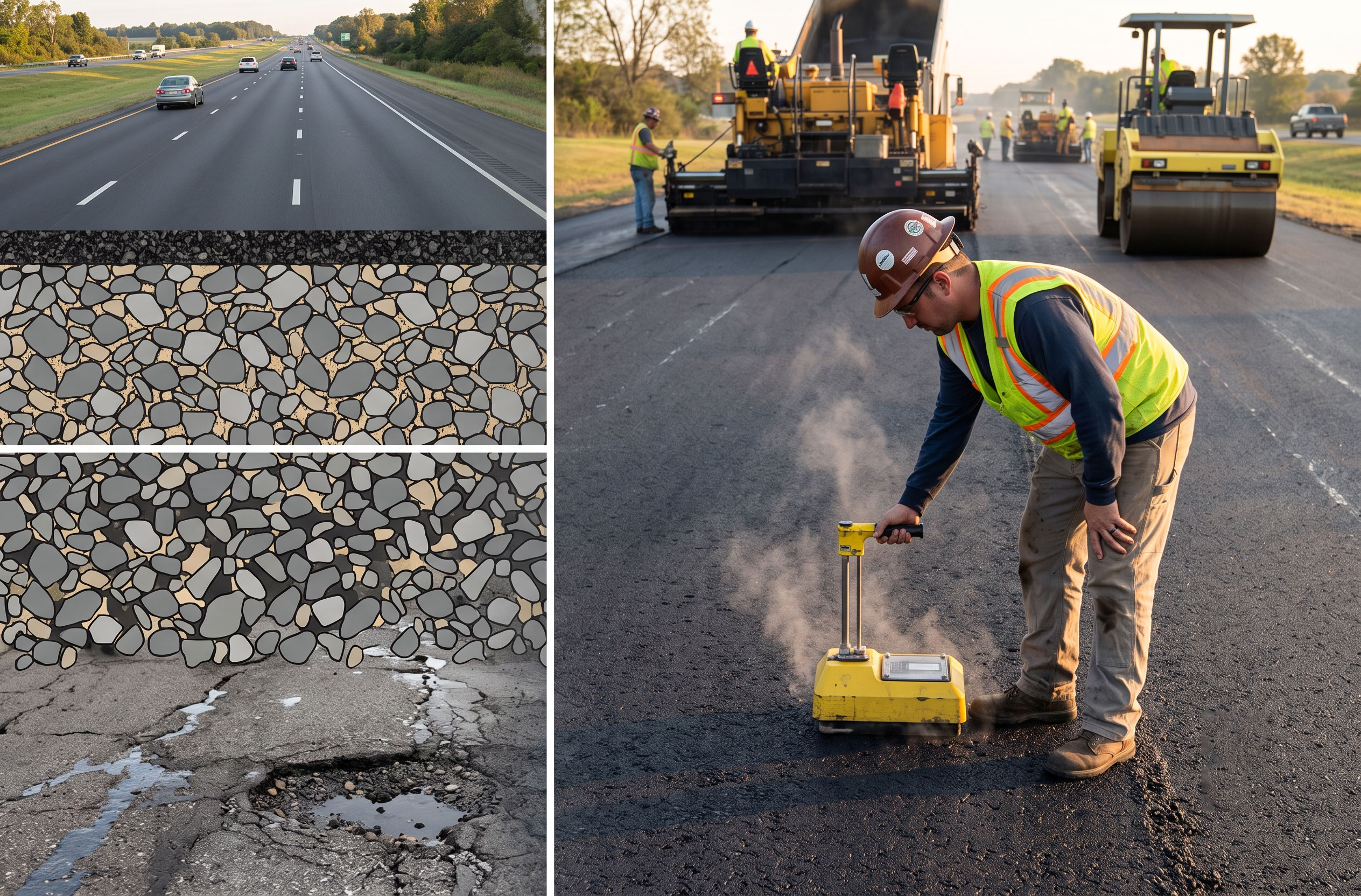
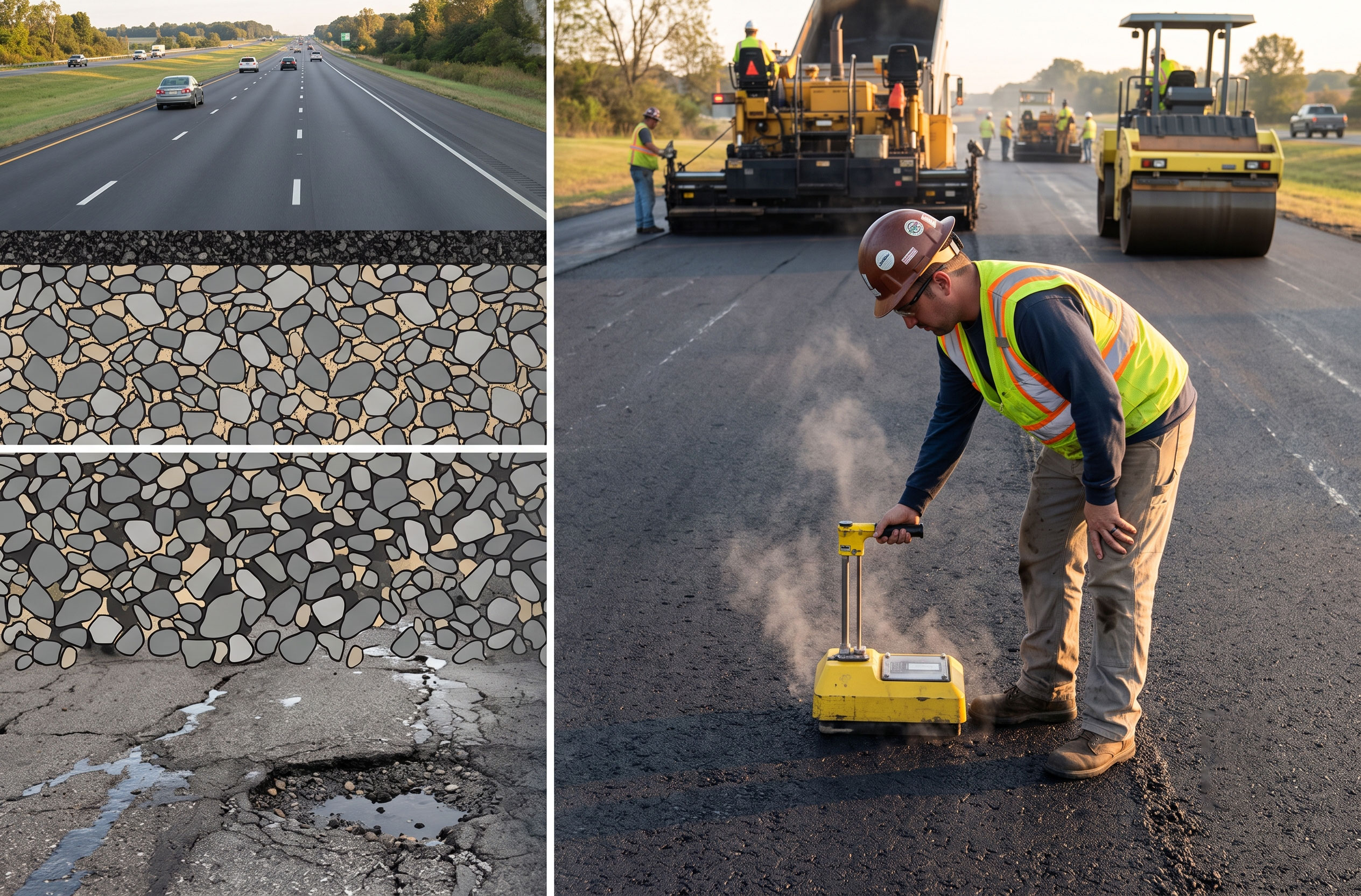
Asphalt is a blend of aggregate, sand, and binder. When freshly laid, that mixture holds pockets of trapped air called air voids. Compaction squeezes those pockets down, pressing particles into a tight, interlocked structure.
Density describes how successful that squeezing was. Higher compaction means fewer air voids and a stronger bond between particles. Lower results leave gaps where water, air, and stress can work their way in.
Engineers often express density as a percentage of theoretical maximum specific gravity, a lab-calculated value representing a mix with zero air voids. Reaching close to that ceiling, without going too far, keeps pavement performing for years.
Why Density Decides How Long a Pavement Lasts
Air voids sit at the heart of durability. A well-compacted surface usually targets 7 to 8 percent voids, which balances strength against flexibility. Stray far above that range, and problems multiply quickly.
Consider what happens when voids climb too high:
- Water seeps into gaps, stripping binder from aggregate and weakening the base
- Repeated traffic loads flex loose particles, speeding up fatigue cracking
- Oxygen ages the binder faster, making surfaces brittle and prone to raveling
- Rutting deepens as the mixture shifts under wheel paths
Research shows that each one percent rise in voids above the ideal band can cut pavement life by roughly ten percent. That single statistic explains why crews chase accurate readings so hard. Every point of compaction protects the investment poured into a project.
How Density Gets Measured
Measuring density well takes more than a quick glance at a finished surface. Several proven approaches give crews and inspectors reliable numbers, each carrying its own strengths.
Nuclear gauges remain a field favorite. Portable and fast, these devices send gamma rays into the mat and read the radiation that scatters back, delivering a figure within minutes. Non-nuclear versions offer similar speed using dielectric sensors, skipping the licensing and safety steps that radioactive sources require.
Core sampling, by contrast, drills cylindrical plugs from finished pavement for lab analysis. Slower and destructive, coring still ranks as the most precise route, since technicians weigh and measure real specimens rather than estimating from above. Newer tools such as ground-penetrating radar add continuous, non-destructive profiling across a whole stretch of road.
Teams weighing which route fits their project can explore this breakdown of density testing methods for a closer look at how every option performs.
Density and Compaction Go Hand in Hand
No test can rescue a mat that was poorly compacted in the first place. Density readings simply confirm whether rolling did its job, which makes compaction the real make-or-break moment.
Temperature drives everything here. Hot mix asphalt firms up best inside a narrow heat window, so crews must roll quickly before the surface cools. Rolling patterns, roller weight, and pass counts all shape the final result, while small adjustments can lift a marginal reading into a passing one.
That feedback loop matters most to the people on the ground. Experienced asphalt contractors build their rolling sequences and timing around density data, treating each result as a cue to adjust before the mat sets. On busy sites where downtime costs real money, that discipline keeps standards high without slowing the schedule.
Crews wanting to sharpen this stage can review these asphalt compaction testing methods to match the right technique to each job.
Hitting the Right Density Target
Chasing compaction is not about packing a mat as tight as possible. Over-rolling crushes aggregate and drops voids below safe levels, which robs pavement of the flexibility needed to handle temperature swings.
Most dense hot-mix projects aim for an in-place figure near 92 to 93 percent of a mix's maximum theoretical density. Landing in that sweet spot delivers:
- Strong resistance to rutting and shoving under heavy loads
- Enough void space for the surface to breathe and flex
- A tight seal that keeps moisture out of lower layers
- A longer service life before major repairs come due
Verified numbers, not guesswork, keep a project inside that band.
Building a Testing Routine That Protects Quality
Consistent results come from consistent habits. A dependable routine catches trouble early, while corrections still cost little. Crews serious about durable pavement tend to follow a few core practices:
- Calibrate gauges regularly so readings stay trustworthy across every shift
- Test at multiple points rather than trusting one lucky spot
- Log density alongside temperature to reveal patterns over time
- Pair fast field checks with periodic core samples for confirmation
- Act on low readings straight away, before surfaces cool past repair
None of these practices demands fancy tooling. Discipline and good equipment, applied every single day, do the heavy lifting.
Final Thoughts
Durable pavement is never an accident. Behind every smooth, long-lasting road sits careful attention to density, backed by testing that turns guesswork into evidence. When crews measure well, compact with purpose, and act on what the numbers reveal, roads reward that effort with years of reliable service.
Whether you manage a busy highway resurfacing or a quiet car park build, density testing gives you confidence that your pavement will hold up. Invest in the right tools, trust the data, and every layer you lay will stand the test of time.