How Weather Affects Concrete Strength: Hot, Cold & Rain
Jul 08, 2026
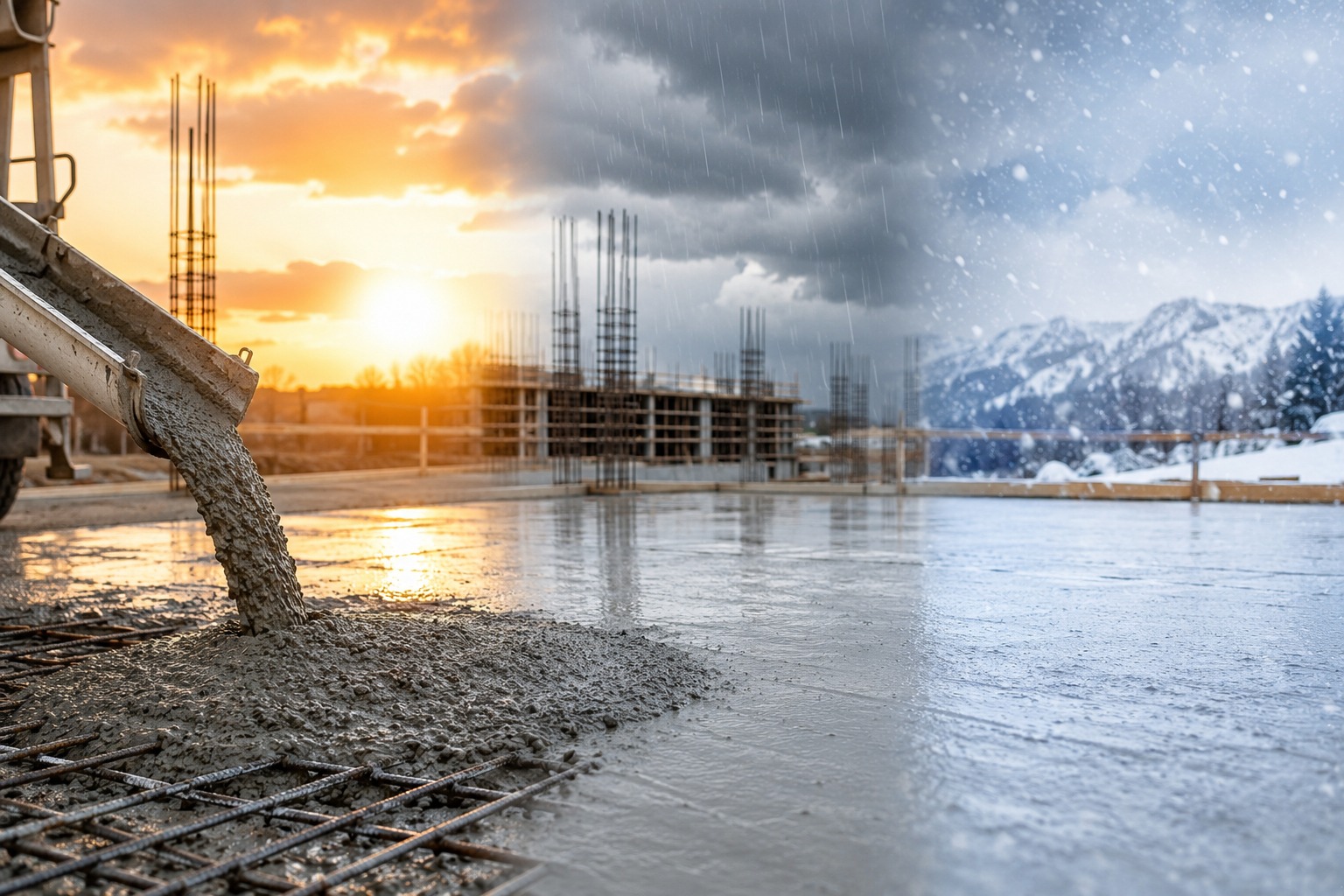
Concrete is designed to withstand decades of heavy loads and environmental exposure, but its long-term performance begins during the first few hours after placement. One of the biggest factors influencing concrete quality is weather. Temperature, humidity, wind, and rainfall all affect how concrete hydrates, gains strength, and ultimately performs throughout its service life.
Many concrete problems, including cracking, reduced strength, scaling, and poor surface finishes, can often be traced back to unfavorable weather conditions during placement and curing. Understanding how weather impacts concrete allows contractors, engineers, and quality control professionals to adjust construction practices and protect their investment.
In this guide, we'll explore how hot weather, cold weather, and rainy conditions influence concrete strength, along with practical best practices that help ensure durable, high-quality results regardless of the forecast.
Why Weather Matters During Concrete Placement
Concrete strength develops through a chemical process called hydration, where cement reacts with water to form strong bonding compounds. Unlike many construction materials, concrete does not simply harden by drying. Instead, it requires sufficient moisture and appropriate temperatures for hydration to continue properly.
When environmental conditions interfere with this process, hydration can slow down, accelerate too quickly, or become incomplete. The result is concrete that may fail to reach its design strength or develop defects that shorten its service life.
For this reason, weather should always be considered during project planning, concrete placement, curing, and quality control testing.
Hot Weather and Its Impact on Concrete Strength
Hot weather presents some of the greatest challenges for concrete construction. According to industry standards, hot weather conditions generally occur when high temperatures, low humidity, strong winds, or direct sunlight increase the rate of moisture evaporation from freshly placed concrete.
One of the biggest concerns is rapid water loss. As moisture evaporates from the concrete surface, hydration may stop before the cement has fully reacted. This can significantly reduce compressive strength while increasing the likelihood of early-age cracking.
Hot weather also shortens the concrete's setting time. Contractors have less time to transport, place, consolidate, and finish the concrete before it begins to stiffen. If finishing operations are rushed or delayed, the surface quality can suffer, leading to scaling, dusting, or uneven finishes.
Another issue is plastic shrinkage cracking. When evaporation exceeds the rate at which bleed water reaches the surface, fine cracks may appear within hours of placement. Although these cracks often seem minor, they can allow moisture, chlorides, and chemicals to penetrate the concrete, reducing long-term durability.
Fortunately, these risks can be minimized through proper planning. Scheduling concrete pours during early morning or evening hours, using sunshades and windbreaks, cooling mixing water or aggregates, and beginning curing immediately after finishing are all effective strategies for protecting concrete in hot weather.
Cold Weather Can Delay Strength Development
While excessive heat accelerates hydration, cold weather slows it considerably. Concrete gains strength much more slowly when temperatures drop because the chemical reaction between cement and water becomes less active.
If fresh concrete freezes before reaching sufficient strength, serious damage can occur. Water inside the concrete expands when frozen, creating internal pressure that disrupts the developing cement structure. This often results in permanent strength loss, surface scaling, and reduced durability.
Cold weather also delays finishing operations and extends the time required before forms can be safely removed or construction loads applied.
To reduce these risks, contractors often use heated mixing water, insulated formwork, thermal blankets, or temporary heated enclosures. These measures help maintain concrete temperatures during the critical early curing period and allow hydration to continue without interruption.
Monitoring concrete temperature throughout curing is equally important. Regular temperature measurements help verify that concrete remains within acceptable ranges for proper strength development.
Rain Can Affect Surface Quality and Concrete Performance
Rainfall is another environmental factor that requires careful attention during concrete placement. While light rain after the concrete has begun to set may have minimal impact, heavy rain during placement or finishing can create significant problems.
Rainwater increases the water content at the concrete surface, effectively changing the local water-cement ratio. This weakens the surface layer and may reduce abrasion resistance, increase dusting, or produce a soft, flaky finish.
Heavy rainfall can also wash away cement paste from the surface, exposing coarse aggregates and creating an uneven appearance. In severe cases, rain may require finishing operations to stop until the surface conditions improve.
Fresh concrete should always be protected if rain is expected. Contractors frequently use waterproof covers or temporary shelters to shield newly placed concrete until it has gained enough strength to resist rainfall.
If unexpected rain occurs, the surface should never be reworked by adding dry cement or excessive finishing. Instead, proper finishing techniques should resume only after excess surface water has disappeared.
Wind and Humidity Also Play an Important Role
Although temperature and rain receive most of the attention, wind speed and relative humidity can be equally important. Strong winds dramatically increase evaporation, especially when combined with low humidity and warm temperatures.
Even on days that seem comfortable, these combined weather conditions can produce evaporation rates high enough to cause plastic shrinkage cracking. When elevated work is also required, crews using an aerial work platform should take changing wind conditions into account, particularly when working around freshly placed concrete.
Monitoring evaporation conditions before placement allows contractors to decide whether additional moisture protection, evaporation retardants, or earlier curing procedures are necessary.
Weather Influences Every Stage of Concrete Quality Control
Weather affects more than just curing, it also influences the results of fresh concrete testing and long-term quality control.
Before placement, construction teams typically evaluate fresh concrete using concrete slump testing, air content testing, temperature measurements, and density testing to confirm the mix meets project specifications. Environmental conditions can directly influence many of these test results, making proper field testing even more important during extreme weather.
Once the concrete has hardened, compressive strength testing verifies whether the concrete has achieved its required design strength. Accurate testing combined with proper weather protection helps identify potential issues before they become costly structural problems.
Educational resources available through Certified MTP explain these common testing procedures and industry best practices, helping construction professionals understand how weather, curing, and testing work together to produce durable concrete structures.
Best Practices for Placing Concrete in Any Weather
Successful concrete construction begins with careful planning rather than reacting to weather after placement has started. Checking the forecast, preparing appropriate curing materials, and adjusting placement schedules can significantly improve project outcomes.
In hot weather, concrete should be placed during cooler parts of the day whenever possible, and curing should begin immediately after finishing. In cold weather, concrete temperatures should be maintained using insulated blankets or heated enclosures until sufficient strength develops. During rainy conditions, protective coverings should be readily available before placement begins, allowing crews to respond quickly if weather changes unexpectedly.
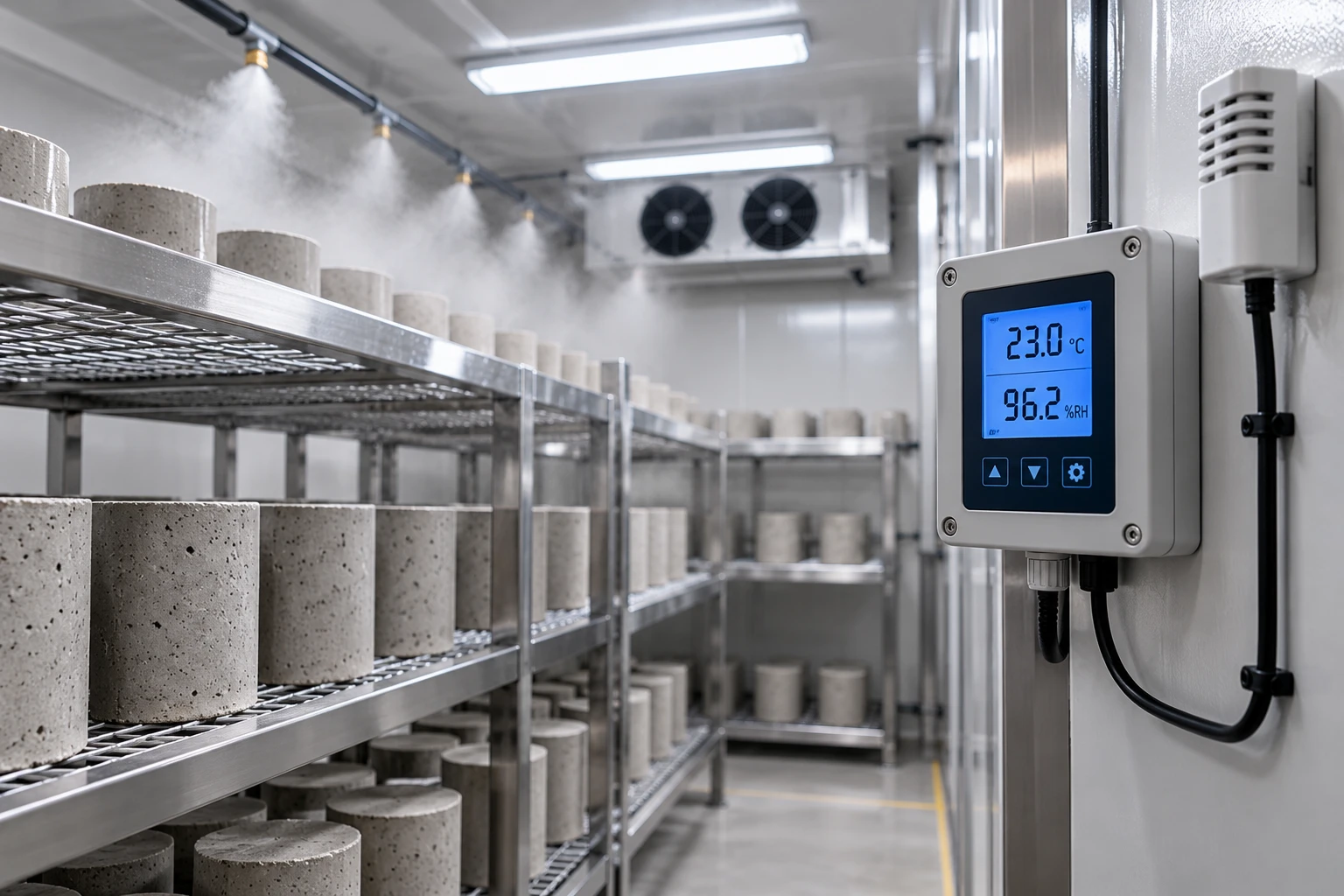
Equally important is maintaining consistent curing conditions regardless of the season. Proper moisture retention allows hydration to continue, helping concrete achieve its intended strength and durability.
Routine quality control testing should accompany every project. Monitoring fresh concrete properties and verifying compressive strength provides confidence that weather has not adversely affected the finished structure.
Conclusion
Weather has a profound impact on concrete strength, durability, and long-term performance. High temperatures can accelerate moisture loss and increase cracking, cold weather can delay hydration and reduce early strength, while rain can weaken concrete surfaces if proper precautions are not taken.
Understanding these environmental influences allows contractors and engineers to adapt construction practices, protect fresh concrete, and achieve consistent results throughout the year. Combined with proper curing procedures and routine quality control testing, weather-conscious construction practices help ensure concrete reaches its full design strength and performs reliably for decades.
By treating weather as an essential part of the construction process rather than an unavoidable obstacle, project teams can reduce defects, minimize repairs, and deliver higher-quality concrete structures.