Preventing Cost Overruns: A Data-Driven Approach to Construction Budgeting
Sep 10, 2026
Cost overruns are one of the most persistent challenges in the construction industry. They are often caused by a combination of smaller cost increases that push projects beyond approved budgets, rather than one large unexpected expense.
Material and equipment price fluctuations, labor shortages, design changes, and inaccurate estimates can become difficult to control in static spreadsheets and disconnected systems that are only updated periodically throughout the project.
Delayed reporting, manual data entry, limited visibility, and inconsistent forecasting methods make it harder for project managers to monitor budgets. This is why a data-driven approach to budgeting helps construction firms move from reactive to proactive budget management.
Artificial intelligence (AI)-powered construction management software can gather project data in real-time, giving project managers the information needed to identify financial risks, improve forecasting accuracy, and make informed decisions before costs overrun.
This article explores why cost overruns occur and how to prevent them in the construction industry.
Why Cost Overruns Occur
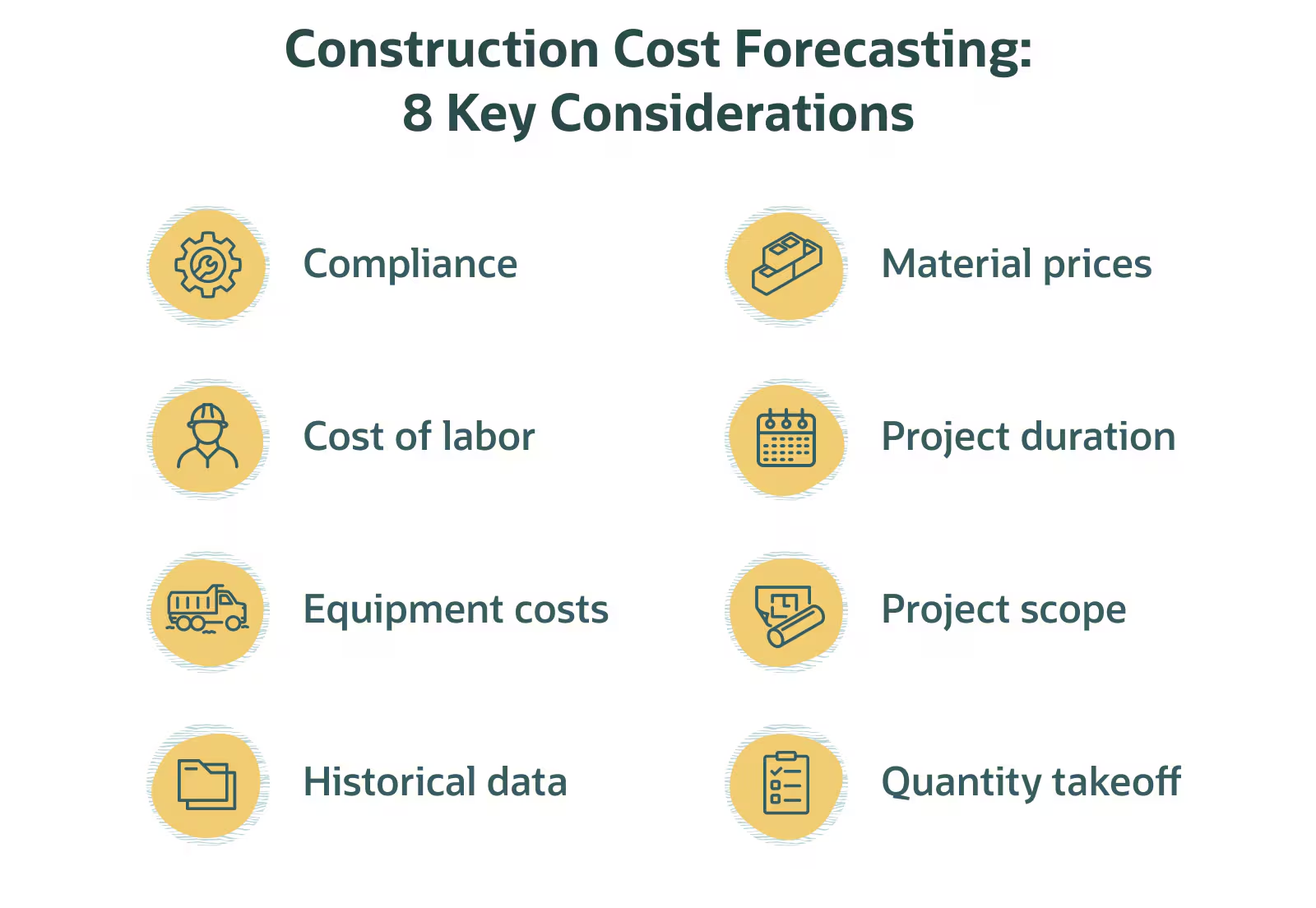
As mentioned above, cost overruns are often caused by a combination of factors rather than a single unexpected expense or budgeting issues. Common factors include:
- Inaccurate initial estimates: For example, underestimating the amount of concrete required for foundations or failing to factor in waste allowances for certain materials.
- Delays that increase labor and equipment costs: For example, heavy rain may delay site work for several days, leaving rented equipment idle while fees continue to accrue.
- Material and equipment price fluctuations: For example, the price of concrete or other materials may rise unexpectedly after the budget has been approved and the project has begun.
- Reworks caused by errors or miscommunication: For example, on-site labor may install foundations according to outdated designs because they were not informed of the revisions, resulting in the work needing to be redone.
- Poor visibility into actual spending: For example, if material purchases and labor costs are recorded in separate systems and only reviewed at the end of the month.
The earlier these issues are detected, the easier they are to address without significantly affecting the overall project budget.
How To Prevent Cost Overruns In Construction
1. Track actual costs in real time
Waiting until the end of the month to review finances makes it difficult to control costs in real time. Modern construction management software can capture labor hours, material deliveries, subcontractor invoices, and equipment usage as they occur.
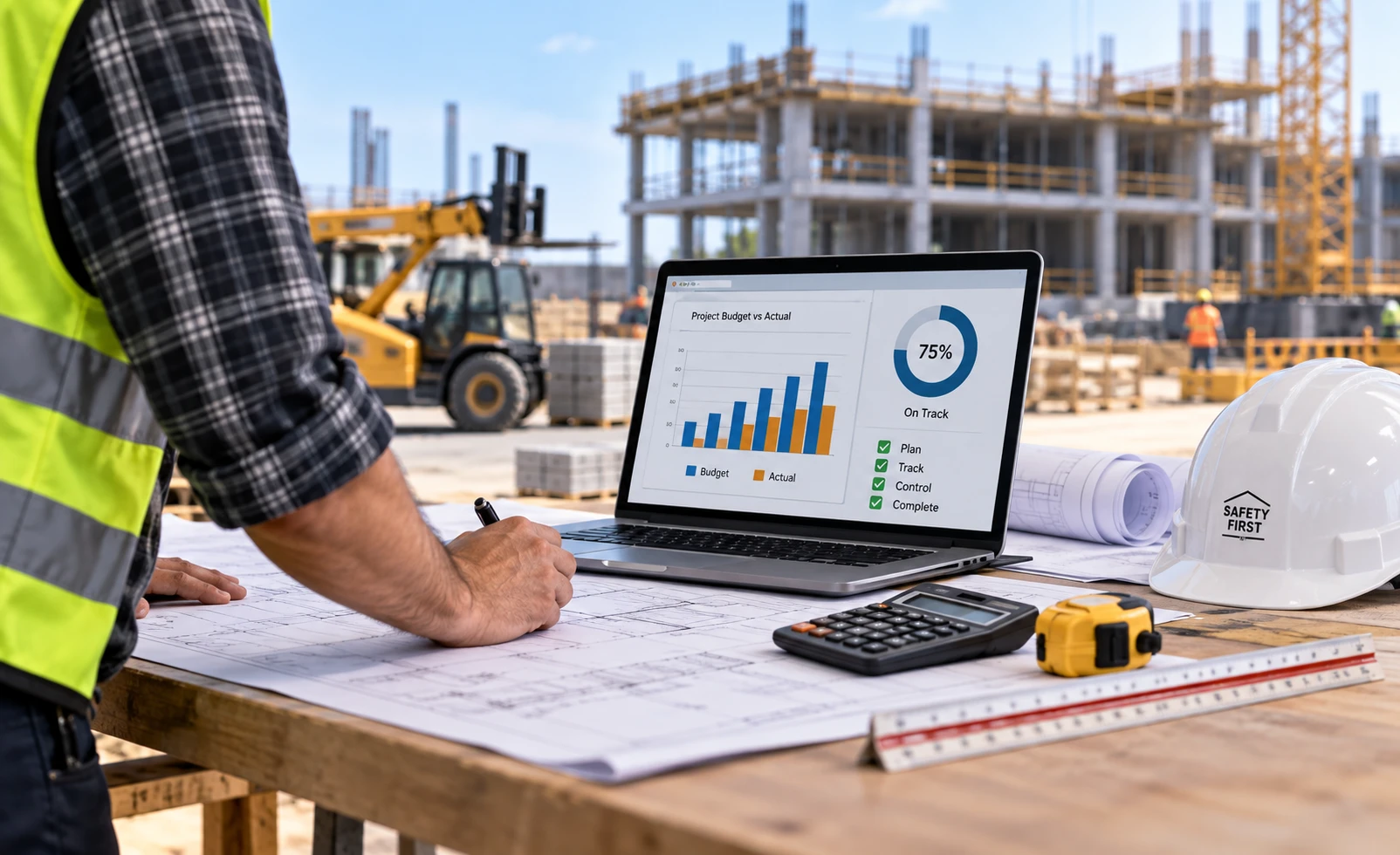
Tracking costs in real-time allows project managers to compare actual spending against the approved budget, identify cost variances and unexpected expenses immediately, and update forecasts based on current project conditions. This continuous monitoring prompts project managers to investigate the cause and helps prevent small increases from causing a budget overrun.
Instead of relying on manual reviews, project managers can receive automated alerts from AI-powered construction management software when costs begin trending in the wrong direction. For example, when material costs increase or more on-site staff are working overtime.
2. Forecast future spending
Data-driven forecasting analyzes project data and uses current performance trends to predict future costs. This approach gives construction firms time to take proactive action while there is still flexibility in the project plan.
For example, if you need to use more material or hire more on-site staff than expected, AI-powered construction management software can forecast the financial impact this will have on the project before the budget is exhausted.
3. Improve change order management
Change orders are one of the most common causes of budget overruns, especially when approved informally, documented inconsistently, or not reflected in the project budget immediately.
Using an AI-powered construction management software like Quickbase to centralize the change management process ensures that every change is properly documented, approved by the appropriate stakeholders, and incorporated into the updated project forecast. This prevents hidden costs from accumulating throughout the project.
Using Data To Prevent Cost Overruns
A data-driven approach to budgeting is not a one-time task completed before the project begins. Instead, the most successful construction firms continuously monitor actual costs and forecasted costs throughout the project lifecycle.
By taking a data-driven approach to budgeting, construction firms can improve estimate accuracy, reduce financial risks, protect profit margins, and make more strategic decisions. The result is a more resilient construction firm that delivers projects with greater confidence and control.