Forklift Fleet Maintenance: The Cost of Deferring PM
Sep 09, 2026
On a working site, the most expensive repair bill rarely arrives as a surprise. It arrives on a schedule nobody kept. A hydraulic hose that would have been swapped during a routine service lets go under load instead, and the pump behind it, the cylinder it feeds, and the shift it interrupts all join the invoice. When that happens, the office conversation turns to what the repair will cost. The better question is why the repair was allowed to become urgent.
Preventive maintenance (PM) means servicing equipment on a schedule — by operating hours or calendar days — instead of waiting for it to break. Most fleets handle this through a scheduled forklift maintenance program anchored to roughly 250 operating hours, with daily pre-shift examinations in between. Deferring it is easy to justify in a busy season: the truck still runs, and the PM invoice can wait a month. But the cost does not disappear when the service is deferred. It compounds quietly and comes due with interest at the worst possible moment.
Why Deferral Compounds Instead of Delaying
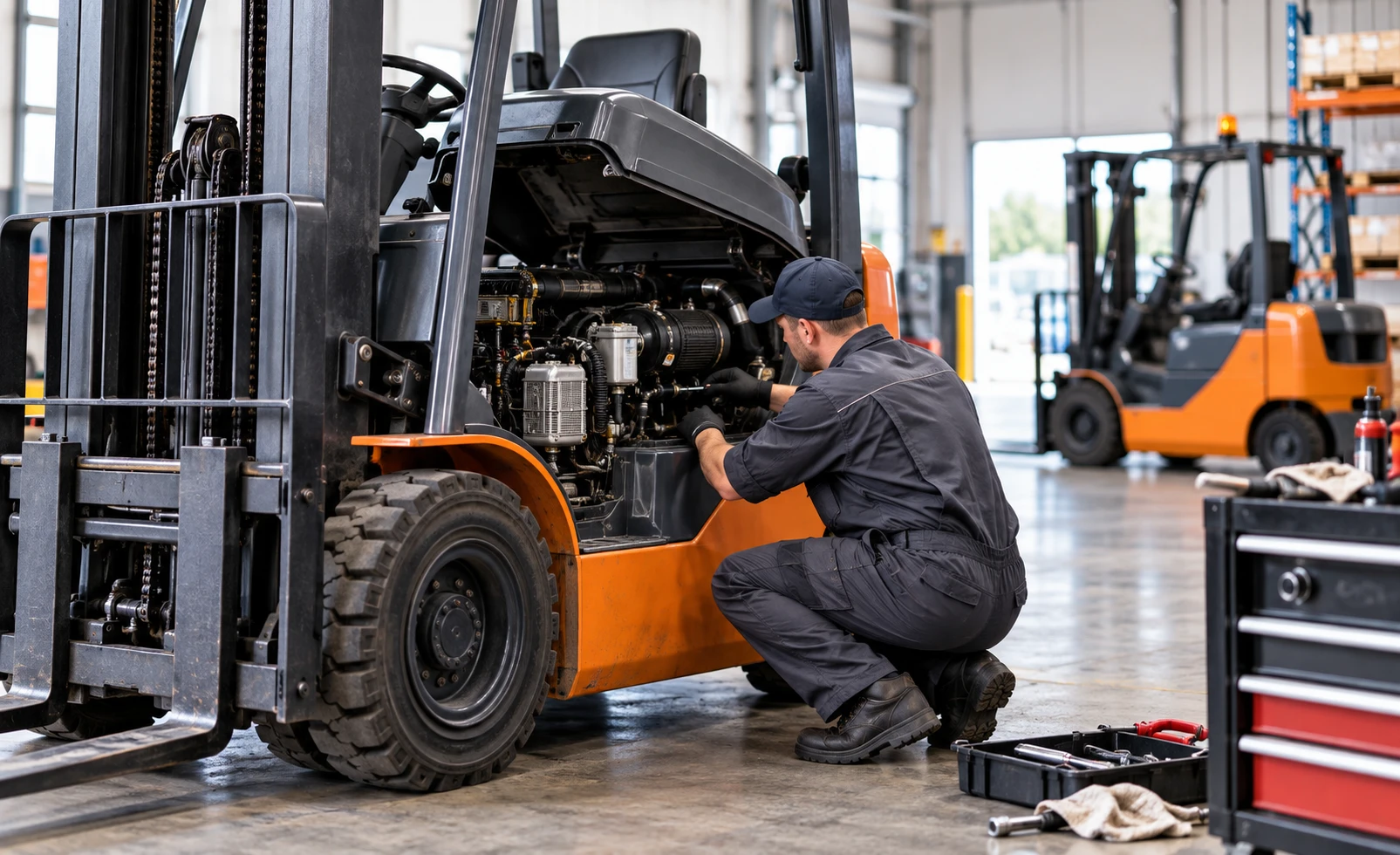
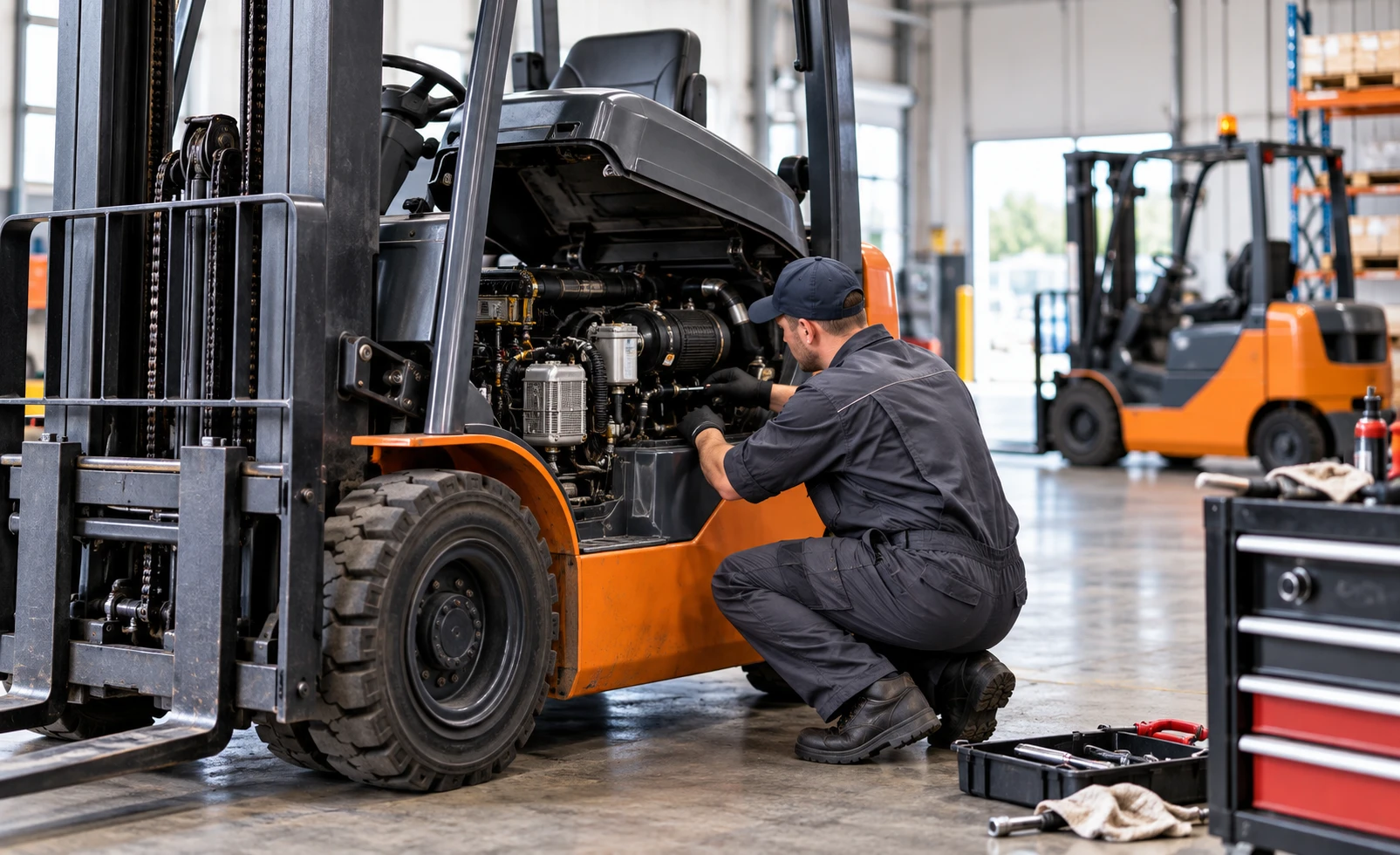
One skipped service rarely kills a truck. The pattern does. A first slip makes the second slip easier, the log goes quiet, and the machine carries small, correctable defects into progressively worse states. This is why fleets that run reactive maintenance pay a premium that is well documented: industry analyses consistently find that emergency repair work runs three to nine times the cost of the same work performed on schedule, once expedited parts freight, after-hours labor, towing, and secondary damage are counted. The multiplier is not an abstraction — it is the visible price of letting a $300 seal become a $3,000 pump job. Catching that seal at a scheduled visit is precisely the kind of early defect work a dedicated forklift repair team in Las Vegas performs every day; catching it three months later is a breakdown.
The compounding follows predictable failure modes. Hydraulic systems run low on fluid or seep past tired seals until a pump or an entire circuit is contaminated. Brakes and steering degrade incrementally, so operators adapt without noticing — until a loaded truck needs a stopping distance it no longer has. Cooling and filtration problems push operating temperatures up quietly, and chronic heat hardens hoses, embrittles seals, and thins oil films. Batteries skipped on watering and terminal cleaning strand electric trucks mid-shift.
What Deferral Actually Costs
The invoice for a skipped PM is small. The invoice for the consequences is not. The costs stack up in four layers:
- Repair escalation. As above, reactive work routinely runs three to nine times the cost of planned work on the same component. Fleets that budget PM as a fixed line item rather than a queue of ad-hoc repairs see the trade every month instead of discovering it at failure.
- A scheduled PM visit is planned around the workload; a breakdown is not. On a job site, the cost is measured in idle crew hours, late deliveries, and rental equipment brought in to cover the gap.
- Shortened equipment life. Trucks run past their service intervals without fluid changes, filter service, and inspections reach major repairs and the replacement decision years sooner than well-maintained siblings.
- Compliance exposure. OSHA's powered industrial truck rule (29 CFR 1910.178) requires examinations before each operating shift under paragraph (q)(7), and any condition affecting safety removes the truck from service until corrected. The penalty schedule now runs $16,550 per serious violation and $165,514 per willful or repeated violation. A documented maintenance backlog makes that conversation with an inspector much harder to win.
Deferral is also a safety decision before it is a financial one. A truck that fails without warning fails during production, not during maintenance, and often with people nearby.
The Desert Multiplier
In Las Vegas and the Southwest, deferral costs more per skipped service than in a temperate climate. Sustained heat above roughly 100°F hardens hoses, embrittles seals, and thins oil films faster than service intervals assume, and fine dust loads filters and air systems sooner. The same deferred service does proportionally more damage here in August than the identical deferral does in a mild climate. Fleets operating in hot, dusty conditions should shorten inspection intervals rather than stretch them, and treat cooling-system and air-filter checks as safety items, not housekeeping.
The heat also compresses the window between "small defect" and "big repair." A hydraulic system already running warm loses fluid faster through hardened seals; a battery that would coast through summer in a climate-controlled building needs twice-weekly watering in a desert dock. The practical rule: whatever inspection frequency your manufacturer's schedule assumes for a temperate region, assume it is optimistic here, and let the truck's condition — not the calendar — decide when service happens.
A Deferral Red-Flag Check
Fleets rarely decide to defer PM in one dramatic moment; it happens in small decisions. Run this check whenever a PM task is about to slip. If any answer is yes, the deferral costs more than the service:
- Has this service already been deferred once? A second slip on the same task is where costs start compounding.
- Does the truck still pass its daily examination under 1910.178(q)(7)? If a defect affecting safety exists, the truck is out of service until corrected — deferral is not an option.
- Is the deferred item safety-critical — brakes, steering, hydraulics, tires, mast chains, overhead guard, or fuel system? These are the wrong items to defer.
- Is the truck approaching its next PM interval? Bundling deferred work into the upcoming service saves a separate downtime window.
- Is the operator reporting new symptoms — drift, noise, slow lift, pulling? Operator-reported changes are early failure data, not complaints.
And run this fleet-level audit monthly: any truck more than one PM interval past due; any open safety defect older than a week; repeat repairs on the same component within twelve months; repair spend rising while PM spend falls. Each is the signature of a fleet sliding into reactive mode.
Making PM Stick on a Working Fleet
The fleets that stay ahead of maintenance do not rely on willpower; they structure the work so deferral is the awkward option:
- Anchor PM to hours, not calendars. Hour meters survive seasonal swings better than dates, and a truck running 2,000 hours a year needs different intervals than one doing double shifts.
- Tie PM to existing routines. Daily examinations happen naturally at shift start or the charging bay; attaching the paperwork to a routine beats asking anyone to remember a separate task.
- Budget PM as a fixed cost. Deferred maintenance feels free because it never appears as a line item until it becomes a repair. A reserved per-truck annual figure makes the trade visible.
- Use a specialist when the fleet outgrows the shop. At a certain fleet size, scheduled service through a dedicated provider costs less than in-house PM, because bundled visits catch developing faults early and cover the major brands on one invoice. A mid-sized mixed fleet — say eight to fifteen trucks across LP, electric, and telehandlers — usually crosses that line when the shop's PM log starts slipping a quarter behind the hour meters.
Deferring preventive maintenance is not a decision to save money. It is a decision to spend more later, at a worse price, on someone else's schedule. The fleets that treat PM as non-negotiable do not spend less because they are lucky — they spend less because they stop paying the premium that deferral charges.