Protecting Concrete Cure Results Through Curing Room Climate Control
Oct 08, 2026
Why the Curing Room Decides What a Break Result Means
Break a concrete cylinder or beam and you learn what the mix can do, as long as it cured in the conditions the test assumes. A room that ran warm over a weekend, or dried out overnight, can leave its mark on the break result.
When the room's climate slips, compressive strength results can get thrown out and retests ordered. Contractors, engineers and owners can end up arguing about whose number to believe. Weeks can go by on a project approval because of one failed or questionable result. It can also start a change-order fight and leave the testing lab exposed to professional liability.
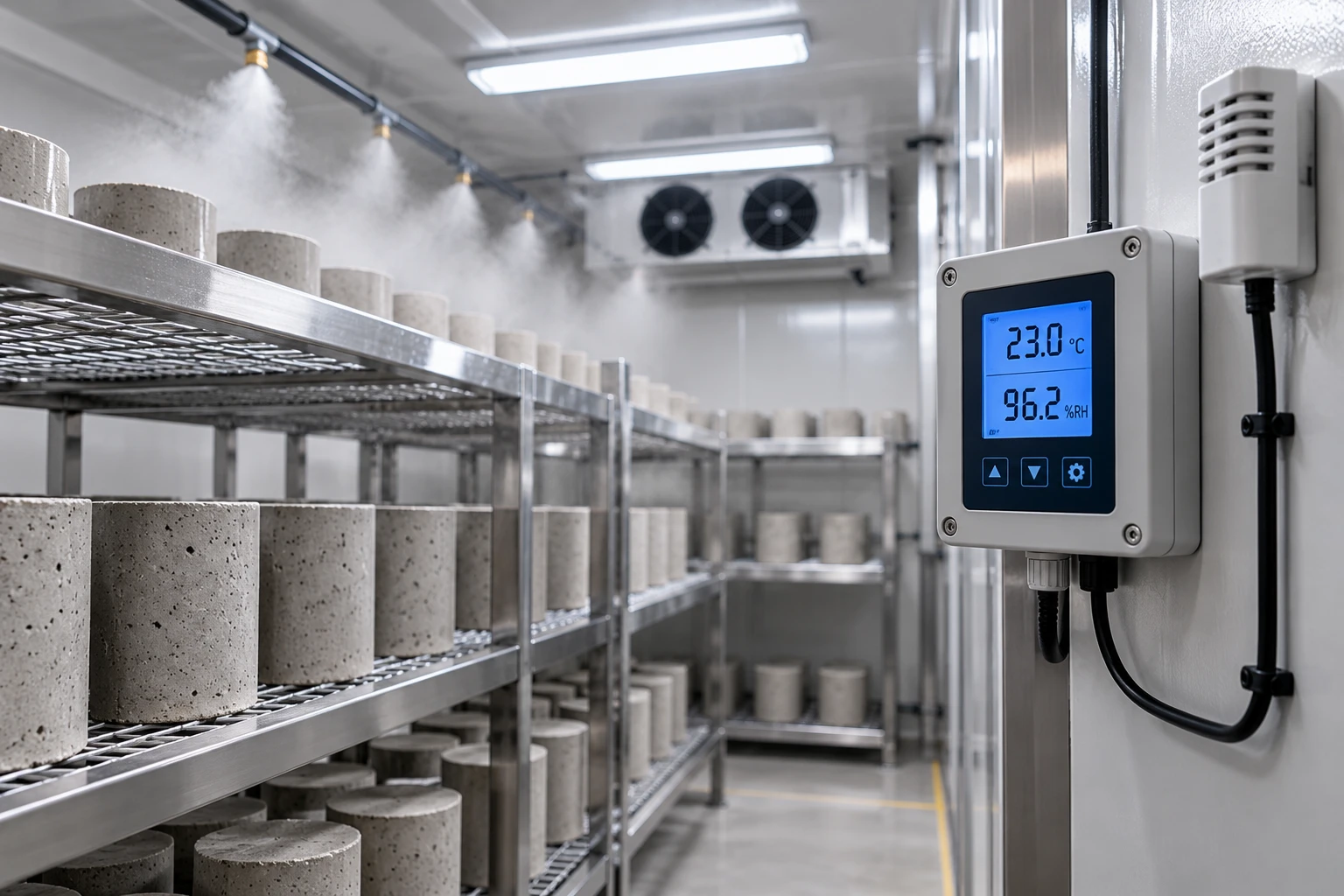
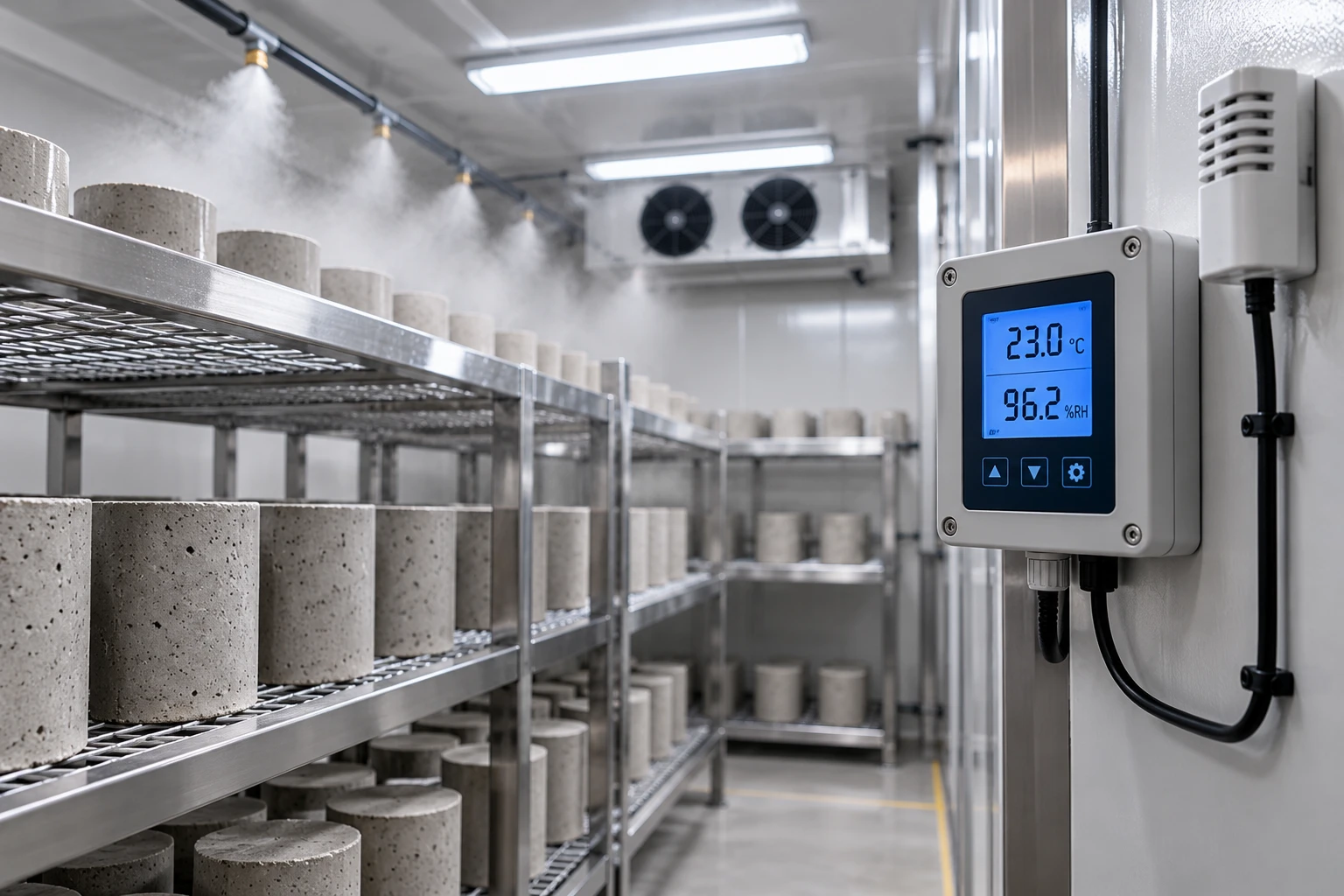
ASTM C511 and AASHTO M 201 require a moist curing room to hold 23.0 ± 2.0 °C with relative humidity at or above 95%. That's a tight band. A small miss that lasts through a 7- or 28-day cure can measurably change the strength development curve. At that point the data no longer reflects how the mix performs. A lab running outside the band may only find out when an accreditation assessment or a strange break pattern brings it up.
What Heat, Cold, and Dry Air Do to Strength Data
Heat matters first, because cement hydration gives off heat of its own and runs faster as the room warms up. Once the room drifts above 25.0 °C, the top of the band, early hydration can run fast. With some mixes and exposure conditions, that can bump up early-age strength and hold back the strength gain that comes later. Drop under 21.0 °C and hydration slows down, so early readings may come out artificially low. A conforming mix can then get flagged as deficient. Holding 23.0 ± 2.0 °C helps keep results consistent and representative of the mix.
Humidity goes wrong in a different way. Once RH drops below 95%, the surface can dry ahead of the core, so the cross-section doesn't cure evenly. The outer shell may micro-crack or carbonate early. That can contribute to erratic breaks that don't reflect the mix design's capacity, and uneven moisture can also widen the spread between companion specimens.
Two failure patterns follow the seasons. A cooling system sized too small loses ground to the summer heat load. In winter the trouble is dry outside air seeping in and wicking moisture out of the room. Labs in climates with big seasonal swings get both in one calendar year.
The Equipment a Compliant Room Needs
Holding a ±2.0 °C band and 95%-plus humidity takes equipment chosen for the job in five areas:
- Cooling. The system has to offset heat coming in through the walls plus the heat the curing specimens give off, at peak specimen load in the hottest part of the season. Size it and set its controls for that case.
- Heating. You'll need supplemental heat in a cold climate, or anywhere winter would pull the room under the 21.0 °C floor. Electric unit heaters, hydronic (hot-water) systems, or forced-air furnaces can supply it, on thermostatic control with a tight deadband so the room doesn't overshoot. Sizing and commissioning heating for a band this narrow is commercial HVAC work. Having one contractor service heating, cooling, chillers, and refrigeration can make maintenance and emergency calls simpler. In Chicagoland and Northwest Indiana, King Heating's commercial team (the author's firm) covers all four, with 24/7 commercial emergency service.
- Humidification. Many moist rooms use fogger nozzles. Atomizing or steam humidifiers are another way to hold RH above the 95% floor. Too much of it and water collects around the specimen bases, which leaves them partly immersed when they should be moist-cured. ASTM C511 counts immersion as a different storage condition.
- Controls and monitoring. A digital controller with alarm setpoints makes a good hub for the system, backed by a temperature recorder and remote monitoring. ASTM C511 wants a temperature reading on the record every 15 minutes or sooner. An accreditor, a state DOT or the lab's own quality system may ask for more than that, and it's easier to find out before the recorder goes in.
- Insulation and sealing. A vapor seal has to run across the walls and doors and around every penetration. With thin insulation the HVAC short-cycles, and any one of those cycles might push the room briefly outside the ±2.0 °C window. The fix is usually spray-foam insulation and doors that seal on magnetic or compression gaskets.
Keeping the Room in Range After Installation
Staying accredited, and being able to defend a result someone questions, depends on the checks a lab keeps running after commissioning.
Verify the recorders on schedule. Under ASTM C511 the temperature recorder gets verified at least every six months, and again whenever someone has reason to doubt what it's showing. Humidity instruments and the other sensors are less tidy, because their checks are set by a mix of the applicable standard, the manufacturer's guidance, your accreditation requirements and your own quality procedures.
Put sensors where the specimens are. The bottom rack near the floor and the top shelf don't always see the same conditions. Weak air circulation widens that gap. One sensor at the return-air intake feeds the controller accurate readings. It tells you nothing about the surface of a cylinder on the bottom shelf. Two independent measurement points besides the control sensor is a sensible minimum when you're buying temperature and humidity data loggers.
Service the equipment before it drifts. Filters, humidifier nozzles, condensate drains and condenser coils all belong on the maintenance calendar. Let a humidifier nozzle clog and RH can sink under the threshold in a matter of hours, while specimens are still partway through their cure. Coil fouling works more slowly. The cooling it costs slips away so gradually that it's often missed until a summer heat wave tips the room out of range. Rooms that hold their climate with chillers or other refrigeration gear have one more thing to look after. A contractor who knows commercial refrigeration and chiller service can help keep that maintenance on track and, after a breakdown, get the room back in range sooner.
Keep the paper trail. The required temperature records go in an archive you can pull them from quickly. An out-of-range excursion on the recorder calls for a written procedure to evaluate the affected specimens, and a note of what was done. That note matters, because assessors may ask to see how the lab responded to excursions, along with the environmental records and the instrument verification or calibration records.
Design and Operating Mistakes That Push Rooms Out of Range
Labs that take on more specimens and leave the room as it was often run into compliance trouble. Cooling and humidification should be sized for the peak specimen count, not the average. A room built for 50 cylinders and holding 120 day in, day out may not stay in range unless capacity gets added.
Doors are a steady leak, since every time one opens, conditioned air goes out and ambient air comes in. In a busy lab, with specimens going in and out all day, a strip curtain or a vestibule cuts that down. So does an SOP that limits how long the door stays open. On a dry winter day, half a minute with the door open can knock the RH down by a measurable amount.
ASTM C511 asks for logging at 15 minutes or less, and one handheld reading per shift doesn't come close. An excursion overnight can slip past it too. The standard doesn't require continuous humidity recording. It can still help with internal quality control, alarms and troubleshooting.
Water pooling on floors and shelves can cover specimen bases and turn moist-air curing into partial immersion. Floors sloped to drains and good airflow design stop the pooling without lowering RH.
Some curing rooms sit next to a boiler room or another hot mechanical space. In other buildings the room backs onto an uninsulated exterior wall facing south. Both add heat the HVAC has to fight around the clock. It's much cheaper to account for that heat gain in the design than to retrofit after commissioning.
Treating Climate Control as Part of the Testing
A room that's designed and maintained properly can pay for itself in the retests it avoids. Accreditors, agencies, and quality systems can differ in the monitoring and the paperwork they ask for. Each lab has to decide how it keeps its records and what it does when an excursion turns up.