How to choose a sieve shaker for aggregate gradation
Posted by Matt Johnson on Nov 26, 2026
Choose a sieve shaker that fits your specified test method, sieve frames, required sample mass, and largest aggregate particles—not simply the machine with the tallest stack capacity. For a purchase, confirm that the shaker produces adequate separation without overloading the sieves or degrading the aggregate; a timer alone does not establish a valid sieving duration.
- Choose a sieve shaker around aggregate gradation requirements, sieve compatibility, and representative sample mass.
- ASTM C136/C136M requires adequate particle separation; a preset run time does not prove completion.
- Separate sieve-stack capacity from allowable aggregate loading on each sieve.
Why this matters
Aggregate gradation results depend on representative sampling, controlled preparation, adequate separation, and correct mass measurements. A shaker cannot correct a reduced sample that no longer represents the material, and extra shaking cannot correct an overloaded sieve.
Compare sieve machines for aggregate test sieves against your laboratory’s actual sample and sieve requirements before selecting an individual model.
Buy for the test you must perform, not the sample that happens to fit. A compact machine becomes the wrong purchase when its usable sieve area forces you to depart from the required sample preparation or loading procedure.
How do you choose a sieve shaker for aggregate gradation?
Start with the governing procedure, then match the shaker to the physical sample and sieve assembly. For a specification, document the following decisions before requesting equipment recommendations.
- Test method. Identify whether the work follows ASTM C136/C136M, AASHTO T 27, or another specified procedure. Read the applicable edition and project requirements rather than assuming similarly named procedures are interchangeable.
- Sample requirements. Establish the required test-sample mass and nominal maximum aggregate size. Do not reduce the sample below the method's requirements simply to suit a smaller machine.
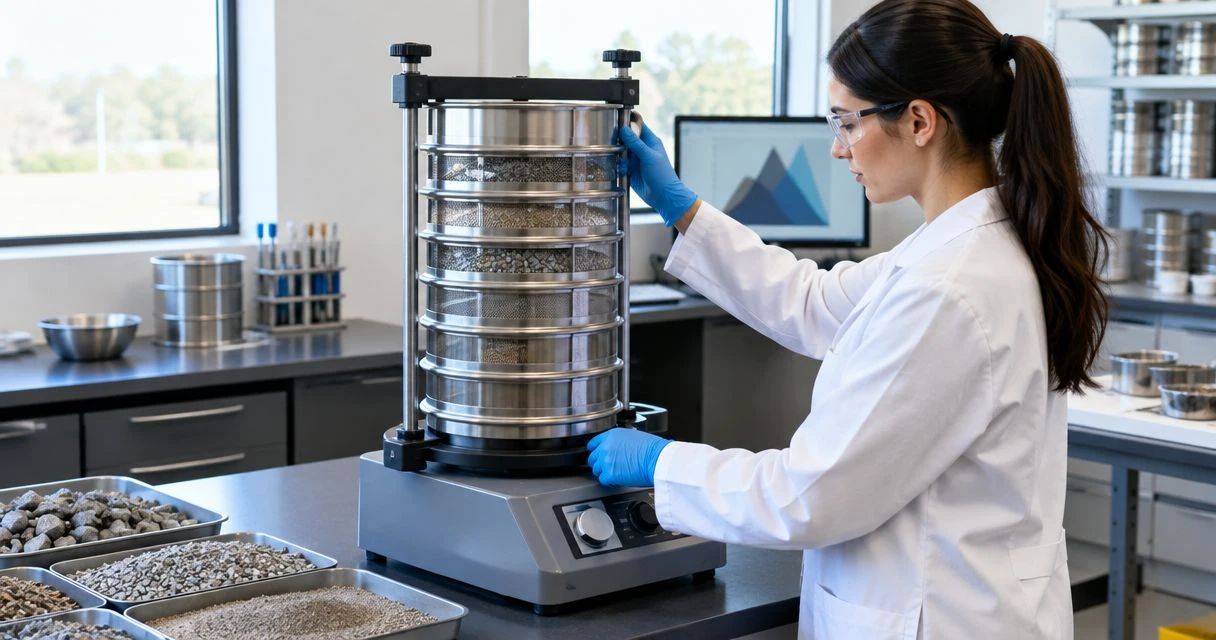
- Sieve compatibility. Record frame diameter, frame height, required openings, pan, cover, and assembled stack height. Obtain confirmation that the complete assembly fits the shaker and clamping system.
- Loading limits. Check both the machine's documented load limits and the method's limits on material retained on individual sieves. These are separate constraints.
- Separation verification. Confirm how your laboratory will establish adequate sieving and select the operating duration. Include a representative material in that evaluation.
- Workstation fit. Check electrical requirements, installation instructions, access for loading, cleaning arrangements, and the work surface required by the manufacturer.
The result should be a written equipment requirement, not just a preferred model name. Compare the same sample description and complete sieve configuration against each model’s documented limits.
Compare shaker configurations by application
The following categories describe equipment arrangements, not verified specifications for any particular model. Best for labels identify the application to investigate; they do not establish a machine's suitability.
| Configuration | Best for | Practical advantage | Limitation to check |
|---|---|---|---|
| Round-sieve mechanical shaker | Laboratories evaluating mechanically driven agitation for routine sieve stacks | Provides powered movement for a secured stack | Motion, supported frames, load limits, and separation performance depend on the model |
| Round-sieve vibratory shaker | Laboratories evaluating vibration-based agitation with operating controls | Applies vibration to the sieve assembly | Adjustable settings do not independently prove adequate separation or prevent overloading |
| Tray-style shaker | Laboratories evaluating larger sieve surfaces for coarse aggregate work | Accommodates tray-format sieves rather than a round stack | Requires compatible trays, suitable workspace, and verification against the intended procedure |
Do not choose between mechanical and vibratory equipment by assuming one category is universally more accurate. The useful comparison is whether the specific machine separates your material adequately under the prescribed loading conditions.
Round-sieve shakers: check the complete stack
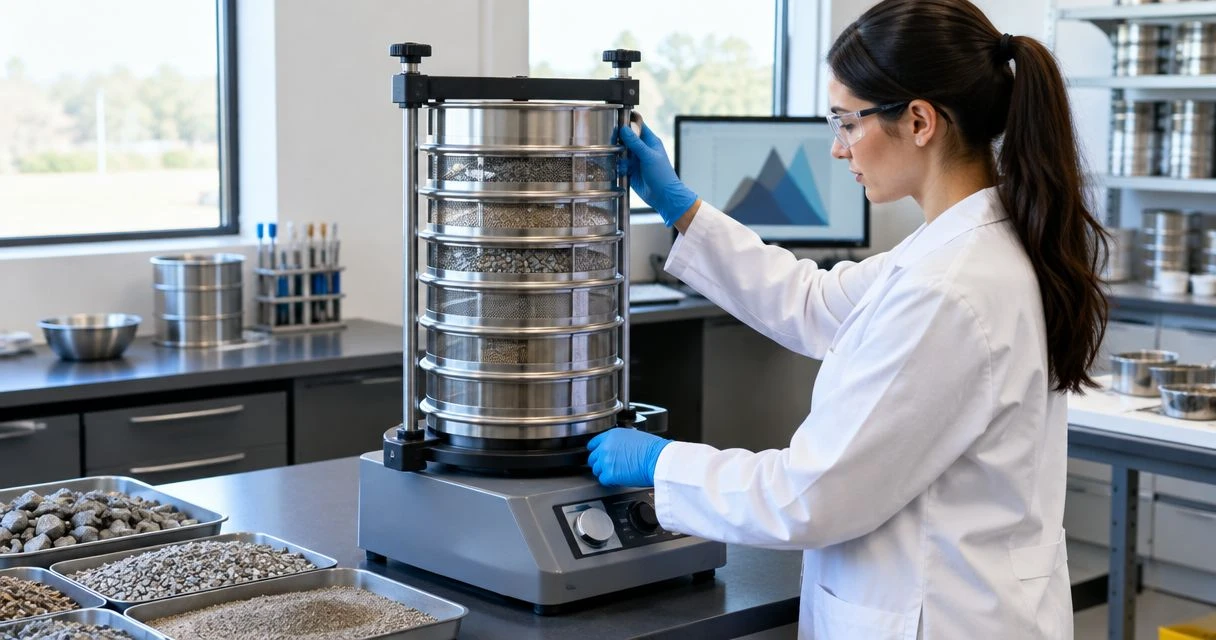
Round-sieve compatibility involves more than nominal diameter. An 8-inch sieve frame and a 12-inch sieve frame require different physical accommodation, and frame height affects how many sieves fit in the available space.
Record the actual assembly, including the receiving pan and cover. A published maximum stack height is not permission to omit components required to contain and collect the sample.
Check the clamping arrangement as carefully as the frame diameter. You need to install the stack securely, remove it without spilling retained fractions, and repeat the process without an improvised restraint.
For a replacement purchase, inventory the frames already in service before specifying another shaker. Reusing suitable existing sieves is a practical consideration, but compatibility must be confirmed rather than inferred from photographs or a familiar diameter designation.
The advantage of a round-stack arrangement is its direct fit with round laboratory sieves; the limitation is the available area and loading capacity of each individual sieve. More vertical room does not increase the screening area beneath a heavily retained fraction.
Tray-style shakers: evaluate coarse aggregate loading
Tray-style equipment deserves consideration when the required aggregate sample and retained fractions call for more sieve surface than your round-sieve arrangement provides. Make that decision from the test method and loading calculations, not from the appearance of a larger machine.
Verify the tray dimensions, opening sequence, receiving arrangement, and manufacturer's permitted load. Confirm how the laboratory will transfer, weigh, and account for each retained fraction without losing particles.
The practical advantage is the tray format's suitability for evaluating larger screening surfaces. The trade-offs include the space occupied by the equipment and the handling requirements of the loaded trays.
Do not treat tray-style equipment as automatic approval for every coarse aggregate application. Documented machine capacity and acceptable sieve loading must both support the intended sample.
Why sieve shaker suitability varies
The same shaker can suit one aggregate procedure and be unsuitable for another. Five factors explain why a category name or maximum stack count cannot settle the selection.
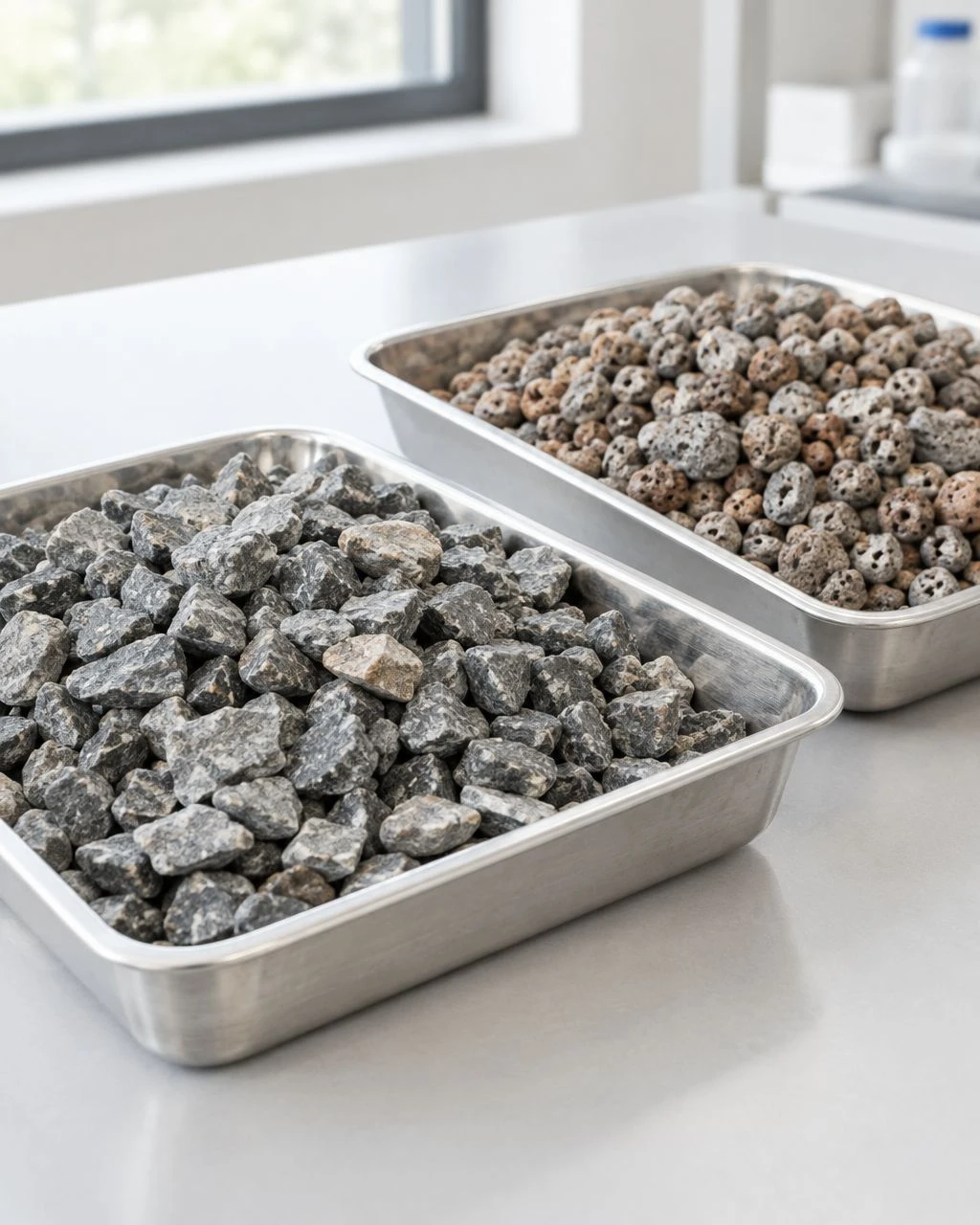
- Particle size and shape. Aggregate particles must move into positions that allow them to pass the appropriate openings. Particle geometry affects that movement and the time needed for separation.
- Required sample mass. The governing procedure links sample requirements to the material being tested. A machine must accommodate the necessary work without encouraging an undersized test sample.
- Retained mass distribution. A sample with much of its mass concentrated on one sieve creates a different loading problem from a sample distributed across several sieves.
- Moisture and adhering fines. Damp particles and attached fines affect separation. Follow the prescribed drying and washing sequence rather than attempting to compensate with longer shaking.
- Agitation and duration. The machine's motion and operating time must produce adequate separation without excessive sieving that degrades the sample.
These factors belong in a purchasing specification because they describe the application, not an optional accessory package. Ask for documented limits and operating instructions that address them.
Verify adequate sieving before standardizing the timer
A timer setting is an operating instruction, not evidence of complete separation. Establish the duration using the adequacy procedure in the governing test method and the material being tested.
ASTM C136/C136M uses a check involving 1 minute of continuous hand sieving: no more than 1% by mass of the material retained on an individual sieve should pass that sieve during the specified check. Apply the complete procedure in the standard, including its handling instructions; do not replace it with an informal visual inspection.
The denominator matters. That criterion concerns the material retained on the individual sieve, not the mass of the entire original sample.
Once you establish a suitable duration, record the material, sample preparation, sieve arrangement, and shaker settings. Reassess the operating procedure when those conditions change rather than copying a timer setting from a different aggregate.
Also inspect the result for evidence of sample degradation. Longer operation is not inherently better: the objective is separation at the specified openings, not particle breakdown caused by excessive sieving.
Does a sieve shaker replace washing for fine material?
No—a sieve shaker does not replace a required washing procedure. ASTM C117 addresses material finer than the 75 µm, No. 200 sieve in mineral aggregates by washing; ASTM C136/C136M addresses sieve analysis of fine and coarse aggregates.
Use the procedures together when the governing specification requires them. Follow the prescribed sequence and calculations so that washed-out material is accounted for correctly rather than treated as unexplained sample loss.
This distinction affects equipment selection. A shaker handles the mechanical separation stage, while washing, drying, and weighing require their own suitable equipment and controlled procedures.
Build your aggregate testing equipment requirement around that complete workflow, so the purchasing brief stays aligned with the test.
Can you split a sample to fit a smaller shaker?
Do not reduce the required test-sample mass merely to fit a smaller shaker. Representative sample reduction and processing a required test sample in portions are different operations.
Where the governing procedure permits portioning to prevent sieve overloading, follow its instructions and combine the corresponding retained masses correctly. Keep the full accounting trail so the final gradation represents the required test sample.
Portioning also adds transfers and weighing work. Compare that handling burden with equipment offering a more suitable sieve area before making the purchase decision.
A smaller shaker is not necessarily unsuitable, but its operating plan must satisfy the method. Require that plan to be explicit rather than leaving technicians to resolve capacity problems after installation.
Build a purchase specification you can verify
Your equipment request should distinguish mandatory requirements from preferences. Use the following checklist to turn the selection into a reviewable decision.
- Identify the application: aggregate type, nominal maximum size, governing procedure, and required sample preparation.
- List the sieve assembly: diameter or tray dimensions, frame heights, openings, pan, cover, and assembled height.
- State the loading requirements: required sample mass and anticipated retained fractions, with the applicable method limits.
- Request machine documentation: supported sieve formats, load restrictions, controls, electrical requirements, and installation instructions.
- Define the acceptance check: how your laboratory will verify adequate separation with representative material.
- Include maintenance needs: access for cleaning, inspection instructions, and documentation for components requiring service.
Avoid writing a blanket requirement that the shaker be compliant with every aggregate standard. Specify documented suitability for the procedure and configuration you intend to use. The test result depends on the complete method, not the shaker alone.
Match any proposed equipment to this checklist before treating it as a complete aggregate gradation setup.
FAQ
What's the best sieve shaker for aggregate gradation?
The best sieve shaker is the model that accommodates your required sample, sieve configuration, and loading limits while achieving adequate separation. Verify those requirements against the governing procedure and the manufacturer's documentation.
Is a vibratory sieve shaker better than a mechanical shaker?
A vibratory sieve shaker is not universally better than a mechanical shaker. Compare the specific machines' documented capabilities and verify separation using representative aggregate.
Can I use an 8-inch sieve shaker for coarse aggregate?
An 8-inch sieve shaker is suitable only when the required sample and individual sieve loads fit the applicable procedure and machine limits. Coarse aggregate alone does not establish suitability.
How long should I run a sieve shaker?
Run the sieve shaker for a duration established through the governing method's adequacy check. Do not assume a preset duration works for every material or sieve arrangement.
Does a sieve shaker measure material finer than the No. 200 sieve by washing?
A sieve shaker does not perform the washing determination. ASTM C117 addresses material finer than the 75 µm, No. 200 sieve by washing, while ASTM C136/C136M addresses aggregate sieve analysis.
What should I check before replacing a laboratory sieve shaker?
Check the governing method, required sample mass, existing sieve dimensions, loading limits, and installation requirements. Confirm the complete stack or tray arrangement rather than matching nominal diameter alone.
Does a taller sieve stack increase sample capacity?
A taller sieve stack does not increase the area of an individual sieve. Sample capacity remains constrained by machine limits and the allowable retained loading on each sieve.
Wrapping Up
The capacity bottleneck is often an individual sieve, not the assembled stack. Before approving a shaker, identify which fraction is expected to retain the most material and check that sieve's loading against the governing procedure.
That check connects the purchase to the aggregate you actually test. A machine that holds every required sieve still needs a valid loading plan.
For an 8in stack, review the Gilson 8in Sieve Shaker with Mechanical Timer. If your laboratory uses different frame diameters, compare the motorized shaker for 8in, 10in and 12in sieves. Confirm the documented stack height, load limits and installation requirements before ordering either machine.
For broader purchasing checks, read the contractor’s guide to choosing testing equipment.
Topics: Aggregate Testing; Sieve Analysis.