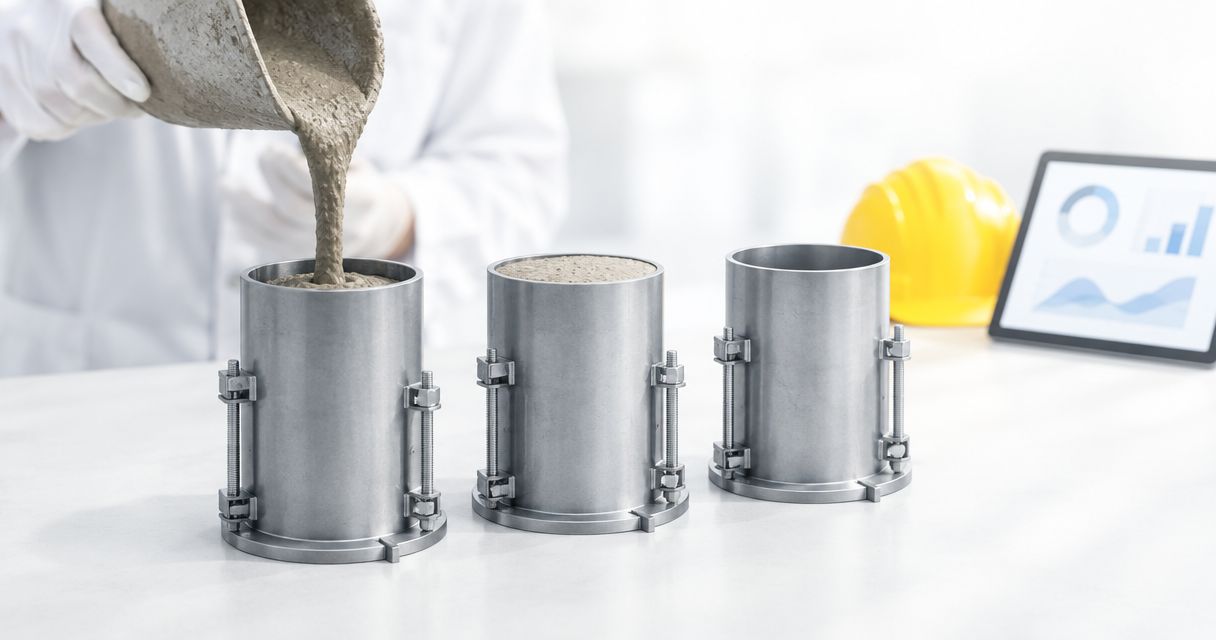
How to select concrete cylinder molds for field sampling
Posted by Matt Johnson on Nov 24, 2026
Select concrete cylinder molds by matching the specimen dimensions to the project’s test requirements, then checking mold construction, dimensional stability, closure, and removal method. Confirm the required size before choosing between single-use and reusable molds; the mold alone does not control specimen quality, so your sampling, consolidation, curing, and transport procedures must also match the applicable method.
- Select concrete cylinder molds by specimen size, aggregate size, test requirements, and field handling needs.
- Single-use molds reduce cleaning; reusable molds require inspection, cleaning, and appropriate preparation between uses.
- Check ASTM C470/C470M documentation rather than assuming a material or appearance establishes suitability.
Why this matters
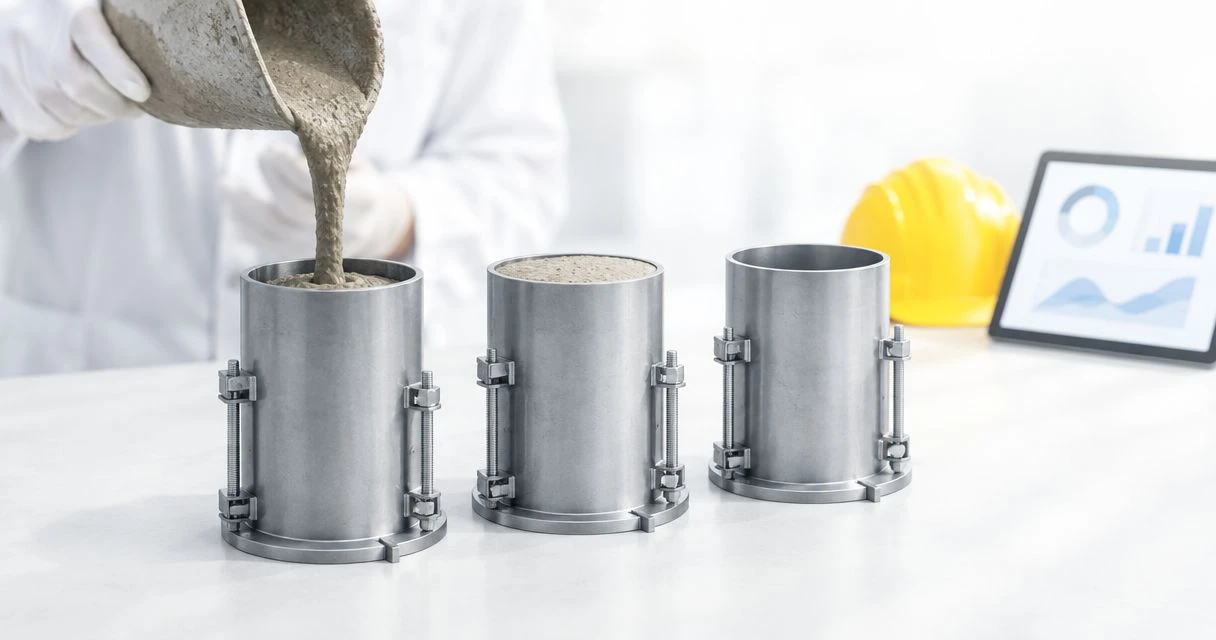
A cylinder mold establishes the specimen’s geometry while fresh concrete sets. Leakage, distortion, or damage during stripping can compromise that specimen before the laboratory prepares its ends or places it in a compression testing machine.
Choose the specimen requirement first and the mold second. For your equipment purchase, treat the mold, cover, consolidation equipment, initial-curing arrangement, and transport protection as one sampling system. Compare concrete cylinder molds and lids against the specimen dimensions and field procedure before selecting a pack.
How do you select concrete cylinder molds for field sampling?
Start with the governing project documents and test procedure. ASTM C31/C31M addresses making and curing concrete test specimens in the field, while ASTM C470/C470M addresses molds for forming concrete test cylinders vertically; neither a product photograph nor a familiar size replaces the relevant requirements.
Use this sequence before issuing a purchase order:
- Confirm the test purpose. Identify whether the specimens support strength acceptance, field-cured strength evaluation, or another specified purpose. The purpose determines the applicable handling and curing instructions.
- Confirm specimen dimensions. Check the required cylinder diameter and length, the nominal maximum aggregate size, and the receiving laboratory’s requirements.
- Check mold documentation. Request the documented dimensions, construction details, preparation instructions, and evidence supporting any stated ASTM C470/C470M suitability.
- Select the handling system. Decide how technicians will fill, consolidate, identify, cover, move, and strip the specimens without damaging them.
- Confirm laboratory compatibility. Check that the laboratory can prepare the specimen ends and test the selected dimensions with its equipment and procedure.
- Document the selection. Record the approved mold description and specimen dimensions in the sampling instructions so purchasing substitutions do not change the test setup unnoticed.
The practical buying decision is not simply plastic versus metal. It is whether the complete setup produces the required specimen and allows your technicians to handle it correctly under field conditions.
4 × 8 in. molds: confirm aggregate and laboratory requirements
A nominal 4 in. diameter × 8 in. length cylinder is a common concrete strength specimen. Its smaller size reduces the amount of concrete handled per specimen compared with a nominal 6 × 12 in. cylinder, but that handling advantage does not establish its suitability for every mixture or project.
ASTM C31/C31M relates cylinder diameter to aggregate size: the cylinder diameter must be at least three times the nominal maximum size of the coarse aggregate. Apply the governing procedure where the concrete requires wet sieving; do not remove larger particles informally to make a mixture fit the selected mold.
Best for: sampling plans that specify or permit this specimen size and satisfy the applicable aggregate-size requirements. The limitation is that a convenient smaller cylinder is not a substitute for checking the mixture and receiving laboratory’s instructions.
6 × 12 in. molds: plan for greater handling demands
A nominal 6 in. diameter × 12 in. length cylinder provides a larger specimen geometry. Select it when the governing requirements call for it, rather than assuming a larger mold automatically produces a more representative or more accurate result.
The larger mold requires more concrete and more handling space than a 4 × 8 in. mold. Your initial-curing arrangement, specimen carrier, stripping method, and laboratory end-preparation equipment must accommodate the selected dimensions.
Best for: projects specifying this cylinder size or requiring a larger diameter under the applicable aggregate-size criteria. The trade-off is a more demanding field-handling setup.
| Specimen option | Best for | Practical advantage | Selection limitation |
|---|---|---|---|
| Nominal 4 × 8 in. cylinder | Projects permitting smaller cylinders with suitable aggregate | Less concrete and handling space per specimen | Requires confirmation of aggregate-size suitability and laboratory acceptance |
| Nominal 6 × 12 in. cylinder | Projects specifying larger cylinders or requiring the larger diameter | Larger specimen diameter | Requires more concrete, curing space, and handling capacity |
Both examples have a nominal length-to-diameter ratio of 2:1. That shared proportion does not make their strength results interchangeable without checking the governing specification and reporting requirements.
Single-use molds versus reusable molds
Mold construction affects preparation, cleaning, stripping, and inspection. For a purchasing specification, describe the required performance and documented suitability rather than treating a material name as proof that the mold meets the test method.
| Mold option | Best for | Practical advantage | Limitation to manage |
|---|---|---|---|
| Single-use plastic mold | Field programs prioritizing reduced mold cleaning | Avoids preparing the same mold for repeated casting cycles | Requires replacement units and a suitable removal and disposal process |
| Reusable metal mold | Programs able to maintain a controlled cleaning and inspection process | Allows repeated use when the mold remains serviceable | Requires cleaning, preparation, and inspection of joints and closures |
Single-use plastic molds
Single-use plastic molds simplify the workflow between sampling events because technicians do not need to clean each mold for another casting cycle. Still, inspect the body, base, and rim before use, and confirm the manufacturer’s instructions for support and removal.
Do not assume every plastic mold uses the same closure or stripping method. Confirm whether the proposed mold requires a separate cover, a removal tool, or another accessory, and include those requirements in the field kit.
Reusable metal molds
Reusable metal molds suit operations that can control maintenance between uses. Inspect the assembled mold for deformation, damaged mating surfaces, worn fasteners, and joints that no longer close correctly.
Follow the applicable procedure and manufacturer’s instructions for assembly and release-agent use. Reject a damaged mold rather than compensating with improvised repairs that change its geometry or sealing. Reusability is useful only while the mold remains suitable for making the required specimen.
Why concrete cylinder mold selection varies
The correct choice changes with the specimen requirement and the way your team works. These factors belong in a selection checklist:
- Governing requirements: the project specification and applicable test method establish the specimen and equipment requirements.
- Aggregate size: the nominal maximum coarse aggregate size affects the permitted cylinder diameter and whether specified sample preparation is necessary.
- Mold construction: the body, base, joints, and closure must remain suitable during filling, consolidation, and early handling.
- Consolidation method: the selected mold dimensions and concrete characteristics must be considered alongside the applicable rodding or vibration procedure.
- Curing and transport: specimen size affects space, support, identification, and protection during initial curing and delivery.
- Laboratory workflow: stripping, end preparation, compression testing, and reporting must accommodate the selected specimen dimensions.
Keep these requirements together. A purchasing specification that names only a diameter leaves technicians to resolve the rest after the equipment reaches the jobsite.
What should you inspect before filling a mold?
Inspect the mold before sampling begins, not while concrete waits in the sampling container. Confirm that the body is undamaged, the base is secure, and the assembled mold can stand vertically on the prepared support surface.
Check the following items:
- Body: no cracks, deformation, or damage that affects the specimen shape.
- Base and joints: secure assembly with no visible separation or damaged mating surfaces.
- Interior: clean and prepared as required by the applicable instructions.
- Cover: suitable for the specified protection during initial curing, without disturbing the concrete surface.
- Identification: a durable specimen identifier that remains traceable through curing, transport, and stripping.
A leak is not merely a housekeeping problem. Loss of water or mortar changes the material retained in the mold, so a visibly leaking mold should not remain in service simply because it still stands upright.
How do sampling and curing affect the buying decision?
For a field kit, separate the mold’s role from the procedures surrounding it. ASTM C172/C172M addresses sampling freshly mixed concrete, ASTM C31/C31M addresses making and curing field specimens, and ASTM C39/C39M addresses compressive-strength testing of cylindrical concrete specimens.
Those scopes matter when you review equipment descriptions. A mold documented for ASTM C470/C470M does not, by itself, establish that sampling, curing, transport, end preparation, or strength testing follows the applicable procedure.
Before purchasing, ask the receiving laboratory to confirm:
- The cylinder dimensions accepted for the project.
- The required specimen identifiers and accompanying records.
- The arrangements for initial curing and subsequent transport.
- The planned stripping and end-preparation procedures.
- Any project-specific instructions that affect the sampling kit.
This review prevents an equipment choice from becoming an undocumented change to the test program. It also identifies accessories that belong in the purchasing request rather than being improvised in the field.
Can you substitute one cylinder size for another?
Do not substitute cylinder dimensions without checking the governing requirements. Both common sizes are used in concrete testing, but their use must match the specification, aggregate-size criteria, and laboratory procedure.
Record an approved substitution before sampling. Do not mix specimen sizes within an intended test set simply because the original mold supply is exhausted; confirm the required approach with the responsible testing authority.
Does an ASTM reference establish mold suitability?
An ASTM reference alone does not establish a particular mold’s suitability. Read what the supplier actually documents: a reference to concrete testing is different from a specific statement supported by information about the mold.
For your purchasing record, retain the product identification, stated dimensions, relevant instructions, and supporting documentation. Keep mold suitability separate from claims about the performance of the entire field-testing process.
FAQ
What concrete cylinder molds should I use for field sampling?
Use concrete cylinder molds that match the project’s required specimen dimensions, aggregate-size criteria, and applicable mold requirements. Confirm the receiving laboratory’s instructions before purchasing or substituting molds.
Are 4 × 8 in. concrete cylinders better than 6 × 12 in. cylinders?
Neither cylinder size is universally better. Nominal 4 × 8 in. cylinders reduce concrete handling per specimen, while nominal 6 × 12 in. cylinders provide a larger diameter; the project requirements determine the appropriate choice.
Can I reuse plastic concrete cylinder molds?
Do not reuse a mold identified as single-use. Follow the manufacturer’s intended use and removal instructions rather than assuming an undamaged appearance establishes suitability for another specimen.
Which ASTM standard covers concrete cylinder molds?
ASTM C470/C470M covers molds for forming concrete test cylinders vertically. ASTM C31/C31M addresses making and curing concrete test specimens in the field, so mold requirements and field procedures have distinct scopes.
Do concrete cylinder molds need lids?
Concrete specimens need the protection required by the applicable curing procedure. Confirm that the proposed cover or other permitted protection works with the selected mold and does not disturb the concrete surface.
Can I change cylinder size when I run out of molds?
Do not change cylinder size without confirming the governing specification and receiving laboratory’s requirements. Record any approved change before making specimens rather than treating the sizes as interchangeable.
Wrapping Up
Decide how you will strip and identify the cylinder before you decide which mold to buy. A mold can be straightforward to fill yet awkward to remove without damaging the specimen or losing its identification.
Write the removal method and identification transfer into the sampling instructions. That small purchasing check connects field sampling to laboratory testing—and keeps the specimen traceable after the mold is gone.
For a specified smaller specimen, review the 4x8 gray concrete cylinder molds, 36 per case, which include attached lids. When larger specimens are required, compare the 6x12 gray molds, 20 per case; that listing supplies molds only, with lids sold separately. Select the required size before comparing packaging.
For the broader purchasing process, read the contractor’s guide to choosing testing equipment.
Topics: Concrete Testing; Concrete Cylinder Molds.