Understanding ASTM D422: Sieve Analysis and Particle Size
Posted by Matt Johnson on Jun 11, 2024
ASTM D422 was the standard test method for particle-size analysis of soils, combining a sieve analysis for particles larger than the No. 200 (75 µm) sieve with a hydrometer analysis for silt and clay. ASTM withdrew it in 2016; its work is now split between ASTM D6913 (sieve analysis) and ASTM D7928 (hydrometer analysis). D422 still appears in older reports and some agency specifications, so labs need to understand both.
- D422 was withdrawn in 2016; use D6913 for sieving and D7928 for hydrometer analysis.
- The hydrometer test relies on Stokes’ law, with readings from about one minute to 24 hours.
- If a specification still cites D422, confirm with the engineer that D6913 and D7928 are acceptable substitutes.
Why this matters
A lab that still runs D422 when the client expects D6913 and D7928 risks rejected reports. The newer standards changed specimen handling, precision options and hydrometer calibration, so the procedures are not interchangeable.
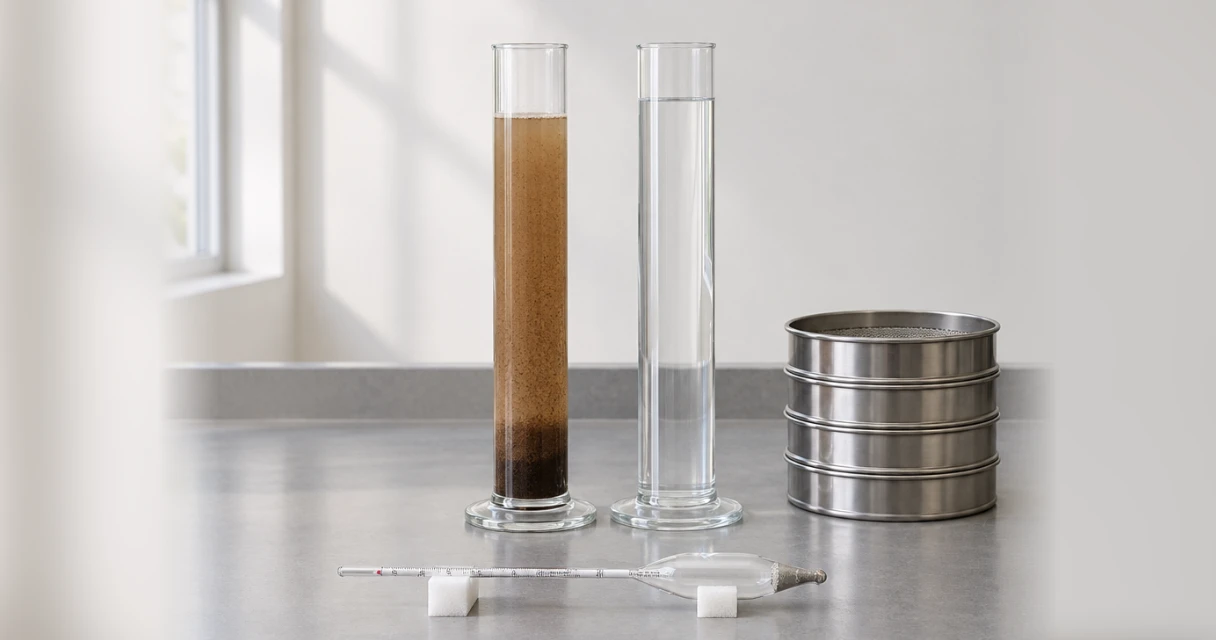
Run the current methods with the equipment they call for. The hydrometer portion uses the ASTM 152H soil hydrometer and a sedimentation cylinder.
What did D422 measure?
D422 produced a single gradation curve from coarse gravel down to clay-size particles (about 0.001 mm). The sieve portion gave the sand and gravel distribution; the hydrometer portion estimated silt and clay from how fast particles settle in water.
How does the sieve portion work (now ASTM D6913)?
- Prepare a representative sample.
- Separate the material retained on the No. 10 sieve (2.00 mm) in D422, or on the designated separating sieve in D6913.
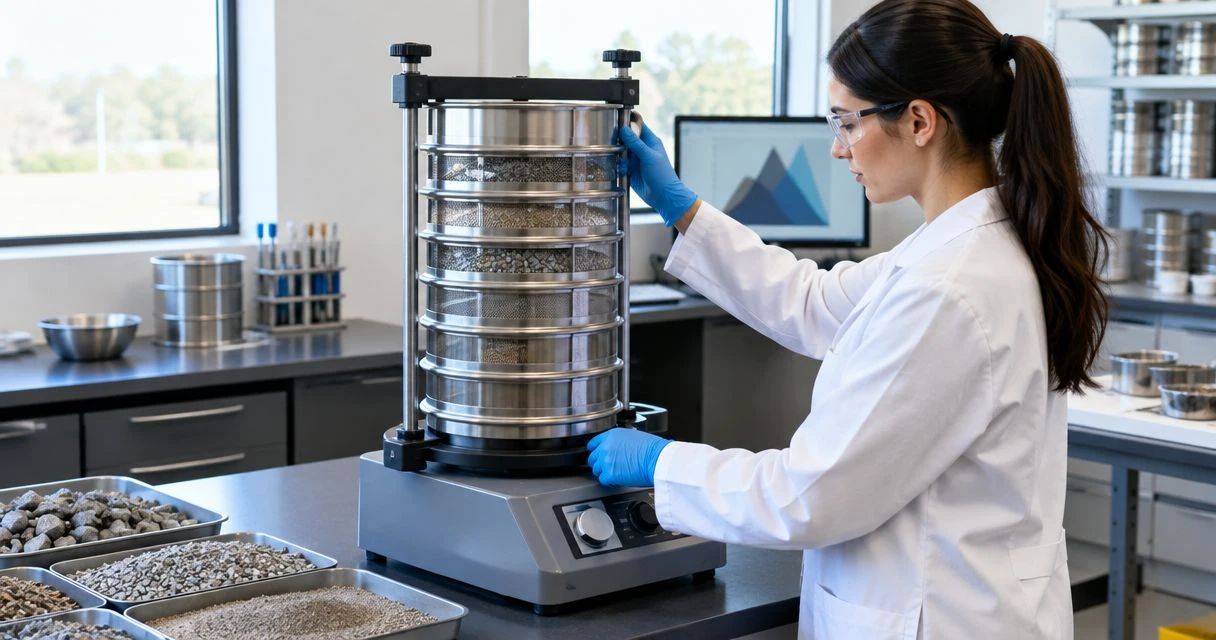
- Sieve the coarse portion through a stack of ASTM test sieves.
- Wash the fine portion over a No. 200 sieve, dry it and sieve it.
- Calculate the percent passing each sieve.
D6913 tightened this procedure with Method A and Method B, specimen mass rules and allowances for testing moist soils. See our full guide to ASTM D6913.
How does the hydrometer portion work (now ASTM D7928)?
- Disperse the fine soil by soaking it in sodium hexametaphosphate solution.
- Mix the slurry with a soil dispersion mixer and transfer it to a 1,000 mL sedimentation cylinder.
- Invert the cylinder repeatedly, set it down and start timing.
- Read the hydrometer at set times, from about one minute to 24 hours, recording temperature.
- Correct and calculate particle diameter and percent finer for each reading.
152H hydrometer: the standard soil hydrometer
D422 and D7928 use the ASTM 152H soil hydrometer, which reads grams of soil per liter.
Best for: routine soil hydrometer analysis. The limitation: readings need temperature, meniscus and dispersant corrections.
151H hydrometer: specific gravity readings
The 151H hydrometer reads specific gravity and is used in some procedures.
Best for: procedures that call for specific gravity readings. The limitation: calculations differ from the 152H, so do not mix the two within a test. Browse all hydrometers.
ASTM D422 vs D6913 and D7928 compared
| Feature | ASTM D422 (withdrawn) | ASTM D6913 + D7928 |
|---|---|---|
| Structure | One combined method | Separate sieve and hydrometer standards |
| Precision options | Single procedure | Method A and B in D6913 |
| Specimen handling | Air-dried specimens typical | Moist specimens allowed in D6913 |
| Hydrometer details | Older calibration and correction steps | Updated calibration, dispersion and calculation rules |
Why particle-size results vary
- Dispersion: incomplete dispersion lets clay particles clump and settle as silt.
- Temperature: settling rates change with water temperature.
- Timing: late or early readings shift the calculated diameters.
- Washing: skipping the No. 200 wash under-reports fines in the sieve portion.
- Method: laser diffraction gives different values from hydrometer testing and is not a direct substitute for specification work.
Do you need a hydrometer test for every soil?
Only when the distribution of particles finer than the No. 200 sieve matters, such as for clay content, frost susceptibility or filter criteria. USCS classification under ASTM D2487 uses the sieve analysis and Atterberg limits. Our guide to the sieve analysis graph shows how to plot the combined curve.
FAQ
Is ASTM D422 still valid?
No. ASTM withdrew it in 2016. Use ASTM D6913 for sieve analysis and ASTM D7928 for hydrometer analysis.
Do I need a hydrometer test for every soil?
Only when the distribution of particles finer than the No. 200 sieve matters, such as for clay content, frost susceptibility or filter criteria.
What hydrometer does ASTM D7928 use?
The ASTM 152H soil hydrometer, which reads grams of soil per liter.
What dispersing agent is used in the hydrometer test?
Sodium hexametaphosphate, which separates fine particles so they settle individually.
Can laser diffraction replace the hydrometer test?
Not for specification work. It is fast and repeatable, but its results differ from hydrometer values.
Wrapping Up
Replace D422 with D6913 and D7928, and confirm the substitution with the engineer. Proper dispersion, timing and temperature records keep the hydrometer portion reliable.
Certified Material Testing Products supplies ASTM test sieves, 152H and 151H hydrometers, sedimentation cylinders and dispersion mixers. Browse our hydrometers.
Topics: Soil Testing; Sieve Analysis; Hydrometer Analysis.