ASTM D6913: Soil Particle-Size Distribution Analysis
Posted by Matt Johnson on Aug 05, 2024
ASTM D6913 is the standard test method for the particle-size distribution (gradation) of soils by sieve analysis, from 3in (75 mm) down to the No. 200 (75 µm) sieve. Run it with E11 sieves, a wash sieve, a balance matched to the method and an oven at 110 ± 5 °C. The results feed soil classification under ASTM D2487, filter and drainage design, and compaction specifications.
- D6913 replaced the sieve portion of ASTM D422, which was withdrawn in 2016; the hydrometer portion is now ASTM D7928.
- Method A reports to the nearest 1%; Method B to 0.1% with a larger specimen and finer balance.
- Wash over the No. 200 sieve and never overload a sieve, or the fines are under-reported.
Why this matters
Gradation decides how a soil is classified, whether it drains and how it compacts. A skipped wash, an overloaded sieve or a torn screen changes the fines percentage, and that can change the USCS group symbol.
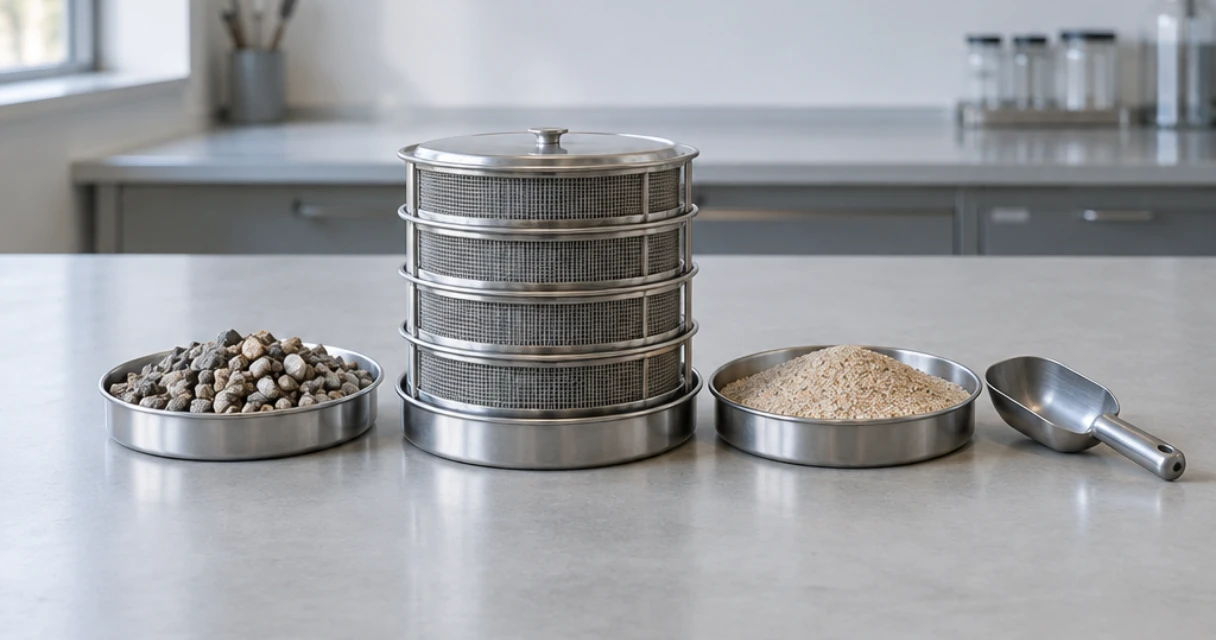
Accurate gradation starts with sound sieves and a proper wash. Build your stack from 8in diameter ASTM sieves and add 12in sieves for coarse fractions.
How do you run a D6913 sieve analysis?
- Prepare the specimen. Obtain a representative portion by splitting. D6913 allows testing from the moist state, which avoids particle breakdown that drying can cause in some soils.
- Choose single or composite sieving. For wide-ranging soils, a designated separating sieve (often the No. 4 or 3/8in) splits the sample into coarse and fine portions; the fine portion is subsampled.
- Wash over the No. 200 sieve. Washing removes clay and silt coating larger particles. Dry sieving alone underestimates fines.
- Dry the washed material to constant mass.
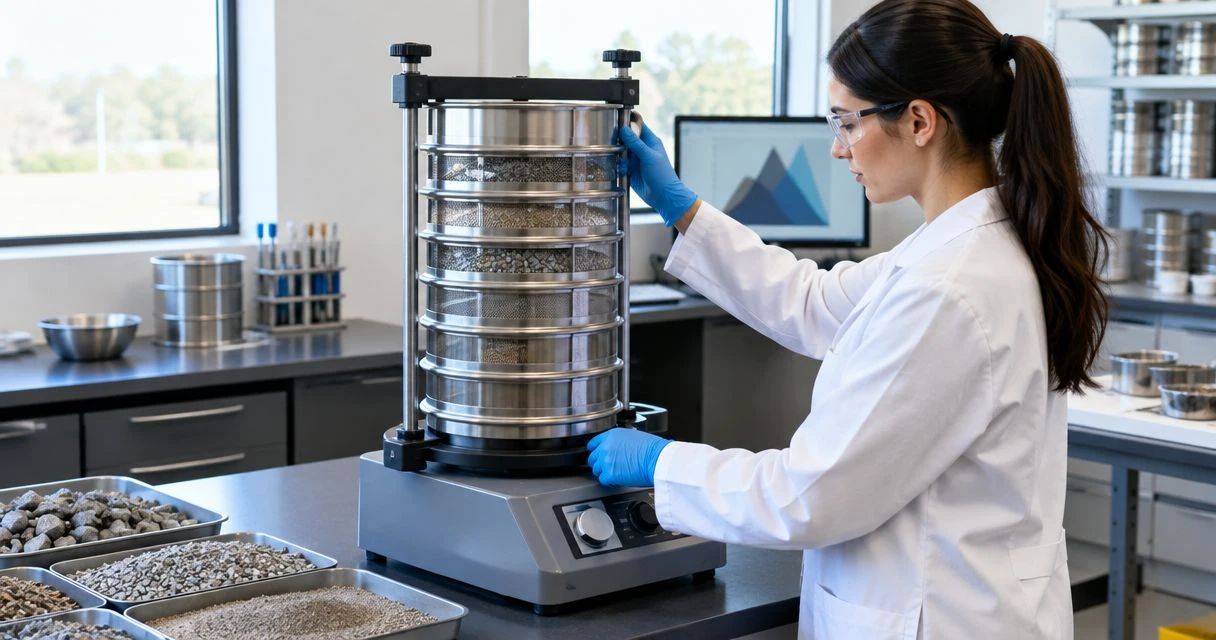
- Sieve by hand or in a shaker. Spread material over extra sieves or sieve in portions to avoid overloading.
- Weigh the mass retained on each sieve and check the total against the starting dry mass within the standard’s tolerance.
- Calculate cumulative percent passing each sieve and plot the gradation curve.
Method A: the usual choice for classification
Method A reports percent passing to the nearest 1%. If the requesting authority names no method, Method A applies.
Best for: routine classification work. The limitation is precision: projects that need tenths of a percent must specify Method B.
Method B: tighter precision on request
Method B reports to the nearest 0.1% and needs a larger specimen and tighter balance readability. The minimum specimen mass rises with maximum particle size, so check the table in the current edition before splitting.
Best for: clients or specifications that call for greater precision. The limitation is effort: larger specimens take longer to wash, dry and sieve.
D6913 equipment compared
| Equipment | Best for | Practical advantage | Limitation to manage |
|---|---|---|---|
| 8in ASTM E11 sieves | Fine fractions and smaller specimens | Standard lab size, fits most shakers | Overloads quickly with coarse material |
| 12in ASTM E11 sieves | Coarse fractions | More sieving area per sieve | Needs a compatible shaker |
| Wet-wash sieves | Washing over the No. 200 | Deep frame keeps material from splashing out | Still requires drying to constant mass |
| Sieve shaker | Busy labs and larger specimens | Consistent, hands-free sieving | Aggressive shaking can break friable particles |
| Balance | Weighing retained fractions | Readability matched to Method A or B | Capacity must cover the full specimen |
You will also need a drying oven, a sample splitter and sieve brushes.
Why D6913 results vary
- Washing: skipping it leaves fines stuck to coarse particles.
- Sieve loading: overloaded sieves blind the mesh and trap material that should pass.
- Sieve condition: worn or torn mesh passes oversize particles.
- Splitting: an unrepresentative specimen skews every fraction.
- Soil type: clays, friable particles and organic soils need special handling.
Which soils need special handling?
- Clays and clayey soils: soak before washing and use a dispersant if particles clump.
- Friable or weak particles (shale, weathered rock): minimize handling and avoid aggressive shaking.
- Organic soils: D6913 is not intended for highly organic soils.
How do you read the results?
The gradation curve plots percent passing against particle size on a log scale. From it you read D10, D30 and D60 to calculate the coefficients of uniformity and curvature used in USCS classification. Our guides to the sieve analysis graph and ASTM D2487 walk through both steps.
FAQ
Does ASTM D6913 measure clay content?
No. D6913 stops at the No. 200 sieve. To break down silt and clay sizes, run a hydrometer test under ASTM D7928 using a 152H soil hydrometer and sedimentation cylinder.
What is the difference between ASTM D6913 and ASTM C136?
D6913 is for soils. C136 is for fine and coarse aggregates used in construction and has its own sample sizes and sieving rules.
Why did ASTM D6913 replace D422?
ASTM withdrew D422 in 2016. Its sieve portion became D6913 and its hydrometer portion became D7928.
Should I use Method A or Method B?
The requesting authority chooses. If none is named, use Method A, which reports to the nearest 1%. Method B reports to 0.1% and needs a larger specimen.
Can I test the soil without drying it first?
Yes. D6913 allows testing from the moist state, which avoids the particle breakdown that air- or oven-drying can cause in some soils.
Wrapping Up
Wash, do not overload, and keep the sieves sound. Those three habits protect the fines percentage that drives classification and design decisions.
Certified Material Testing Products supplies ASTM E11 sieves, wash sieves, shakers and balances for soil gradation work. Start with our 8in diameter ASTM sieves.
Topics: Soil Testing; Sieve Analysis; Gradation.