ASTM C136 Sieve Analysis: Equipment and Procedure Guide
Posted by Matt Johnson on Nov 22, 2026
ASTM C136/C136M is the standard test method for sieve analysis of fine and coarse aggregates. It finds the particle size distribution, or gradation, of an aggregate sample by passing it through a stack of test sieves and weighing what stays on each one. Labs use the results to check aggregate against project gradation limits and to calculate the fineness modulus of fine aggregate. AASHTO T 27 covers the same test for state DOT work.
This guide explains the equipment the test calls for and the main steps, so you can match your lab setup to the method. Always work from the current edition of the standard and your project specification.
Equipment Needed for ASTM C136
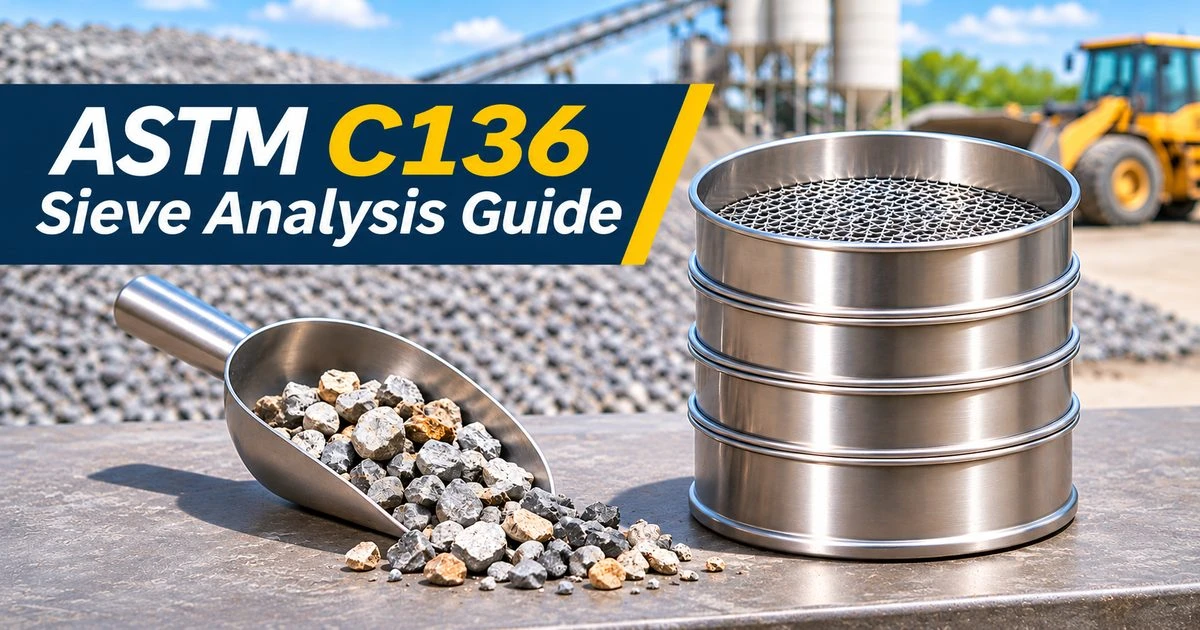
Test Sieves
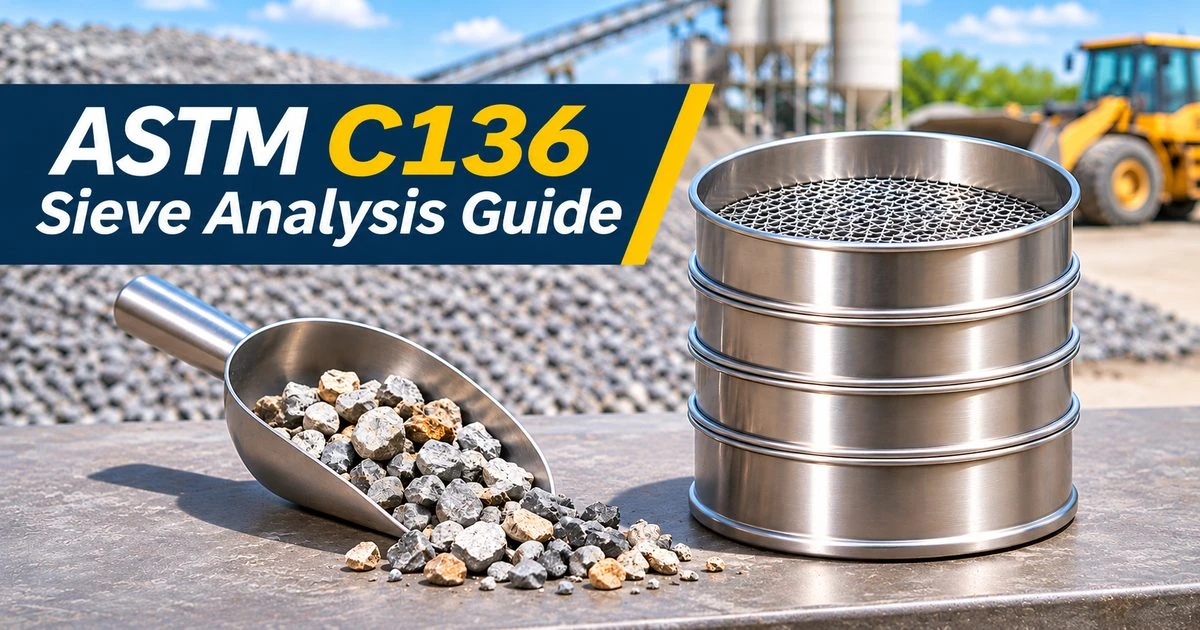
The sieves must meet ASTM E11, the specification for woven wire test sieve cloth. Choose the sieve sizes your project specification calls for. Most fine aggregate work uses 8in diameter ASTM sieves. Coarse aggregate needs more sieving area, so many labs use 12in diameter ASTM sieves to avoid overloading. You can compare every frame size and material in our ASTM test sieves category, and our US sieve size chart lists sieve numbers with their openings.
Balance
For fine aggregate, the balance must read to 0.1 g and be accurate to 0.1 g or 0.1% of the test load, whichever is greater. For coarse aggregate, or a mix of fine and coarse, it must read and be accurate to 0.5 g or 0.1% of the test load, whichever is greater. Coarse samples can weigh 20 kg or more, so check capacity as well as readability. See our balances and scales for laboratory and field models.
Mechanical Sieve Shaker
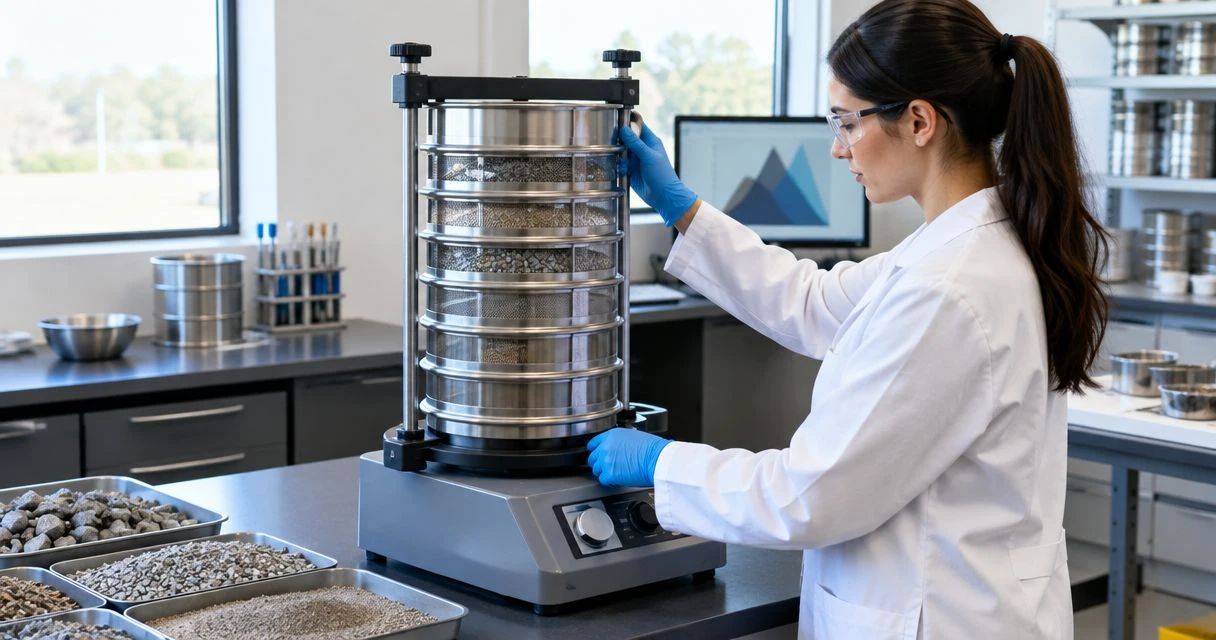
A shaker is optional for small samples, but the standard recommends one when the sample is 20 kg or larger. Whatever shaker you use, it must sieve the sample completely within a reasonable time. Labs set the shaking time by checking it against the hand sieving rule described below. Compare models in our sieve shakers category.
Drying Oven
The oven must hold 110 ± 5°C (230 ± 9°F) so the sample can be dried to constant mass. Size the oven for your largest sample pans. See our laboratory ovens.
Sample Splitter
The field sample has to be reduced to test size without changing its gradation. A riffle splitter or similar divider is the usual tool. See our sample splitters and dividers.
Small Tools
You will also need pans, scoops and sieve brushes to clear particles from the mesh without damaging it.
How Big Should the Test Sample Be?
For fine aggregate, the sample must weigh at least 300 g after drying. For coarse aggregate, the minimum mass depends on the nominal maximum size of the aggregate:
- 9.5 mm (3/8in): 1 kg
- 12.5 mm (1/2in): 2 kg
- 19.0 mm (3/4in): 5 kg
- 25.0 mm (1in): 10 kg
- 37.5 mm (1-1/2in): 15 kg
- 50 mm (2in): 20 kg
A mix of fine and coarse aggregate follows the coarse aggregate requirement.
How to Run a Sieve Analysis
- Reduce the field sample to test size with a sample splitter.
- Dry the sample to constant mass at 110 ± 5°C and record its dry mass.
- Stack the sieves with the largest opening on top and a pan on the bottom, then place the sample on the top sieve.
- Shake the stack by hand or in a mechanical shaker for the time your lab has established.
- Weigh the material retained on each sieve and in the pan.
- Calculate the percentage passing, the percentage retained or both, and compare the results with your specification.
Check That Sieving Is Complete
Under ASTM C136, sieving is complete when no more than 1% by mass of the material retained on any individual sieve passes that sieve during one minute of continuous hand sieving. AASHTO T 27 uses a different check: no more than 0.5% by mass of the total sample. Labs use this check to set and confirm the run time on a mechanical shaker.
Do Not Overload the Sieves
On sieves finer than 4.75 mm (No. 4), the material left on any sieve must not exceed 7 kg per square meter of sieving surface. That works out to 200 g on an 8in sieve. Sieves of 4.75 mm and larger have a limit that rises with the sieve opening. If a sieve is overloaded, add an intermediate sieve, split the sample into portions or move to a larger frame.
Material Finer Than the No. 200 Sieve
Dry sieving alone does not measure the fines passing the 75 µm (No. 200) sieve accurately. When you need that value, wash the sample by ASTM C117 first, dry it again and then dry sieve it. For the washing step, see our wet-wash sieves.
Fineness Modulus
The fineness modulus describes how coarse or fine a sand is. To calculate it, add the cumulative percentages retained on the 150 µm, 300 µm, 600 µm, 1.18 mm, 2.36 mm and 4.75 mm sieves, plus the 9.5 mm, 19.0 mm and 37.5 mm sieves and larger in a 2 to 1 ratio. Then divide the total by 100.
Common Mistakes
- Testing a sample that was not split, which can change the gradation before the test starts.
- Running the shaker for a fixed time that was never checked against the one-minute hand sieving rule.
- Overloading the fine sieves, which traps particles that should pass.
- Using worn or damaged sieves. Inspect the mesh regularly, and replace or verify sieves that show stretched or torn openings.
- Relying on dry sieving alone when the specification limits the amount passing the No. 200 sieve.
Equip Your Lab for ASTM C136
A complete setup includes test sieves in the sizes your specification calls for, a balance with the right readability and capacity, a drying oven, a sample splitter and, for larger samples, a mechanical shaker. Start with our sieving equipment and build the stack your work requires.