Grieve Ovens: Models, Uses and How to Choose One
Posted by Matt Johnson on Aug 22, 2024
Select a Grieve oven by matching its maximum temperature to your process, its chamber to your largest load and its electrical rating to your building. Grieve Corporation of Round Lake, Illinois, has built industrial ovens and furnaces since 1949; its forced-air and gravity convection models dry, cure, preheat and age everything from soil and aggregate samples to coated metal parts.
- Choose a Grieve oven by maximum temperature, chamber size and power supply, in that order.
- A 350 °F bench oven covers the 110 °C drying used for most soil and aggregate tests; curing and heat-treating work usually needs a 550 °F model.
- Confirm voltage and phase on the exact product page before ordering; Grieve builds the same chamber in several electrical versions.
Why this matters
Moisture content, gradation and specific gravity tests all begin with an oven-dried sample. An oven that cannot hold its set temperature, or a chamber packed too tightly for air to move, leaves some pans wetter than others and makes the results harder to defend.
Buy the oven for the hottest process and the largest load you actually run. Compare every model we carry on our Grieve ovens page, then check the electrical rating of the one that fits.
How do you select a Grieve oven?
Work through these decisions before comparing individual models:
- Set the temperature. Drying soil and aggregate to constant mass is typically done at 110 ± 5 °C (230 °F), so a 350 °F oven covers it with margin. Curing coatings or heat-treating parts usually calls for a 550 °F model.
- Size the chamber. Measure your largest pan or rack load and leave space around it for air to circulate. Crowded shelves dry unevenly.
- Match your power. Grieve models are offered in 115 V, 208 V, 230 V and 460 V versions, single or three phase. Confirm what your outlet or panel supplies.
- Choose electric or gas. The large cabinet ovens come in both. Gas can lower running costs where a gas line is already in place.
- Choose gravity or forced air. Gravity convection suits light powders; forced air gives more even temperatures and faster recovery after the door opens.
- List the accessories. Extra shelves, a stand and a shutdown timer are sold separately.
Laboratory ovens: small chambers for sample and glassware drying
Grieve’s LO, LR and LW lab ovens range from 0.7 to 2.0 cu ft. Gravity convection models such as the Grieve LR-271C (1.3 cu ft, up to 270 °C) move air without a fan, so light powders are not blown around. Forced-air models such as the Grieve LW-201C (2.0 cu ft, up to 200 °C) heat more evenly and recover faster.
Best for: labs drying small samples, fine powders or glassware. The limitation is chamber size: several large soil or aggregate pans will not fit with room for airflow.
NB bench ovens: the common choice for soil and aggregate drying
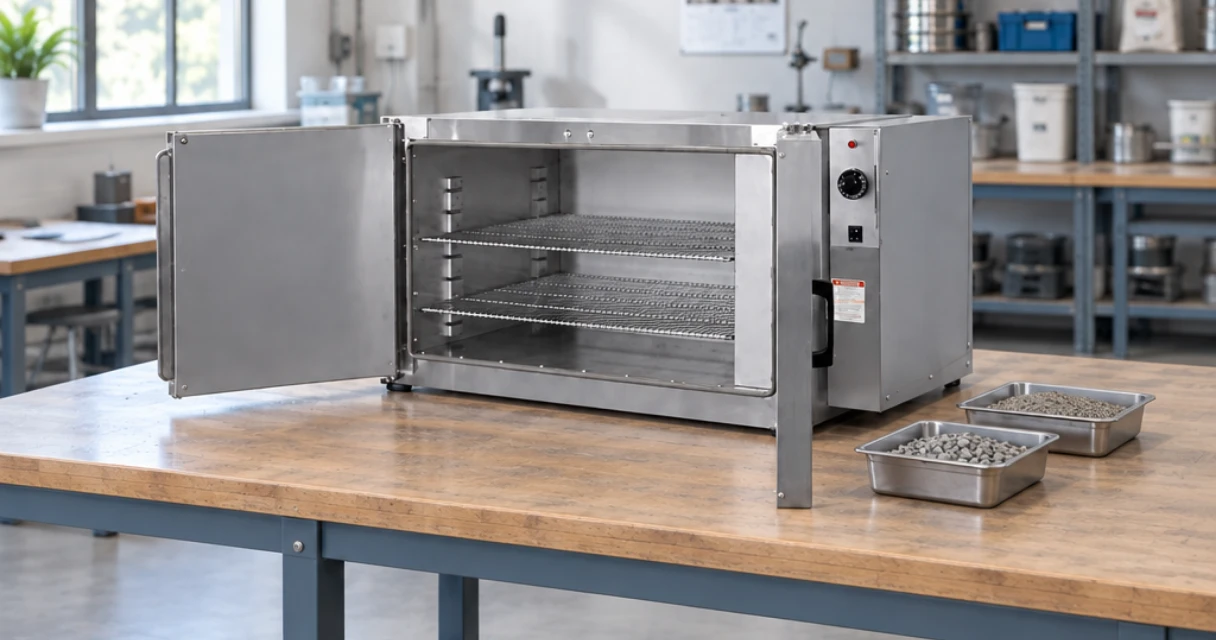
The NB series sits on a bench or stand. The Grieve NB-350 (7 cu ft, up to 350 °F) holds several sample pans and comfortably covers 110 °C drying. The NB-550 reaches 550 °F for curing and heat-treating. The DR-350 adds pull-out drawers (4.8 cu ft) for small parts and tray loads.
Best for: materials testing labs drying soil, aggregate and asphalt samples daily. The limitation is batch size: high-volume work outgrows a 7 cu ft chamber.
300 series hi-capacity bench ovens: more space without a floor cabinet
The Grieve Model 323 holds 15.8 cu ft, the Model 333 holds 27.0 cu ft and the Model 343 holds 36.0 cu ft. Each comes in single-phase and three-phase versions.
Best for: larger batch loads where floor space is limited. Check the maximum temperature and electrical rating on each product page; they differ by version.
SA, SB and SC cabinet ovens: high-volume drying and curing
These floor-standing ovens offer 46.9, 58.3 and 77.9 cu ft chambers, with 400 °F or 550 °F maximum temperatures and electric or gas heat. The Grieve SA-400 is the entry point to the range.
Best for: production shops and busy labs running full racks. The limitation is installation: plan the floor space, electrical service or gas line, and door clearance before ordering.
Grieve oven series compared
| Series | Best for | Practical advantage | Limitation to manage |
|---|---|---|---|
| LO / LR / LW lab ovens (0.7–2.0 cu ft, 200–270 °C) | Small samples, powders, glassware | Gravity or forced-air options in a small footprint | Too small for multiple large pans |
| NB bench ovens (5.3–7 cu ft, 350 or 550 °F) | Soil, aggregate and asphalt sample drying | Covers 110 °C drying with margin | Batch size limited by chamber |
| DR drawer oven (4.8 cu ft, 350 °F) | Small parts and tray loads | Pull-out drawers | Not suited to tall loads |
| 323 / 333 / 343 hi-capacity bench (15.8–36.0 cu ft) | Larger batches in limited floor space | Single- and three-phase versions | Confirm temperature and power per version |
| SA / SB / SC cabinets (46.9–77.9 cu ft, 400 or 550 °F) | High-volume drying, curing, preheating | Electric or gas heat | Needs floor space and suitable utilities |
Sizes and temperatures come from the models listed in our store. Check each product page for the exact voltage and phase before you order.
Why Grieve oven selection varies
- Process temperature: drying, curing and heat-treating sit at very different set points.
- Load size and shape: pans, racks and parts need clearance on every side for air to move.
- Material: light powders favour gravity convection; dense loads benefit from forced air.
- Electrical service: voltage and phase must match the building, not just the oven.
- Fuel: gas heat on cabinet ovens depends on an existing gas line.
- Throughput: how many samples or parts must dry in one cycle.
What should you check before putting an oven into service?
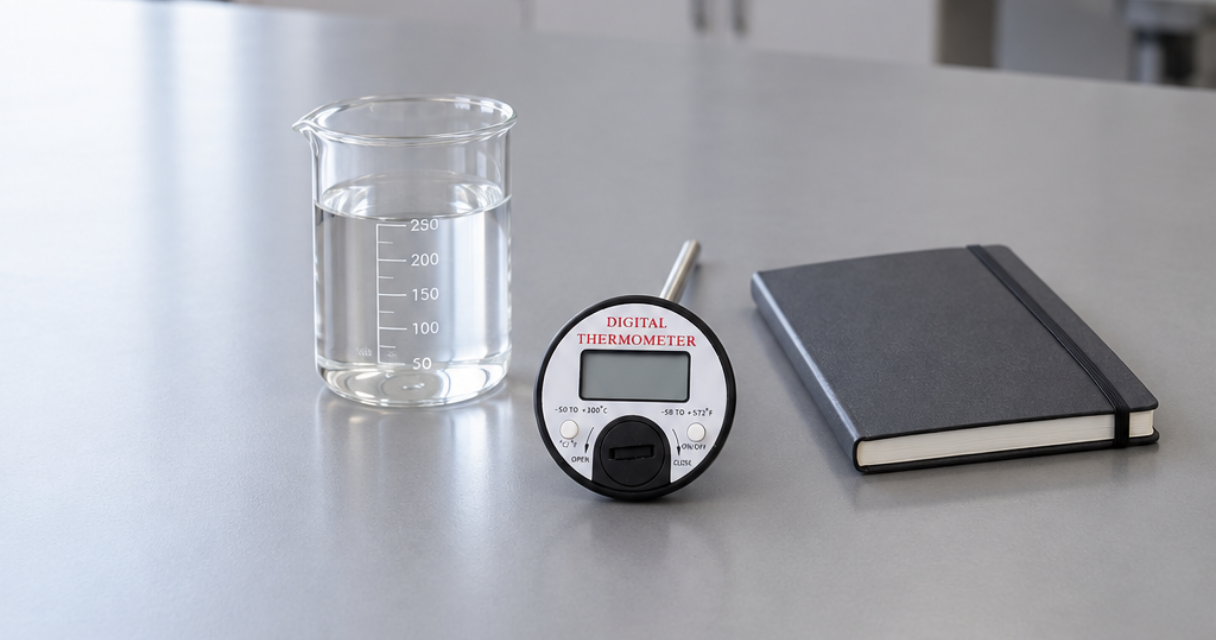
- Chamber temperature: verify it with a calibrated thermometer rather than relying on the controller display alone.
- Shelf loading: leave gaps between pans and walls so air circulates.
- Electrical connection: confirm the supply matches the oven’s rating before first start-up.
- Accessories: extra shelves, a bench oven stand and a shutdown timer are sold separately.
- Weighing: pair the oven with a scale that reads to the precision your test method requires.
Can one oven handle both sample drying and curing?
A 550 °F model can reach both set points, but running two processes in one chamber means waiting for it to heat or cool between jobs. Labs that dry samples every day often keep a dedicated 350 °F bench oven for that work and a separate oven for higher-temperature jobs.
FAQ
What is a Grieve oven?
A Grieve oven is an industrial or laboratory oven made by Grieve Corporation. Most Grieve models use forced-air convection, with a blower that moves heated air across the shelves for even temperatures.
Where are Grieve ovens made?
Grieve Corporation builds its ovens in Round Lake, Illinois, where it has made industrial ovens and furnaces since 1949.
Which Grieve oven is best for drying soil and aggregate samples?
Most labs use a Grieve NB-350 bench oven. Its 7 cu ft chamber holds several sample pans, and 350 °F covers the 110 °C drying temperature used in most moisture and gradation methods.
What is the hottest Grieve oven Certified MTP sells?
Of the bench and cabinet ovens we stock, the 550 °F models (NB-550 and the SA, SB and SC-550 cabinets) reach the highest temperatures. The LR-271C lab oven reaches 270 °C (518 °F).
Should I choose gravity or forced-air convection?
Choose gravity convection for light powders that a fan could disturb. Choose forced air for more even temperatures across the shelves and faster recovery after the door is opened.
Do Grieve ovens come in different voltages?
Yes. Grieve models are offered in 115 V, 208 V, 230 V and 460 V versions, single or three phase. Check the exact rating on the product page before ordering.
Wrapping Up
Start with the temperature, then the load, then the power. Those three numbers narrow the Grieve range to one or two models, and the product page confirms the electrical version you need.
Certified Material Testing Products stocks Grieve lab, bench and cabinet ovens for testing labs and production shops. For other brands and sizes, compare our full range of lab ovens.
Topics: Lab Ovens; Grieve Ovens; Sample Drying.