Crucible Tongs: Guide to Types, Uses and Safety Tips
Posted by Matt Johnson on Jun 26, 2024
Choose crucible tongs by material, length and jaw shape. These scissor-style tongs with curved, gripping jaws lift hot crucibles, evaporating dishes and lids in and out of furnaces, ovens and burner flames. In a materials testing lab they handle ignition and ash-content tests, loss-on-ignition work and moves to and from a desiccator.
- Stainless steel suits most labs; brass is chosen where a non-sparking tool is needed.
- Pick the shortest length that keeps your hand out of the heat; longer tongs suit muffle furnaces.
- Wear safety glasses and heat-resistant gloves with the tongs, not instead of them.
Why this matters
A crucible dropped on the way from the furnace to the desiccator loses the sample and the test. Tongs that are too short, the wrong jaw shape or bent out of alignment are the usual cause.
Match the tongs to the heat source and the crucible you use most. See every style in our crucible tongs category.
How do you choose crucible tongs?
- Set the length. Short tongs (around 8in to 9in) give control over a burner or hot plate. Longer tongs keep your hands away from a muffle furnace opening.
- Match the jaw shape. Bow-shaped jaws wrap around a crucible’s body; serrated tips grip lids and small dishes. Make sure the jaws fit your most common crucible size.
- Match the temperature. Furnace work at several hundred degrees favors stainless or oxidized steel.
- Consider chemical exposure. Stainless steel or brass resists corrosion from acids and salts better than plated steel.
Stainless steel tongs: the all-round lab choice
Stainless steel crucible tongs resist corrosion, clean easily and handle repeated high-heat use.
Best for: most testing labs. The trade-off is a higher cost than plated steel.
Plated steel tongs: economical for general use
Plated steel tongs (nickel or chrome) are strong and economical.
Best for: general lab handling. The limitation: plating can wear or flake with heavy heating.
Oxidized steel tongs: built for furnace work
Oxidized steel tongs have a durable dark finish suited to furnace work.
Best for: repeated muffle furnace use. The limitation: they can rust if stored wet.
Brass tongs: non-sparking and corrosion resistant
Brass crucible tongs are non-sparking and resist corrosion.
Best for: work where a non-sparking tool is required. The limitation: brass is softer and less suited to very high temperatures.
Crucible tong materials compared
| Material | Best for | Practical advantage | Limitation to manage |
|---|---|---|---|
| Stainless steel | Most labs; repeated high-heat use | Corrosion resistant, easy to clean | Higher cost than plated steel |
| Plated steel (nickel or chrome) | General use | Strong and economical | Plating can wear or flake with heavy heating |
| Oxidized steel | Furnace work | Durable dark finish | Can rust if stored wet |
| Brass | Non-sparking applications | Corrosion resistant | Softer; less suited to very high temperatures |
For benchtop work, the compact 8in crucible tongs give close control.
Why crucible tong selection varies
- Heat source: burners and hot plates need control; furnaces need reach.
- Crucible size and shape: the jaws must close evenly around the body.
- Temperature: plated finishes and brass suffer at the highest temperatures.
- Chemicals: acids and salts attack plated steel.
- Load: large crucibles need a crucible shank or fork, not tongs.
How do you handle hot crucibles safely?
- Wear safety glasses and heat-resistant gloves along with the tongs.
- Clear a path from the furnace to the cooling area or desiccator before opening the door.
- Grip the crucible firmly around its body, not by the rim, and keep it level.
- Set it on a heat-resistant surface or clay triangle, never on a cold or wet bench, which can crack it.
- Do not lift loads heavier than the tongs are made for.
- Let the tongs cool before setting them on plastic or paper.
What should you check before each use?
- Jaw alignment: the jaws must meet evenly; bent tongs can drop a crucible.
- Pivot: replace tongs with a loose pivot or cracked jaws.
- Cleanliness: wipe off residue after each use so it does not bake on.
- Storage: store dry and keep plated tongs away from corrosive fumes.
Where do crucible tongs fit in testing work?
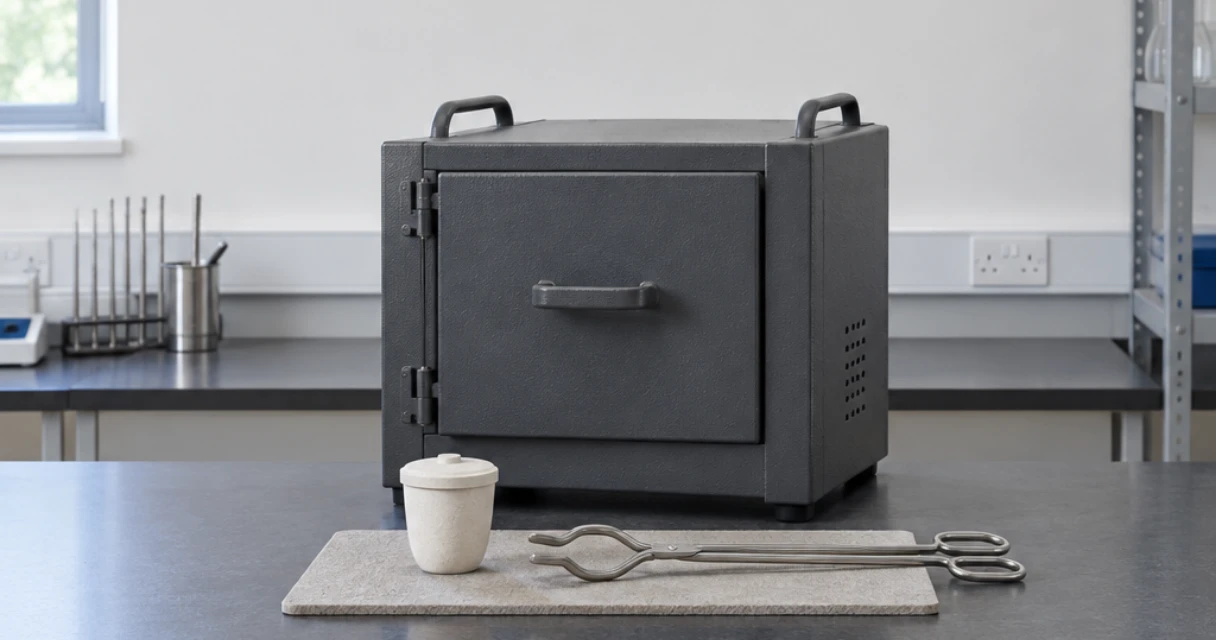
Ash content and loss on ignition of soils and aggregates, and cement chemistry tests, all end with a sample in a crucible at high heat. Pair your tongs with suitable crucibles, a muffle furnace and an analytical balance for weighing.
FAQ
What are crucible tongs used for?
They pick up and move hot crucibles, lids and evaporating dishes safely, mostly between a furnace, oven or burner and a cooling area.
Can I use crucible tongs for beakers?
No. Beakers need beaker tongs with jaws shaped to grip a cylindrical wall. Crucible tongs can slip on a beaker.
What is the best material for crucible tongs?
Stainless steel suits most labs because it resists heat and corrosion and is easy to clean. Brass is chosen where a non-sparking tool is needed.
What length crucible tongs should I buy?
Choose the shortest length that keeps your hand out of the heat. Around 8in to 9in suits burners and hot plates; longer tongs suit muffle furnaces.
Where should I set down a hot crucible?
On a heat-resistant surface, a clay triangle or in a desiccator. Never set it on a cold or wet bench, which can crack it.
Wrapping Up
Reach, grip and material decide the right tongs. Choose a length that keeps hands clear, jaws that fit your crucibles and a material suited to the heat and chemicals involved.
Certified Material Testing Products supplies stainless, plated, oxidized and brass crucible tongs alongside crucibles, furnaces and desiccators. Compare our crucible tongs.
Topics: Lab Equipment; Crucible Tongs; Lab Safety.