Concrete Mixer Parts: Your Complete Replacement Guide
Posted by Matt Johnson on Jun 21, 2024
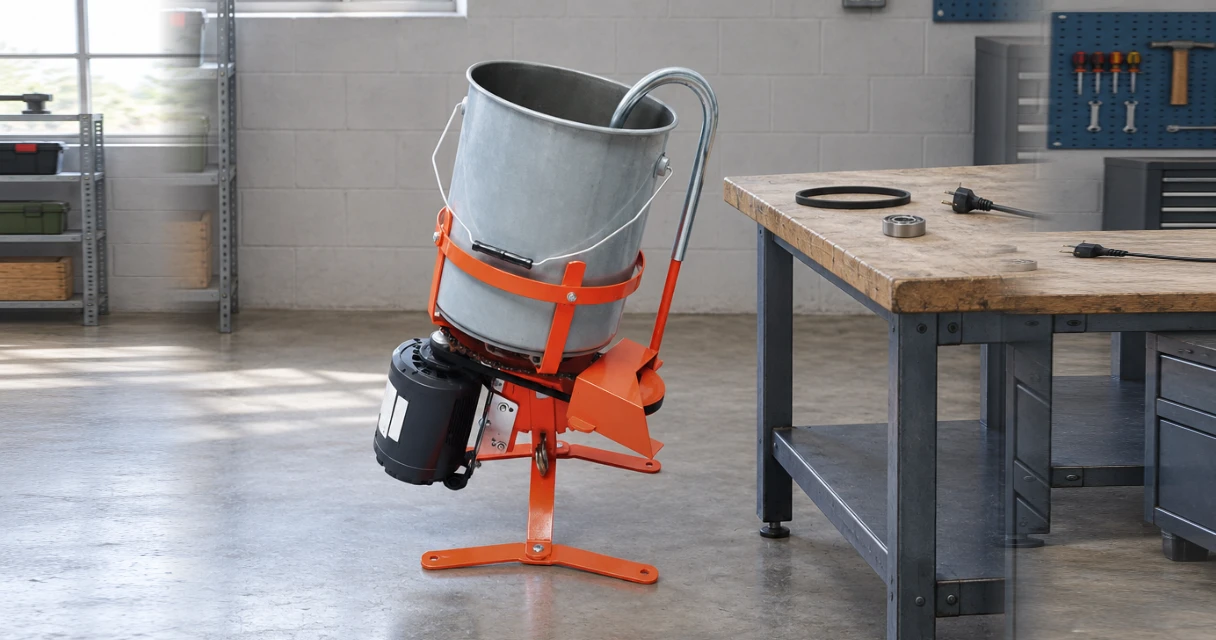
Order concrete mixer parts by reading the data plate first: brand, model and serial number decide which motor, belt, gear or bearing fits. Most breakdowns come from a handful of wear parts — the drive belt, the ring gear and pinion, the paddles, the bearings and the motor. Knowing how each one fails lets you order the right replacement and keep the mixer turning on pour day.
- Match replacement parts by specification (horsepower, voltage, shaft, belt section, tooth count), not appearance.
- Replace the ring gear and pinion together; a new pinion on a worn ring gear wears out quickly.
- Overloading the drum is the most common cause of motor and gear failure.
Why this matters
A mixer that stops mid-pour leaves a crew standing idle and a batch setting in the drum. In the lab, worn paddles and slipping belts lengthen mixing time and can change slump and air content between trial batches.
Know the wear parts before they fail. Replacement motors and drive guards are listed below, and our concrete mixers category covers complete units if yours is beyond repair.
How do you order the right replacement part?
- Read the data plate. Record the brand, model and serial number. Parts often change between production years of the same model.
- Match the specification, not the look. For motors, match horsepower, voltage, shaft size and mounting. For belts, match section and length. For gears, match tooth count and pitch.
- Replace pairs together. Replace the ring gear and pinion as a set when either is damaged.
- Stock the common wear parts. A spare belt, switch and set of bearings costs little compared with a crew standing idle.
Concrete mixer parts and signs of wear
| Part | What it does | Signs of wear | What to do |
|---|---|---|---|
| Drum | Holds and turns the batch | Thin spots, cracks, hardened buildup throwing it off balance | Clean after every use; inspect for thinning |
| Paddles / fins | Lift and fold the mix | Rounded or bent edges, poorly mixed batches | Replace when mixing time grows |
| Ring gear and pinion | Transfer drive to the drum | Grinding, clicking, chipped or missing teeth | Replace as a pair; grease on schedule |
| Motor or engine | Powers the drive | Slow start, overheating, tripping breakers | Match horsepower, voltage and mounting |
| Belt and pulleys | Carry power to the gearbox or pinion | Squealing, slipping, cracked or glazed belt | Check tension; keep a spare |
| Bearings and bushings | Support the drum shaft | Wobble, play, noise when turning | Grease; replace when play appears |
| Tilt handle and lock | Hold the drum angle | Drum drifts or will not lock | Repair before use |
| Tires, axle and frame | Move and support the mixer | Flats, bent axle, cracked welds | Inspect before transport |
| Switch and cord (electric) | Start and stop the motor safely | Intermittent starting, damaged insulation | Replace damaged electrics immediately |
Replacement motors: match the original specification
For small electric mixers we stock motors such as the 1/4 HP motor for compact cement mixers and the 1/4 HP motor for adjustable mixers.
Best for: restoring a mixer whose motor has failed. The limitation is fit: a larger motor can overload the gears and bearings, so use the motor specified for your model.
Drive guards and enclosures: protect the belt and chain
A guard such as the bucket mixer belt and chain enclosure keeps hands and debris away from the drive.
Best for: mixers missing or with damaged drive covers. The limitation: a guard protects the drive but does not replace belt tension checks.
Replace the mixer instead: when repair stops making sense
When the drum is thin, the frame is cracked or several drive parts are worn at once, compare portable concrete mixers, portable cement mixers and mortar mixers. Labs batching trial mixes should look at our lab mixers, built for repeatable small batches.
Why mixer parts wear out at different rates
- Batch size: filling to the drum’s full volume rather than the rated batch strains motors and gears.
- Cleaning: hardened concrete adds weight and unbalances the drum.
- Lubrication: missed greasing or gritty old grease wears gears and bearings.
- Belt tension: loose belts slip and glaze; overtight belts wear bearings.
- Storage: water left in the drum and exposed electrics shorten part life.
What maintenance makes parts last?
- Clean the drum after every use: rinse with water and a few shovels of gravel while it turns.
- Grease on schedule: follow the manual for drum shaft bearings, pinion and ring gear; wipe off grit-laden grease.
- Check belt tension regularly.
- Do not overload: fill to the rated batch size.
- Protect electrics: use a properly rated extension cord and a GFCI outlet, and keep the switch dry.
- Service the engine on gas units: oil, air filter and spark plug at the manual’s intervals.
- Store under cover with the drum tilted down so water drains.
Can a worn mixer affect lab test results?
Yes. Worn paddles and slipping belts lengthen mixing time and can change slump and air content between batches. If trial batches vary more than expected, check the mixer before blaming the materials.
FAQ
Why does my concrete mixer drum stop under load?
Usually a slipping belt, an overloaded drum or a weak motor. Check belt tension first, then reduce the batch size.
Can I fit a bigger motor to my mixer?
Only if the frame, gearing and electrical supply are designed for it. A larger motor can overload the gears and bearings. Use the motor specified for your model.
How often should the ring gear be greased?
Follow the manufacturer’s manual. Many open-gear mixers need a light coat of gear grease every few days of regular use.
Should I replace the pinion and ring gear together?
Yes. A new pinion running on a worn ring gear wears out quickly, so replace both when either is damaged.
Where do I find my mixer’s model number?
On the data plate. Record the brand, model and serial number before ordering, because parts can change between production years.
Wrapping Up
Order by the data plate and replace worn pairs together. Clean, grease and load the mixer correctly and the wear parts last far longer.
Certified Material Testing Products stocks replacement mixer motors, drive enclosures and complete portable, mortar and lab mixers. Browse all concrete mixers.
Topics: Concrete Mixers; Mixer Parts; Equipment Maintenance.