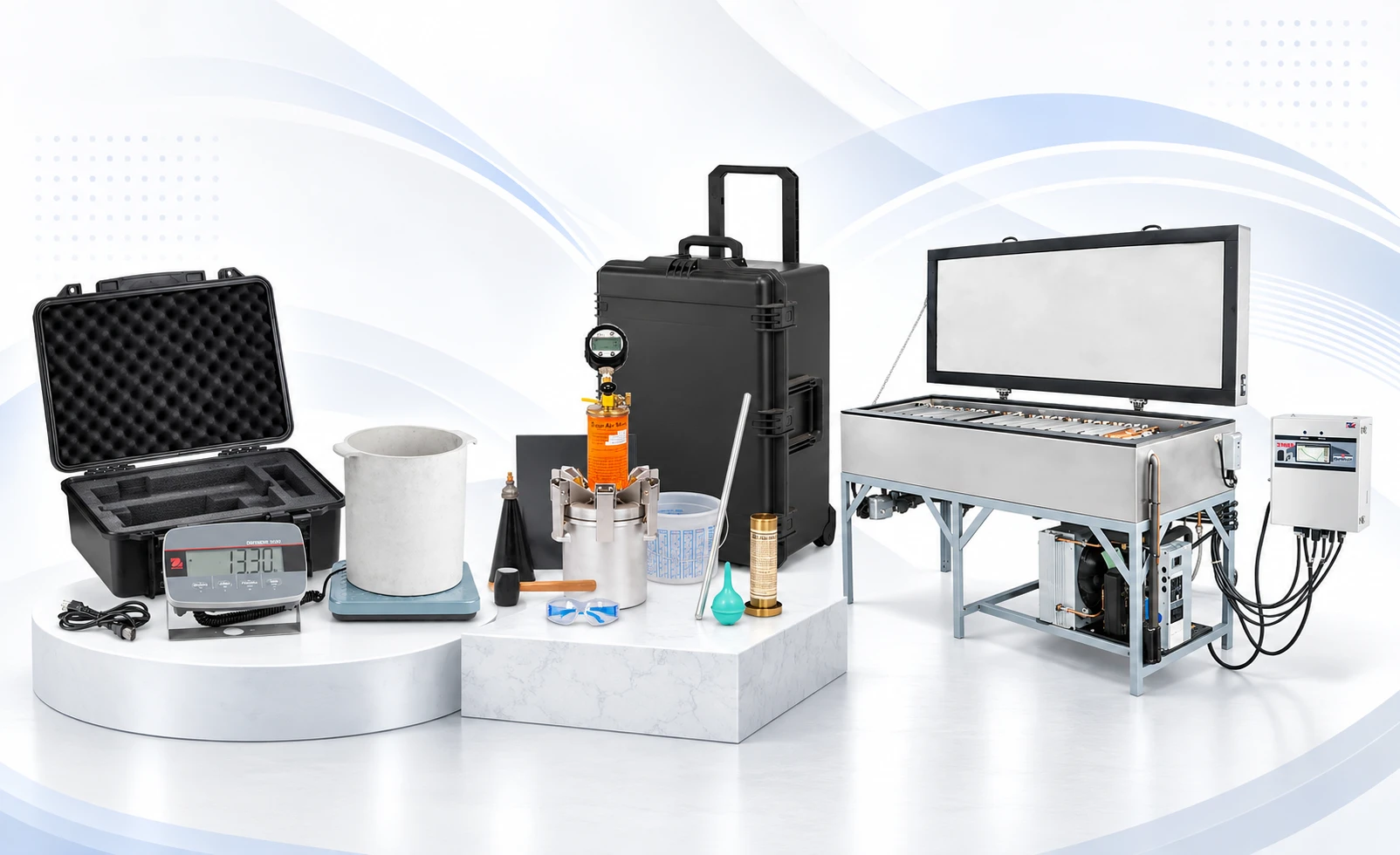
Concrete Unit Weight & Density Test Equipment
Select the Measure and the Scale
Standard test methods for density (unit weight) and yield of fresh concrete use a calibrated measure of known volume. Compare the steel unit weight measure, 1/2 cu ft and the 1/3 cu ft steel measure with the aluminum options, including the 1 cubic foot aluminum unit weight bucket, against the nominal maximum aggregate size and procedure volume your method specifies.
Pair the measure with a scale of suitable capacity and readability, such as the Digital Field Scale, 220lb. Verify the measure volume and scale calibration status before testing; an unverified measure makes every density figure that follows unreliable.
Complete the Setup with Rod, Plate and Technique
Consolidation and strike-off determine whether the sample fills the measure correctly. Where the governing procedure calls for rodding, select a tamping rod of the specified diameter and length. Compare the 24 x 5/8in stainless steel tamping rod with your method requirements, then select a strike-off plate sized for the measure. Do not substitute the smaller 3/8in cylinder rod for the rod required by the density test.
Follow the specified consolidation method, number of layers and strike-off technique rather than improvising. Overfilling, under-filling or a careless strike-off changes the sample volume and distorts the calculated unit weight, so confirm the technique against the governing method before each test.
Interpret Unit Weight, Yield and Air Content
Density is the net mass of concrete in the calibrated measure divided by its volume. Yield is the volume of concrete produced from known batch quantities; relative yield compares that produced volume with the intended volume. Calculating yield and gravimetric air content requires the relevant batch and mixture data in addition to the measured density. Follow the governing method for each calculation.
Record each figure with the batch information your quality program requires, and treat a low unit-weight reading as a prompt to check air content and mixture proportions. For air measurements, compare concrete air meters separately, and use the fresh concrete testing equipment category to plan the complete field setup.
Browse all of our concrete testing equipment for fresh and hardened concrete.