




Fast
Shipping

Quick,
Simple Ordering

Clear,
Upfront Pricing

Over 30,000
Happy Customers

Exceptional
Customer Service

Industry's Largest
Catalog
Tremie Pipe: 12in Diameter, 4ft – For Underwater Concrete Pouring
What is a Tremie Pipe?
A tremie pipe is a long vertical pipe used to pour underwater or below ground level. The term “tremie pipe” comes from the French word for funnel, it’s a funnel. This pipe ensures a smooth and controlled pour of concrete where the concrete needs to move into place without segregation. Made from metal or PVC, tremie pipes come in various diameters and lengths to fit your project. Their main job is to allow the concrete to flow continuously and hold its integrity and quality during construction which is highly dependent on the amount used.
Tremie Pipe, 12in Diameter for Pouring Concrete Underwater
The Tremie Pipe has thick Polyethylene walls for extra long life
-
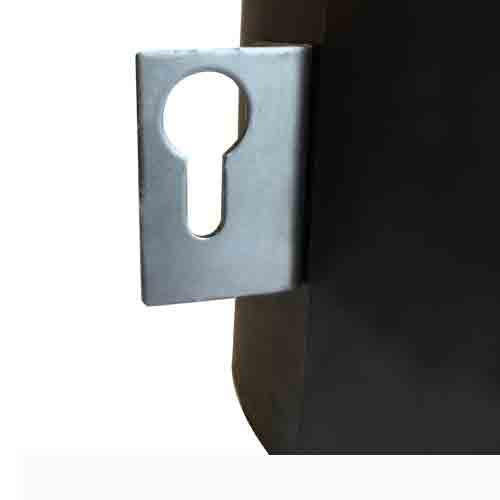
Tremmie Pipes include heavy duty steel chains and brackets
-
Available in two sizes: 12” dia x 4ft and 8” dia x 4ft.
-
Made in the USA.
The Tremie Hopper, by Deslauriers, is a specialized tool used in concrete pouring to ensure a smooth and controlled pour of concrete especially in deep or construction. It’s used for the tremie method of pouring concrete below water or where there’s a risk of segregation or contamination.
The Tremie Hopper is made from high quality materials such as polyethylene or steel to withstand the demands of a construction site and last long. It has a funnel shape with a wide opening at the top and a narrow discharge at the bottom to allow for a smooth and movement.
During the pour, the Tremie Hopper is placed vertically above the pour area. The concrete is loaded into the hopper which acts as a reservoir and provides a consistent and uninterrupted supply of concrete to the pour point. The narrow discharge at the bottom ensures a controlled to maintain flow and prevent segregation or debris from entering the concrete.
Each batch of fresh concrete should be poured quickly to hold movement, prevent early set and get a strong and uniform concrete structure during difficult pours.
One of the main benefits of using a Tremie Hopper is to prevent water from entering the concrete during underwater pour. The hopper maintains a positive pressure at the discharge point to prevent water from entering the flow and get a homogeneous mix. Also the Tremie Hopper allows for precise laying in deep foundations, caissons, bridge piers and other submerged or confined structures. The design ensures the concrete is placed in a column without significant free fall, reducing the risk of segregation and maintaining the structural integrity of the final product.
In summary the Tremie Hopper by Deslauriers is a specialized tool used in concrete pouring using the tremie. It provides controlled flow, prevents water entry and allows for precise and placement in difficult construction situations. Using the Tremie Hopper ensures successful complex projects and good concrete structures.
Components and Features
A tremie pipe consists of several key components that work together to get the concrete placed efficiently. Ensuring high concrete quality is essential to keeping the integrity and cohesiveness of the placement. The pipe itself has thick polyethylene walls for durability and long life. Heavy duty steel chains and brackets are attached to the pipe to connect it to the tremie hopper. At the top of the pipe a conical hopper allows concrete to be loaded, to get a smooth flow into the pipe. The discharge opening at the bottom controls the movement to get the freshly placed concrete to be deposited accurately and with minimal dispersion. This design helps to maintain the quality and integrity of the placement.
Benefits of Using a Tremie Pipe
Using a tremie pipe offers several benefits in underwater construction and placement. One of the primary advantages is the ability to pour concrete underwater without compromising its quality. The tremie pipe ensures a continuous flow, preventing segregation and washout, which can lead to structural weaknesses. Additionally, the tremie allows for precise placement, reducing the risk of human error and ensuring that it is placed exactly where it is needed.
The use of a tremie pipe also enables the construction of complex structures, such as diaphragm walls and piles, which are essential for deep foundation construction. Furthermore, the tremie method is a reliable and efficient way to pour concrete underwater, reducing the risk of contamination and ensuring that the concrete maintains its strength and durability.
Best Practices for Tremie Concrete Pouring
To ensure successful tremie concrete pouring, several best practices should be followed. Firstly, it is essential to maintain a movement to prevent segregation and washout. This can be achieved by using a gravity feed system and ensuring that the mix is designed to move easily through the tremie pipe.Secondly, the tremie pipe should be sealed to prevent water from entering the pipe and contaminating the concrete. A foam rubber plug can be used to seal the bottom of the tremie pipe.
Thirdly, the freshly placed concrete should not be disturbed or vibrated excessively, as this can cause segregation or washout. Finally, the upper surface should be finished properly to get a smooth surface.
Industries and Applications
Tremie pipes are used in various construction applications, especially in construction. They are used for underwater foundations, diaphragm walls and piles and in complex structures that require precise placement. Marine construction, offshore construction, coastal construction, bridge construction and tunnel construction industries use tremie pipes. They can pour underwater and in confined spaces making them a versatile and essential tool in these industries to get strong structures.
Safety Considerations and Precautions
When using tremie pipes, safety considerations and precautions should be followed to get a good pour. High concrete quality is also important to avoid blockages and placement. Flow is key to avoid blockages and keep the concrete. The pipe should reach the exact location underwater to pour it accurately. Operators should be trained to operate the equipment and understand the movement through tremie pipes. Regular maintenance of tremie pipes and accessories is important to prevent clogs and damage to get long life and reliability of the equipment. By following these safety measures you will get good results with tremie pipes.
Maintenance
Regular maintenance is important to get long life and effectiveness of the tremie pipe. The pipe should be inspected regularly for damage or wear and tear and any repairs should be done promptly.
The tremie pipe should also be cleaned and flushed regularly to prevent blockages and get smooth movement. Heavy duty steel chains and brackets should also be inspected regularly to ensure they are in good condition and functioning properly.
Selecting the Right Tremie Pipe
Selecting the right tremie pipe is crucial to get successful construction. The pipe should be made of durable materials, thick polyethylene walls to withstand the process.The diameter of the pipe should also be chosen to fit the application. A larger diameter pipe for bigger projects and a smaller diameter pipe for smaller projects.
Finally the length of the pipe should be chosen to reach the required depth for construction. The pipe should be adjustable to fit different depths and should have a lifting link to lock the tremie pipe to the winch.
Summary
In summary, using a tremie pipe is a reliable and efficient way to pour underwater, get continuous flow of concrete. The benefits of using a tremie pipe is to pour underwater without compromising its quality, precise concrete and complex structures.
By following best practices for tremie concrete pouring, continuous flow of concrete, seal the pipe, don’t disturb the freshly placed concrete you will get successful construction and concrete placement.
Regular maintenance and repair is also important to get long life and effectiveness of the tremie pipe. By choosing the right tremie pipe and following best practices you will get effective underwater construction and concrete placement.