How to Choose a Forced Air Lab Oven
In a forced air oven, a fan or blower pushes heated air across the chamber instead of letting it rise on its own. Moving the air keeps the temperature more even from shelf to shelf, which matters when a full load of samples has to dry the same way.
Forced Air or Gravity Convection?
Choose forced air when you dry or heat full shelves, dense samples or large loads. Choose a gravity convection oven when light or powdery samples could be blown around by moving air.
Benchtop, Bench and Cabinet Sizes
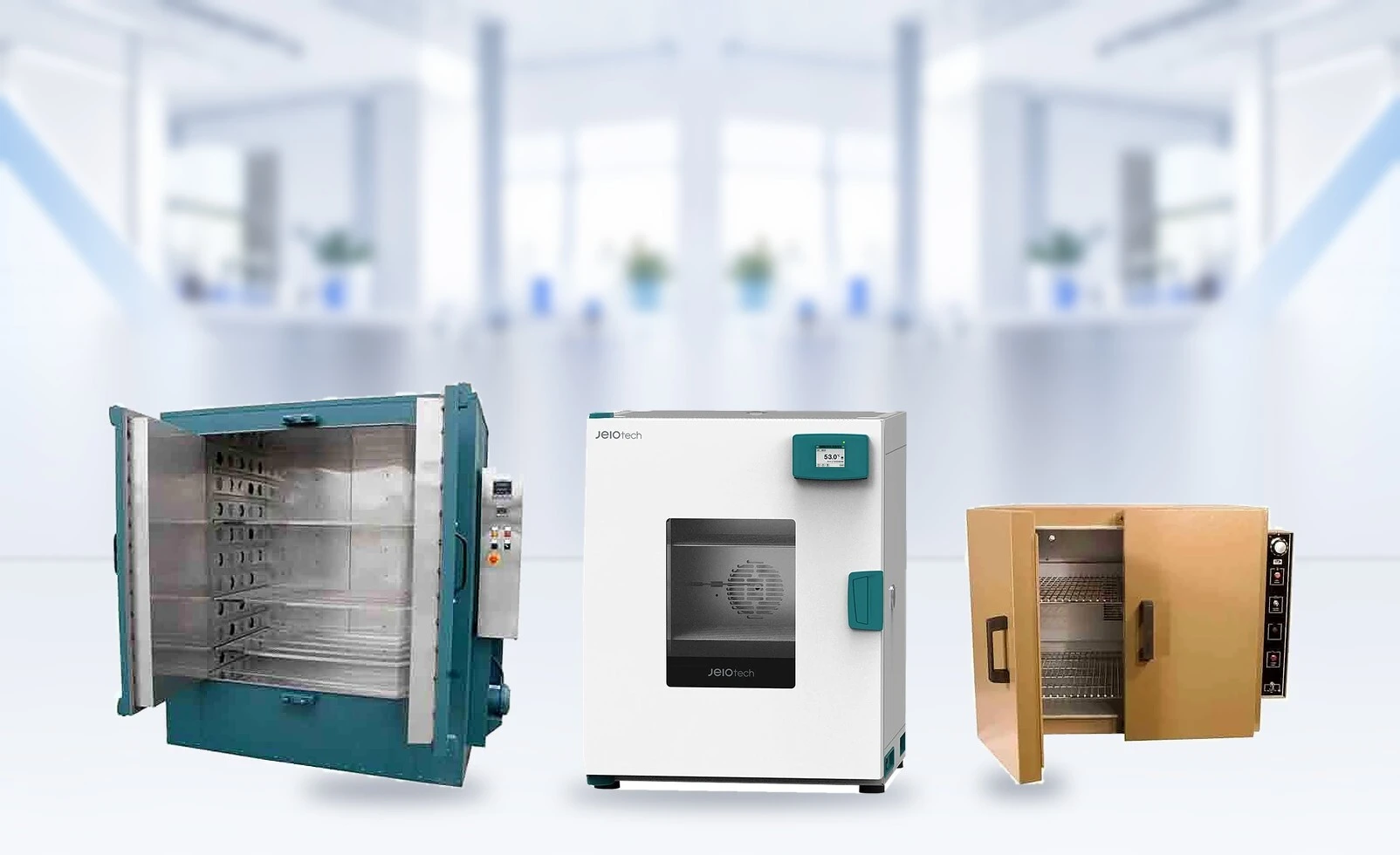
Benchtop models from Quincy Lab, JEIO Tech, Shel Lab and Cascade TEK start at about 26 liters and suit routine moisture content and sample drying. Larger bench ovens from Quincy Lab, Gilson and Grieve hold 6 to 36 cubic feet for bigger soil and aggregate loads. Grieve cabinet ovens reach almost 78 cubic feet for production drying and curing.
Check Temperature, Controls and Power
Match the maximum temperature to your method, then choose analog or digital controls. Digital and programmable models hold set points and run timed cycles. Check the voltage and phase before you order, because many large ovens need 208V, 230V or 460V service.
Compare every airflow type in our laboratory ovens, or see vacuum ovens for drying at low temperature under reduced pressure.