
Fast
Shipping

Quick,
Simple Ordering

Clear,
Upfront Pricing

Over 30,000
Happy Customers

Exceptional
Customer Service

Industry's Largest
Catalog
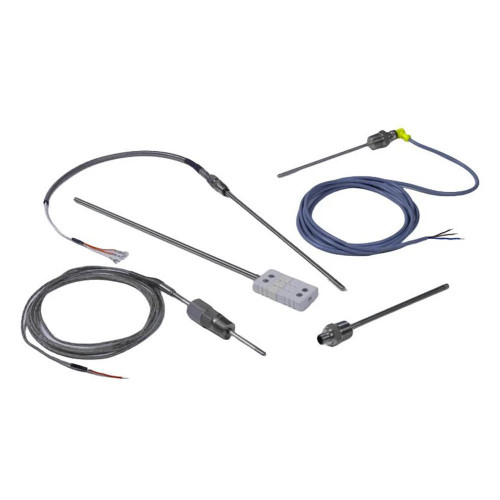
RTD Sensor with Male Plug, 100 Ohm, 1/4in OD Sheath, 12in Long
What is an RTD Sensor?
Resistance Temperature Detectors, commonly known as RTDs, are sensors used to measure temperature. They operate on the principle that the electrical resistance of certain metals changes predictably with temperature. By measuring this resistance, the sensor can provide highly accurate and stable temperature readings.
How Do RTDs Work?
RTDs are typically made from a pure material, most often platinum, but also nickel or copper. This material is formed into a coil or a thin film, which serves as the sensing element. A small, known electrical current is passed through this element. As the temperature of the process being measured changes, the resistance of the metal element changes accordingly. This change in resistance is then measured, and the device converts it into a precise temperature reading. Because of their high degree of repeatability and interchangeability, RTDs are a trusted solution for critical temperature monitoring.
Key Features and Construction:
- Sensing Element: The core of the RTD is its measurement element. This is typically created by winding a fine wire (wire-wound) or plating a film (thin-film) onto a ceramic or glass core. This assembly is then sealed within a protective capsule to ensure stability and durability.
- Lead Wire Compensation: RTD elements, such as the common 100-ohm platinum type (Pt100), have a relatively low initial resistance. To prevent the resistance of the lead wires from affecting the accuracy of the temperature measurement, RTDs are often configured with three or four wires. This setup allows the measuring device to compensate for lead wire resistance, ensuring a more precise reading.
- Protective Sheath: To protect the delicate sensing element from moisture, corrosion, and physical damage, it is housed in a metal tube called a sheath. The sheath material is chosen based on the application's temperature range and chemical environment.
- Wide Temperature Range: By selecting the appropriate element and sheath materials, RTDs can be designed to operate reliably across a broad temperature range, typically from -200°C to 600°C (-328°F to 1112°F).
Your Partner in Temperature Measurement
Pyromation specializes in manufacturing high-quality RTDs for a wide array of industrial applications. Our product line includes everything from standard single- or dual-element RTDs and various platinum resistance values (Pt100, Pt1000) to specialized Sanitary (CIP) configurations for the food and beverage industry.
If our extensive catalog doesn't have the exact sensor for your needs, our expert product engineers are ready to design a custom RTD assembly. We can create solutions tailored to your specific application, including integrated assemblies with connection heads, thermowells, and transmitters for a complete temperature measurement package.
Product Specifications
- Description: RTD, 100 Ohm Platinum Element, 1/4" OD Sheath, 12" Long, 3-Wire Configuration, with Male Plug Connection
- Temperature Range: -30°C to 200°C
- Plug: 3-Pin, White