


Fast
Shipping

Quick,
Simple Ordering

Clear,
Upfront Pricing

Over 30,000
Happy Customers

Exceptional
Customer Service

Industry's Largest
Catalog
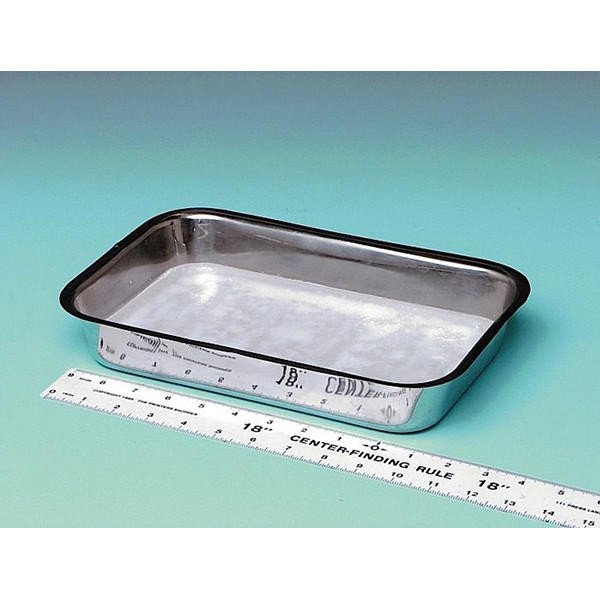
Dissecting Tray: 16in x 12.75in x 2in
The Dissecting tray is a must have for labs and classrooms for various scientific experiments including dissecting pans. Features stainless steel construction for durability and long life and versatile for biology, medicine and education. 16in x 12.75in x 2in in size. Perfect for many scientific experiments.
Also has a plastic insert to support sample during dissection for stability and precision.
Sold in a pack of two. Perfect for classrooms, labs or scientific institutions. Easy to clean and sterilize so can be used multiple times.
For science experiments, dissections and pathology research. The wax coating helps with precision and efficiency of the dissection by preventing sample from slipping and a clean workspace. Also great for veterinary schools, medical colleges and research institutions. Non slip surface means you can do experiments safely and without accidents.
In summary, it is an efficient, durable and versatile for scientific institutions, medical colleges and veterinary schools. Long lasting, easy to clean and sterilize, it’s a cost effective investment. Non slip surface and spacious surface means you can do many experiments with accuracy and safety.
Specifications
Dissecting pan made from heavy gauge metal for a strong and corrosion free surface for dissecting. Rectangular pan 7-1/2in x 11-1/4in x 1-1/2in in size. Surface coated with black tar and white wax for wax surface for pinning specimens. Shallow design for pinning, cutting and examining. Essential for educational use. Edges are smooth and rolled for easy carrying and stacking. Perfect for busy labs, these dissecting pans are designed to withstand repeated use in educational and laboratory settings.
Material and Construction
Made from heavy gauge aluminum, it has a robust and corrosion resistant platform for all your dissection needs. Aluminum construction means it can be used repeatedly without compromising its structure. The surface is coated with white wax which protects the aluminum from corrosion and provides a smooth and clean surface for pinning and examining specimens. This wax coated surface is essential for stability and precision during dissections to prevent specimens from slipping and for accurate results. Also has smooth, rolled edges for easy carrying and stacking for busy labs and classrooms.
Examining Biological Specimens
The dissecting pan provides a stable and secure platform for dissecting and examining samples, precise cutting and examining. To maintain the pan heat wax to a specific temperature, not exceeding 250 degrees Fahrenheit. The surface keeps samples in place so they don’t slip or move which is critical for accuracy. Made from heavy gauge aluminum the pan is durable and can be used many times. When resurfacing place the pan and allow the wax without exceeding a safe temperature. Easy to clean and maintain by resurfacing with a hot plate to melt the wax. Versatile for use in labs settings, it’s a must have for scientific use.
Dissecting Pan Comparison
A dissecting tray is compared to a dissection pan but they serve different purposes. A dissection pan is for precise cutting and examining biological specimens, a dissecting tray is for larger specimens and general dissection activities. Dissecting trays are made of stainless steel or plastic, dissection pans are made of heavy gauge aluminum. The wax coated surface of a dissection pan allows for easy pinning and securing of specimens, a dissecting tray may not have a wax coating. Understanding the difference between these two is key to choosing the right one for your needs. Also components like trays and silicone pads in dissecting trays can be removed for cleaning and reuse, very practical and convenient.
Laboratory Use in Educational Settings
In biology and anatomy labs the dissecting pan is used for many dissection exercises to study internal structures and anatomical features of organisms, so it’s a must have for educators and researchers. Also used in zoology to explore and analyze specimens. Used in educational settings to give students hands on experience to learn how to dissect and study biological specimens. Also used in scientific research to examine biological specimens and tissues precisely and efficiently. When used with other lab equipment like dissecting pins and safety equipment the pan creates a safe and controlled environment for scientific use. Versatile for many types of specimens so great for lab use.
Maintenance
Proper maintenance and cleaning of a dissecting tray is crucial for its longevity and performance. Note that these trays are not dishwasher or microwave safe. To clean, use soap and water, do not use a dishwasher or microwave. For trays with wax coated surface heat the wax carefully on a hot plate to melt it, but do not exceed 250 degrees Fahrenheit. This will resurface and maintain its smooth surface. Regular cleaning and maintenance will ensure years of reliable service from your dissecting tray.
Additional Tips
-
Use dissecting pins to hold specimens in place during the dissection process.
-
Make sure it is stable and secure to prevent accidents and spills.
-
Use with wax coated surface for easy pinning and securing of specimens.
-
Choose one that is made of heavy gauge aluminum or stainless steel for durability and longevity.
-
Follow safety protocols and guidelines when using a dissecting tray in educational settings.
-
Clean and maintain your dissecting tray regularly to extend its life and performance.
-
Opt for a lightweight dissecting tray for easy handling and transport in busy lab environments.