





Fast
Shipping

Quick,
Simple Ordering

Clear,
Upfront Pricing

Over 30,000
Happy Customers

Exceptional
Customer Service

Industry's Largest
Catalog
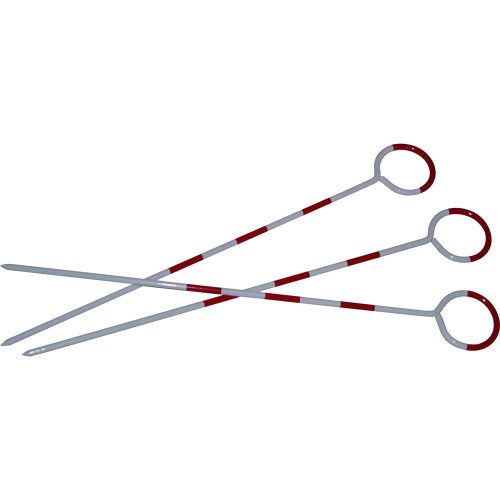
- Arrow made from 7/32" cold rolled steel with a hardness rating of 85
- 14in long
Survey Arrow: Understanding Arrows in Surveying
Arrows are the unsung heroes of the field. Made from 7/32" cold rolled steel with a hardness rating of 85, these 14-inch long arrows are built to last. They're part of a broader range of surveying accessories that surveyors rely on for accurate measurements in the field. Alongside the surveying marker, which helps mark specific points with precision, these arrows are designed to be both durable and precise.
What exactly are arrows? They're also known as surveying pins or marking pins. Their primary purpose is to mark specific points on the ground. That might sound simple, but these marks are what surveyors rely on for measurement and reference. Constructed from spring steel, these arrows are designed to withstand the elements. A powder-painted finish helps prevent rust and corrosion, extending their lifespan.
Arrows are used to mark boundaries, survey points, important points and reference locations during surveying. You'll find them in any surveyor's toolkit. They come in a range of materials, including steel or fiberglass. That means they can withstand rough weather and handling. In this section, we'll explore the various types of surveying instruments, their applications with a total station, materials and construction methods, as well as best practices for precise measurements. Surveying chain is another tool surveyors use in conjunction.
Arrows are versatile tools used in a wide range of surveying applications. Surveying is one area where they really shine. They help mark the ends of a measuring chain, allowing surveyors to measure large areas of land with precision. They're used to delineate boundaries, corners and other significant points. These marks provide a permanent record of land measurements. Surveyors use them in conjunction with other equipment, such as theodolites and levels, to ensure accurate and reliable measurements.
Using arrows offers numerous benefits and advantages. Here are just a few:
Accurate and reliable measurements are just the beginning. Arrows provide a durable and visible marker, ensuring precise and consistent measurements. They're built to last, made from spring steel that can withstand harsh environmental conditions. That means long-term use. Arrows are also easy to use and can be quickly installed, saving time and effort during surveying tasks. They're cost-effective too, reducing the need for more expensive surveying equipment while still providing reliable results.
Surveyors need to choose the right arrow for their needs. That means considering factors like material (spring steel is a popular choice), size (diameters of 4mm, 6mm and 8mm, and lengths ranging from 300mm to 1500mm), coating (a powder-painted finish helps prevent rust and corrosion), color pattern (an alternating red and white color scheme enhances visibility) and accessories (like heavy-duty orange nylon bags or quivers).
By considering these factors and following best practices, you can choose the right arrow for your needs. And with the right arrow, you can achieve accurate and reliable surveying results.
The Surveyor Arrow - Steel is a reliable workhorse for surveyors, construction workers and land managers. It's one of those tools that gets the job done—accurately and efficiently. That's especially true in surveying, where measuring large areas of land is the goal.
Product Features
Made from 7/32” rolled steel, this arrow is built to last. You can use it repeatedly without worrying about it bending or breaking. It's 14 inches long, easy to hold and maneuver, and long enough to be seen from a distance. Powder coating protects it from rust and corrosion.
What really sets this arrow apart is its strength and durability. That means it can withstand the elements and stay in place for a long time. That's essential for surveying large areas with precision. And that's exactly what you need when you're marking property lines, boundaries and other important landmarks.
In fact, the arrow meets the specific requirements for land surveying. The pointed tip is designed for soft soil, so you can mark your lines accurately. The steel construction ensures the arrow stays put. That's why it's an excellent investment for anyone in the field.
Product Benefits
This tool is great for surveys. Its durable construction means it will last a long time. Powder coating protects it from rust and corrosion. The pointed tip lets you mark property lines and other important landmarks accurately. That's one of the most common ways to do accurate and efficient land surveys.
That's why the Bon Tool 14-833 Surveyor Arrow - Steel is a great investment for surveyors, construction workers, land managers and anyone who needs a reliable and accurate marker. It's lightweight, durable and precise. You'll find yourself reaching for it time and time again to ensure accuracy in your work.
Types
There are several types of arrows, each suited to a specific purpose and environment. Steel arrows, made from cold rolled steel, are the most common. They're known for their durability and corrosion resistance. Fiberglass arrows are lightweight, flexible and corrosion resistant. They're a good choice for wet or corrosive environments. Plastic arrows are an economical option, but they're not as durable as steel or fiberglass arrows.
Uses
Arrows are multi-purpose tools used in many surveying operations. They mark boundaries and important points, serve as reference markers to measure distances and angles. In chain surveying, they mark the ends of measuring chains. They also mark underground utilities and other hidden features. And they indicate the position of surveying equipment like tripods and leveling rods.
Materials and Construction
The construction of arrows is what makes them perform and last. Steel arrows are made from cold rolled steel with a hardness rating of 85. That means they can withstand harsh conditions. Fiberglass arrows are made from a combination of fiberglass and resin. They're lightweight and corrosion resistant. Plastic arrows are made from durable plastics like polypropylene or polyethylene. Each material offers unique advantages.
Best Practices
To get accurate and reliable results when using arrows, follow these best practices. Choose the right arrow for the job. Make sure it's properly installed and secured. Use it with other surveying tools like measuring tapes and leveling rods. Regularly inspect the arrows for damage or wear. Replace them as needed. And always follow safety guidelines when handling arrows. Wear gloves and safety glasses. By following these best practices, you'll get the most out of your arrows.
What is a Survey Arrow?
A survey arrow, also known as a arrow or chaining pin, is a specialized survey marker used primarily in surveying. These tools are essential for marking the ends of a measuring chain, ensuring precise land measurements. Typically crafted from spring steel, arrows feature a sharpened point for easy insertion into the ground and a loop or hook at the end for convenient handling. Their robust construction allows them to withstand the rigors of fieldwork, making them indispensable in marking boundaries and key survey points.
Types
Arrows come in various types, each tailored to specific surveying needs. The most common series include:
-
SA4 Series: With a 4mm diameter, these arrows are available in lengths of 300mm, 500mm, and 600mm.
-
SA6 Series: Featuring a 6mm diameter, these arrows also come in lengths of 300mm, 500mm, and 600mm.
-
SA8 Series: These arrows have an 8mm diameter and are available in longer lengths of 1000mm, 1200mm, and 1500mm.
Each type of arrow offers unique characteristics, making them suitable for different surveying applications. Whether you need a lightweight option for easy transport or a longer arrow for marking extensive boundaries, there’s a arrow to meet your needs.
Uses and Benefits
Survey arrows play a crucial role in chain surveying, providing several key benefits:
-
Accurate Measurements: By marking the ends of a measuring chain, arrows help ensure precise land measurements, which are vital for construction, engineering, and architectural projects.
-
Efficient Surveying: These tools streamline the process of chain surveying, making it easier to cover large areas of land quickly and accurately.
-
Durability: Made from spring steel, arrows are built to last. They resist rust and corrosion, ensuring long-term reliability even in harsh environmental conditions.
-
Customizability: Arrows can be tailored to specific needs, with options for different lengths, diameters, and colors to enhance visibility and usability in various surveying scenarios.
Best Practices for Using
To maximize the effectiveness of arrows, it’s important to follow these best practices:
-
Select the Right Arrow: Choose a arrow that matches the specific requirements of your surveying task. Consider factors like length, diameter, and material.
-
Handle with Care: Although durable, arrows can be damaged if mishandled. Treat them with care to maintain their integrity.
-
Proper Storage: Store survey arrows in a dry, shaded area to prevent rust and corrosion. Avoid exposure to moisture and direct sunlight.
-
Regular Inspections: Periodically check your survey arrows for signs of wear or damage. Replace any that are compromised to ensure continued accuracy and reliability.
Tips for Effective
Chain surveying is a fundamental method for measuring large tracts of land. Here are some tips to enhance its effectiveness:
-
Use Quality Equipment: Invest in a high-quality measuring chain and survey arrows to ensure accurate and reliable measurements.
-
Mark Ends Clearly: Utilize survey arrows to mark the ends of your measuring chain. This practice helps maintain accuracy and provides clear reference points.
-
Frequent Measurements: Take regular measurements to verify accuracy and consistency throughout the surveying process.
-
Leveling: Use a level to ensure your measuring chain is straight and plumb, which is crucial for obtaining precise measurements.
By following these guidelines and utilizing the right tools, you can achieve accurate and efficient results in your chain surveying projects.