


Fast
Shipping

Quick,
Simple Ordering

Clear,
Upfront Pricing

Over 30,000
Happy Customers

Exceptional
Customer Service

Industry's Largest
Catalog
Understanding Actuators in Moisture Room Control Panels
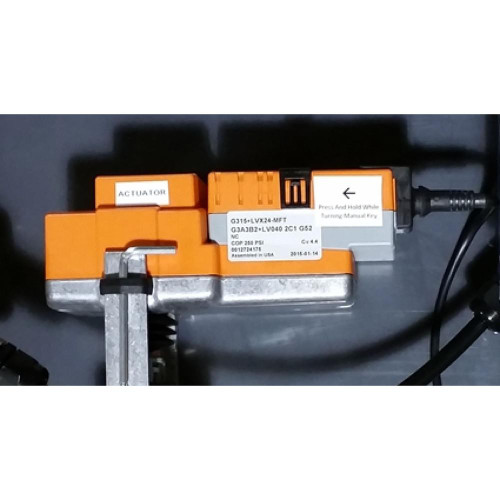
An actuator is a critical component within a moisture room's environmental control system. This device, whether electronic, pneumatic, or mechanical, acts as the "muscle" of the control panel, translating control signals into physical action to precisely manage humidity levels within a space. This function is essential in environments like laboratories, cleanrooms, manufacturing plants, data centers, and archival storage facilities, where maintaining specific moisture levels is vital for process integrity, product quality, and safety.
How Does an Actuator Work?
The actuator operates in a feedback loop with the control panel and humidity sensors (hygrometer).
- Sensing: A sensor within the room continuously measures the relative humidity.
- Signaling: This data is sent to the central control panel, which compares the current humidity level to the desired setpoint.
- Actuating: If there is a discrepancy, the control panel sends an electrical or pneumatic signal to the actuator.
- Action: The actuator then physically moves to open or close dampers in the ventilation system, adjust a valve on a humidification/dehumidification line, or alter fan speeds. This action regulates the flow of conditioned air, steam, or water, thereby increasing or decreasing the room's moisture content until the setpoint is reached.
Key Features and Benefits of Actuators
Precision and Reliability: High-quality actuators are engineered for precise, repeatable movements. This ensures that humidity levels remain stable and within the tight tolerances required by sensitive applications, preventing damage to products or disruption to scientific processes. Their robust construction guarantees long-term reliability with minimal maintenance.
Improved Air Quality: By enabling dynamic control over ventilation, actuators play a role in overall air quality. They ensure proper air circulation, which helps prevent the stagnant, humid conditions that encourage the growth of mold, mildew, and other harmful microorganisms. This is crucial for protecting both stored materials and the health of personnel.
Energy Efficiency: Modern actuators contribute significantly to energy savings. Instead of running ventilation or conditioning systems at full capacity, an actuator allows the system to operate on an as-needed basis. By precisely modulating dampers and valves, it ensures that only the necessary amount of energy is used to maintain the desired humidity, reducing operational costs and environmental impact.
Integration and Automation: Actuators are designed to integrate seamlessly with sophisticated Building Management Systems (BMS). This allows for centralized monitoring, control, and data logging, enabling fully automated environmental management. They can be programmed for specific schedules or to react to complex environmental triggers, offering a flexible and intelligent control solution.
In summary, the actuator is a small but mighty device that provides the crucial link between digital control and physical environmental adjustment. Its precision, reliability, and efficiency are fundamental to the successful operation of any controlled moisture environment.