
Fast
Shipping

Quick,
Simple Ordering

Clear,
Upfront Pricing

Over 30,000
Happy Customers

Exceptional
Customer Service

Industry's Largest
Catalog
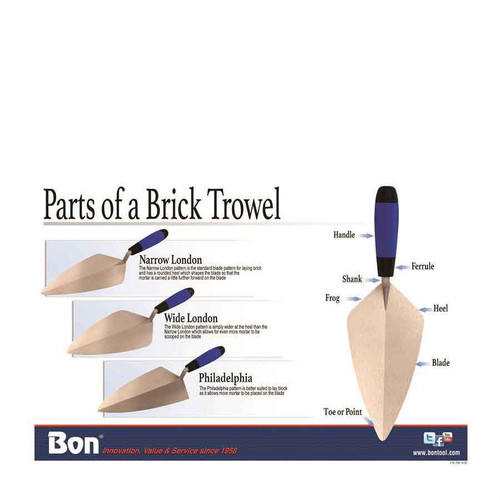
Poster, Parts Of Brick Trowel
The brick trowel is an essential tool for any mason or bricklayer. A detailed poster of the tool would be a valuable addition to any school shop or professional workshop. That poster—17 x 11 inches in size—can hang on a classroom wall or in a workshop, making it easy to reference. It clearly shows every part of a brick trowel-the blade, handle and ferrule-and labels each component so you can easily identify them and see how they work together.
You’ll see the design of London Brick Trowels in those images: the durable steel construction, ergonomic handles and angular shape that increases mortar capacity. The angular style holds more mortar, making it especially advantageous for construction tasks involving stone and block work. The handles are made from both leather and wood, so you get comfort and durability. The wood handle contributes to both comfort and durability, appealing to professionals who value tool performance in demanding masonry tasks.
Printed on paper with a gloss finish, the poster is built to last. It’s a great investment for any school shop or professional workshop where brick trowels are used. By giving you a detailed understanding of every part of the tool, you’ll be able to use and maintain it better. And that will take your bricklaying to the next level.
What is a Brick Trowel?
A brick trowel is a handheld tool used in masonry and construction to apply, spread, and shape mortar, concrete, or other bonding agents onto surfaces. It is an essential tool for laying bricks, blocks, and stones, and is commonly used in various applications, including functional or decorative brickwork, stonework, and block applications. Whether you’re working on a small DIY project or a large construction site, a brick trowel provides the precision and control needed to achieve professional results.
Parts of a Brick Trowel
A typical brick trowel consists of two main components: the blade and the handle. The blade, often made from durable materials like carbon steel or durable steel, is designed to withstand the rigors of masonry work. Its sharp angles and pointed nose allow for precise application and efficient handling of mortar. The handle, which can be made from leather, wood, or polypropylene, is crafted to provide comfort and a secure grip. Leather and wood handles offer a traditional feel and ergonomic design, while polypropylene handles are lightweight and durable. Together, these parts make the brick trowel an indispensable tool for any mason.
Trowel Types and Features
There are several types of brick trowels available, each with its own unique features and characteristics. Some common types of brick trowels include:
-
London Brick Trowels: Known for their angular style, which holds more mortar, and their sharp angles, which allow for more efficient mortar handling. These trowels are ideal for stonework and block applications, providing precision and control.
-
Philadelphia Brick Trowels: Feature a precision-ground blade and a soft-grip handle, making them perfect for tasks such as laying bricks, blocks, and stones. Their durable carbon steel construction ensures long-lasting performance.
-
Margin Trowels: Designed for use in tight spaces and for applying mortar to small areas. Their smaller, angled blades and pointed noses make them perfect for detailed work and getting into hard-to-reach corners.
Handle Materials and Ergonomics
The handle of a brick trowel is an important consideration, as it can affect the comfort and usability of the tool. Common handle materials include leather, wood, and polypropylene. Leather handles are often preferred for their durability and grip, while wood handles are prized for their comfort and feel. Polypropylene handles are often used on more affordable trowels and offer a durable and lightweight option. Ergonomic design is also an important consideration, as a well-designed handle can reduce user fatigue and improve overall performance. Look for handles with contoured grips, cushioning, and balanced weight distribution for extended use.
Maintenance and Care
To ensure the longevity and performance of a brick trowel, regular maintenance and care are essential. This includes cleaning the tool after use, storing it in a dry place, and applying a rust-inhibiting coating to the blade. It is also important to inspect the tool regularly for signs of wear or damage, and to replace it as needed. By taking these steps, you can ensure that your brick trowel remains a reliable and effective tool for all your masonry projects.
Conclusion
A brick trowel is a vital tool for any masonry or construction project, and choosing the right one can make all the difference. By understanding the different types of brick trowels, their features, and how to properly maintain and care for them, users can ensure that their tool performs optimally and lasts for a long time. Whether you’re working with functional or decorative brick, stonework, or blocks, a high-quality brick trowel is an essential part of your toolkit. Investing in a durable steel blade and an ergonomic handle will not only improve your work quality but also enhance your overall masonry experience.