


Fast
Shipping

Quick,
Simple Ordering

Clear,
Upfront Pricing

Over 30,000
Happy Customers

Exceptional
Customer Service

Industry's Largest
Catalog
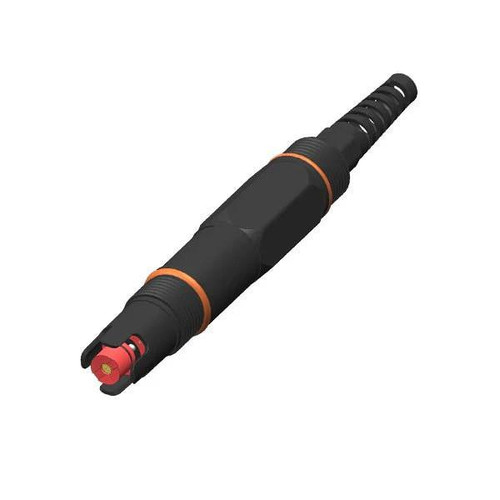
Sper Scientific Inline Digital Ion Sensor: Precision Water Quality Monitoring
Experience unparalleled accuracy and reliability in water quality analysis with the Sper Scientific Inline Digital Ion Sensor. Designed for seamless integration into diverse monitoring systems, this advanced sensor combines robust construction with cutting-edge technology to deliver precise ion detection in various environments.
Seamless Integration & Remote Monitoring: Equipped with RS485 communication and a standard Modbus protocol, the Sper Scientific Digital Ion Sensor offers exceptional adaptability. This enables effortless integration into existing control systems and SCADA networks, facilitating efficient remote monitoring and data acquisition from virtually any location.
Unmatched Durability & Longevity: Built for demanding applications, its corrosion-resistant PPS+POM housing ensures superior chemical resistance and a long operational life. Meeting stringent IP68 standards, this sensor is fully submersible and protected against dust and prolonged immersion, guaranteeing reliable performance even in harsh water quality monitoring environments.
Advanced Sensing Technology for High Precision: At its core, the sensor features an industrial-grade composite electrode with a innovative double salt bridge reference design. This crucial design element significantly extends the sensor's lifespan and maintains stable, accurate readings over time. A built-in PT1000 temperature sensor coupled with a sophisticated compensation algorithm ensures highly precise measurements across varying temperatures, minimizing potential errors.
Versatile Applications Across Industries: The Sper Scientific Inline Digital Ion Sensor is a critical tool for professionals across numerous sectors. It's widely adopted in:
- Wastewater Treatment Plants: Monitoring critical ion levels for process optimization and regulatory compliance.
- Groundwater Monitoring: Assessing water quality for environmental protection and resource management.
- Aquaculture: Ensuring optimal conditions for aquatic life by tracking key ion concentrations.
- Industrial Processes: Essential for chemical production, agricultural fertilization, and organic wastewater management.
- Research Institutions: Providing reliable data for scientific studies and experimental setups.
Its capability to detect ions in general sewage, industrial wastewater, and surface water makes it an invaluable asset. Designed for flexible installation, it can be easily mounted in sinks or flow tanks, adapting to your specific setup requirements.
Key Features:
- Selectable Ion Measurement Options: Configure the sensor to detect specific ions critical to your application.
- Compact & Easy-to-Install Design: Streamlined form factor allows for quick and hassle-free deployment.
- Robust IP68 Rated Construction: Ensures complete protection against dust and water immersion.
- Extended Lifespan Composite Electrode: Designed for durability and consistent performance.
- High Precision with Temperature Compensation: Integrated PT1000 sensor and algorithm guarantee accurate readings.
- Standard RS485 Modbus Communication: For universal compatibility and remote data access.
Technical Specifications:
- Model: 870001-ION Digital Ion Sensor
- Ions Type (Selectable): F⁻, Cl⁻, Ca²⁺, NO₃⁻, NH₄⁺, K⁺
- Range: 0.02 - 1000 ppm (mg/L)
- Resolution: 0.01 mg/L
- Power: 12V DC (customized options available for 5V, 24V DC)
- Slope: 52 ~ 59mV / 25℃
- Accuracy: < ±2% at 25℃
- Response Time: < 60 seconds (for 90% true value)
- Communication: Standard RS485 Modbus
- Temperature Compensation: PT1000
- Dimensions: Diameter: 30mm, Length: 250mm, Cable: 3 meters (extendable)
- Working Environment: Temperature: 0 ~ 45℃, Pressure: 0 ~ 2 bar
Interfering Ions (Important Considerations for Specific Measurements):
Understanding potential interferences helps ensure the most accurate readings for your specific application.
- Fluoride ion (F⁻): Can be interfered with by OH⁻.
- Chloride ion (Cl⁻): Potential interferences include CN⁻, Br⁻, I⁻, OH⁻, S²⁻.
- Calcium ion (Ca²⁺): Can be affected by Pb²⁺, Hg²⁺, Si²⁺, Fe²⁺, Cu²⁺, Ni²⁺, NH₃, Na⁺, Li⁺, Tris⁺, K⁺, Ba⁺, Zn²⁺, Mg²⁺.
- Nitrate (NO₃⁻): Potential interferences include CIO₄⁻, I⁻, CIO₃⁻, F⁻.
- Ammonium ion (NH₄⁺): Can be interfered with by K⁺, Na⁺.
- Potassium (K⁺): Potential interferences include Cs⁺, NH₄⁺, Tl⁺, H⁺, Ag⁺, Tris⁺, Li⁺, Na⁺.