



Fast
Shipping

Quick,
Simple Ordering

Clear,
Upfront Pricing

Over 30,000
Happy Customers

Exceptional
Customer Service

Industry's Largest
Catalog
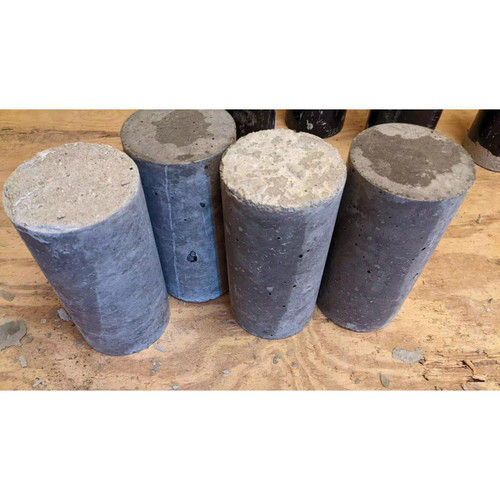
4 x 8in Concrete Test Cylinder, Grey, No Lid, Lip (50/Ct)
Our 4x8in Concrete Test Cylinders are eco-friendly and made to last. We make them from one piece of non-absorbing, injected plastic. That means they're in shape and precise in their dimensions. You can also get them in cast iron for added strength.
Product Dimensions and Specifications:
-
Dimensions: 4in diameter x 8in high (102 x 203 mm)
-
Case Quantity: 50 per case
-
Material: That non-absorbing plastic we mentioned
-
Material Color: Grey
-
Lid Type: No lid, with a lip
These concrete test cylinder molds are climate-resistant, climate-resistant and have an unlimited shelf life. They're recyclable and biodegradable. We add a special additive to the plastic that helps microbes in landfills and composting facilities break down the plastic over time.
When you use these molds, you can expect durability. They're heat-resistant, light-resistant and cement paste-resistant. They'll keep their round specimen shape throughout the process. You can use them to make test cylinders from a composite sample to test the potential strength. You can also use them to make cured molds which are cured in the same environment as the actual structure.
That final curing is critical to maintain specific moisture and temperature to develop its strength. Initial curing is also important to minimize moisture loss and temperature fluctuations immediately after it is poured.
Our molds have a smooth surface that makes it easy to write directly on them for data recording. They're biodegradable, which reduces plastic waste. You'll also need a storage tank to maintain optimal moisture conditions during curing.
We offer a range of accessories to go with our molds. These include lids (V045.004-887-C), tamping rods, a concrete strike-off bar, stripping tools and a rubber mallet.
Our 4x8in Concrete Test Cylinders meet the following industry standards:
AASHTO M205, AASHTO T22, AASHTO T23, AASHTO T126, AASHTO T198, ASTM C31, ASTM C39, ASTM C192, ASTM C470 and ASTM C496.
These standards are critical in forming test cylinders that meet industry standards. Standard cured molds are also critical to verify mix meets project specifications.
You can get our 4x8in Concrete Test Cylinders in cases of 50. We also offer them in 2x4in, 3x6in and 6x12in sizes.
If you're looking to improve your concrete testing in the USA, our 4x8in Concrete Test Cylinders are the solution. Whether you're in the field or on the job site, these molds will give you reliable results.
In fact, our 4x8in Concrete Sample Cylinders are designed to form concrete test cylinders to the highest standards of quality and precision. They feature a durable bio cylinder that's compliant with ASTM specifications. That means you can rely on dependable performance for control in concrete testing.
The smooth surface of our molds acts as a moisture barrier for results. Each mold is one piece, so all samples are uniform. Our 4x8in size is perfect for larger samples and great for bigger spaces. These concrete test cylinders are good for all environments and reliable.
When you use storage tanks to submerge your concrete test cylinders during curing, you can ensure the environment mimics standard curing conditions necessary for proper hydration and strength development.
Our 4x8in Sample Cylinders have many benefits and uses. They ensure accurate compressive strength, meet the required strength specs for structure. They also give you reliable results and repeatable results for quality testing.
Cylinder test is the process for the compressive strength of concrete. That's where our durable bio cylinder comes in—designed to be both cost-effective and easy to use, from lab to job site.
You need those qualities for quality, acceptance and research and development to ensure you meet specs.
Process
Cylinder test is about determining the compressive strength of concrete. Here's how it works:
-
Sampling: You take a sample of fresh concrete from the mixer truck or job site. This sample has to be taken in accordance with ASTM C172. That ensures it really does represent the mix being used.
-
Molding: You mold that concrete sample into a cylinder using a mold that meets ASTM C31. Those molds are made of smooth plastic or metal to give you a consistent shape and precise dimensional tolerance. Our durable bio cylinder is strong enough to withstand the elements and job-site storage issues. And it complies with ASTM specifications to give you dependable performance for quality in concrete testing.
-
Curing: You cure that molded concrete cylinder in a controlled environment, either on the job site or in the lab. Curing involves keeping the temperature and humidity level just right to let it develop its strength. Proper curing prevents storage problems on site and ensures the concrete reaches its max load capacity.
-
Testing: After curing, you test the concrete cylinder for compressive strength using a compression testing machine. The machine gradually loads the cylinder until it fails—and the maximum load is recorded. That's critical to determine the concrete's ability to withstand compressive forces and ensure the durability and safety of structures.
Compressive Strength
Compressive strength is the most important part of cylinder testing. It measures the ability to withstand compressive forces. Here are some key facts:
-
Why it matters: Compressive strength testing is required to determine the load capacity of a concrete structure. That means the structure can withstand the weight and stresses it will be subjected to. That's critical for both safety and longevity.
-
How we do it: The compressive strength is performed using a compression testing machine with our durable bio cylinder. That cylinder is known for its strength and weather resistance, which eliminates storage issues on site. It complies with ASTM specifications to give you consistent and dependable performance for quality in concrete testing. The machine applies a gradual load to the concrete cylinder until it fails—and the max load is recorded. That gives you a precise measurement of the concrete's compressive strength.
-
Standards: The compressive strength test is performed to ASTM C39. That standard test method for compressive strength of cylindrical concrete specimens ensures the test results are accurate and reliable.
Acceptance testing and quality control are part of the concrete cylinder testing process. They ensure the concrete mix meets the required strength and durability standards. Here are some key facts:
-
Purpose: Acceptance testing is to ensure the concrete mix meets the required strength and durability standards. Quality control is to ensure the concrete is produced and tested to the relevant standards to prevent issues in the final concrete structures.
-
Standards: Acceptance testing and quality control is to ASTM C31. That standard practice for making and curing concrete test specimens in the field ensures the concrete cylinders are tested under the same conditions to get reliable results.
-
Procedure: The acceptance testing procedure involves testing a series of concrete cylinders to ensure they meet the required strength and durability standards. The test results are then used to determine if the concrete mix is acceptable for the project.
By following the concrete cylinder testing process, engineers and contractors can be confident that the concrete used in their projects meets the required strength and durability standards. That gives peace of mind the concrete will perform as expected under load.
Product Care and Handling
To maintain accuracy and longevity of our durable bio cylinder 3x6in Concrete Sample Cylinders, follow these guidelines:
-
Handle them with care to avoid damage and scratches.
-
Store them in a dry, cool place away from direct sunlight to prevent degradation.
-
Avoid exposing the cylinders to extreme temperatures, moisture or chemicals that can compromise them.
-
Clean the field cured cylinders with mild soap and water to remove any residue.
-
Thoroughly dry the field cured cylinders after cleaning to prevent water spots and contamination.
Our concrete test cylinders are built to last—and to give you the consistent results you need for construction and testing applications. We meet the industry standards you trust: ASTMC31, ASTMC39, AASHTO M 205 and AASHTO T 23.
At our company, we're dedicated to providing the best products and service for our customers. That's why our durable bio cylinder complies with ASTM specifications. We're committed to excellence, so you can rely on us for accurate and reliable results every time. We're always innovating and improving to meet those industry standards.
That's why our 4x8in Concrete Test Cylinders are eco-friendly and feature that durable bio cylinder. Made from non-absorbing, one-piece injected plastic, these molds are 4in diameter x 8in high (102 x 203 mm). They come in grey, with no lid and a lip. We also offer cast-iron molds for added strength.
Our 4x8in Concrete Test Cylinders are weather-resistant, climate-resistant and have an unlimited shelf life. They're recyclable and biodegradable. We add a special additive to the plastic that allows microbes in landfills and composting facilities to break down the plastic over time.
These molds can withstand heat, light and cement paste. They retain the round specimen shape throughout testing. You can use them to make test cylinders from a composite sample to test the potential strength of the concrete. Cylinders are compression tested to meet project strength requirements. You can also use them to make field-cured cylinders, which are cured in the same environment as the actual concrete structure.
We make field-cured cylinders easy to use. Initial curing is critical to minimize moisture loss and temperature fluctuations immediately after the concrete is poured. Final curing is also important to maintain specific moisture and temperature conditions for the concrete to develop its designed strength.
Our molds come with a writable surface for easy data recording. They're environmentally friendly, biodegradable and reduce plastic waste. You'll also need a water storage tank to maintain optimal moisture conditions during curing.
We offer a range of accessories to make your testing easier. These include domed lids, tamping rods, concrete strike-off bars, stripping tools and a rubber mallet.
Our 4x8in Concrete Test Cylinders meet AASHTO and ASTM standards. We meet the following standards:
AASHTO M205, AASHTO T22, AASHTO T23, AASHTO T126, AASHTO T198, ASTM C31, ASTM C39, ASTM C192, ASTM C470 and ASTM C496.
Standard concrete cylinder molds are crucial in forming test cylinders that meet industry standards. Standard cured cylinders are also crucial to verify concrete mix meets project specifications.
Improving your concrete testing in the USA? That's where our 4x8in Concrete Test Cylinder Molds from M.A. Industries come in. Whether you're in the lab or on the job site, these molds will give you the consistent results you need.
Our 4x8in Concrete Sample Cylinders are designed to meet the highest standards of quality and precision. Made from non-absorbing plastic, they have a smooth surface that prevents moisture from interfering with your test results. Each one-piece cylinder ensures uniform samples. That 4x8in size is ideal for larger concrete samples and more space. These cylinders work in any environment-you get reliable, consistent results.
After initial curing at the job site, concrete test cylinders need to be transported to water storage tanks for controlled final curing. That's according to ASTM C 31, which maintains specific moisture and temperature conditions for the concrete to develop its designed strength.
Our 4x8in Concrete Sample Cylinders have many benefits and uses. That includes the durable bio cylinder, which complies with ASTM specifications. This ensures consistent and dependable performance for quality control in concrete testing. Some of the benefits include:
-
Compressive strength that meets project requirements
-
Reliable results for quality control and acceptance testing
-
Cost-effective testing without sacrificing quality
-
Easy to use and transport
-
Multi-use in various testing environments and conditions
These cylinders are a must-have for quality control, acceptance testing and research and development to ensure your concrete meets project specs.
Concrete cylinder testing is a crucial process to determine the compressive strength of concrete. Here's how it works:
-
Sampling: You take a representative sample of fresh concrete from the mixer truck or the job site. This sample must be collected according to ASTM C172 to ensure it represents the concrete mix being used.
-
Molding: The concrete sample is then molded into a cylindrical shape using a mold that meets ASTM C31 requirements. These molds are typically made of smooth molded plastic or metal, to ensure consistent shape and precise dimensional tolerance.
-
Curing: The molded concrete cylinder is cured in a controlled environment, either at the job site or in a laboratory. The curing process involves maintaining a consistent temperature and humidity level to allow the concrete to develop its designed strength.
-
Testing: After curing, the concrete cylinder is tested for compressive strength using a compression testing machine. This machine applies a gradual load to the cylinder until it fails, and the maximum load is recorded.
Compressive strength is a critical part of concrete cylinder testing. It measures the concrete's ability to withstand compressive forces. This test is important to ensure concrete structure durability and safety.
Compressive strength testing is important to determine the load capacity of a concrete structure. It helps engineers to ensure the structure can carry the weight and stresses it will be subjected to, so it is safe and durable.
A compression testing machine is used to perform the compressive strength test. This machine applies a controlled, gradual load to the concrete cylinder, to get accurate and reliable results.
The results of the compressive strength test are used to determine the strength of the concrete. These results are typically expressed in units of force per unit area, such as pounds per square inch (psi) or mega-pascals (MPa). This information is important to verify the concrete meets the project strength requirements.
Acceptance testing and quality control are critical components of the concrete testing process. They ensure that your concrete meets project specs and is safe and durable.
Acceptance testing and quality control are the backbone of the concrete cylinder testing process. That's where you ensure the concrete meets project specs and industry standards. Here are the key points of acceptance testing and quality control:
-
What it's all about: Acceptance testing verifies that your concrete mix has the strength you need-it needs to meet project requirements. That's where our durable bio cylinder comes in. Compliant with ASTM specifications, it gives you consistent and dependable performance for quality control in concrete testing. Quality control is about making sure the concrete is produced and tested according to the standards. This keeps the testing process - and the integrity of the results - intact.
-
When to test: The frequency of acceptance testing depends on your project specs and the type of concrete you're working with. Typically, you'll test concrete cylinders at 7, 28 and 56 days after casting. This lets you track how the concrete strength develops over time.
-
What the results mean: The results of the acceptance tests show whether your concrete mix meets project strength requirements. If the results don't meet the required strength, you may need to adjust or reject the mix to improve its performance.
-
Why quality matters: Quality is key to making sure the sample is mixed and cured properly. This includes maintaining consistent mixing procedures, proper curing conditions and keeping your testing equipment calibrated and maintained correctly. Effective quality control prevents storage problems on site and ensures the concrete develops the strength you designed it to have.
By following these guidelines, you'll get an accurate, reliable and compliant testing process. That means safer, more durable structures.
Product Care, Handling and Initial Curing
Proper care and handling of our 4x8in Concrete Test Cylinders is crucial to maintaining accuracy and longevity. Our durable bio cylinder complies with ASTM specifications and gives you consistent and dependable performance for quality control in concrete testing.
To get the most out of your cylinders, follow these care instructions:
-
Handle them with care: Avoid damage and scratches by handling them gently.
-
Store them properly: Store them in a dry, cool place, away from direct sunlight. This prevents degradation.
-
Avoid extremes: Don't expose the cylinders to extreme temperatures, moisture or chemicals that can compromise them.
-
Clean them regularly: Clean the field cured cylinders with mild soap and water to remove any residue. And make sure they're dry afterwards to prevent water spots and contamination.
By taking care of your concrete test cylinders, you can keep them in top condition for testing.
Industry Compliance, Standards and Quality Control
Our 4x8in Concrete Test Cylinders meet industry standards:
-
ASTM C31: Standard Practice for Making and Curing Concrete Test Specimens in the Field
-
ASTM C39: Standard Test Method for Compressive Strength of Capping Cylindrical Concrete Specimens
-
AASHTO M 205: Curing Concrete
-
AASHTO T 23: Compressive Strength of Concrete Cylinders
Our durable bio cylinder complies with ASTM specifications. By meeting these standards, our field cured cylinders are suitable for all construction and testing applications. They give you consistent results.
About Us
At the heart of what we do is providing our customers with the best products and service. Our durable bio cylinder complies with ASTM specifications and gives you consistent and dependable performance for quality control in concrete testing. We're dedicated to excellence. That means your testing needs will be met with precision and reliability. We're always improving to meet industry standards. Trust us to deliver the best concrete test cylinders for you to get accurate results every time.
